
Saas Business Models: Which One Is Right for Your Startup?

Selecting the optimal SaaS business model for your startup can be daunting due to the myriad of options available. Important factors to consider include target market needs, revenue goals, and industry trends. Should you opt for a subscription-based model that offers consistent revenue, or a freemium approach to attract a broader user base? Perhaps a pay-per-use model aligns better with your customers' usage patterns. Each model has its advantages and disadvantages, but understanding them is crucial for aligning your pricing strategy with your growth objectives. Which path will lead your startup to sustained success and profitability? Let's delve into the details.
Key Takeaways
- Evaluate your target market's needs and budget preferences to select an appropriate pricing model.
- Study industry trends and successful business models to identify a proven strategy for your startup.
- Consider scalability and future growth potential when choosing a business model.
- Leverage customer feedback to refine and optimize your SaaS business model.
- Compare potential revenue streams and customer retention strategies across different models.
Understanding SaaS Business Models
To understand SaaS business models, you need to recognize how they utilize cloud-based software to offer flexible, subscription-based services. By leveraging the cloud, SaaS companies provide customers with remote access to software, ensuring convenience and ease of use. This model thrives on subscriptions, which generate recurring revenue, creating a steady income stream for the company.
A significant advantage of SaaS is its scalability. As your customer base grows, the cloud infrastructure allows you to scale up effortlessly. This flexibility extends to pricing models as well. You can offer various subscription tiers to meet different customer needs and budgets, enhancing your appeal and market reach.
Customer retention is essential in the SaaS business model. Because revenue is recurring, maintaining a loyal customer base becomes vital. Continuous updates and improvements based on customer feedback help keep customers satisfied and engaged.
However, the SaaS market is highly competitive, requiring ongoing investment in technology and customer support. Despite these challenges, the ability to reach a global market and secure regular payments from loyal customers makes SaaS a compelling business model for startups aiming for long-term success.
Subscription-Based Model
Adopting a subscription-based model offers a predictable revenue stream, aiding stable financial forecasting. This model also enhances customer retention by consistently delivering value, thereby reducing churn rates. By focusing on these aspects, your startup can achieve steady growth and long-term success.
Predictable Revenue Stream
A subscription-based model in SaaS businesses provides a predictable and stable revenue stream through regular monthly or annual fees. This approach, characterized by monthly recurring revenue (MRR), is crucial in the SaaS industry for maintaining consistent cash flow. By implementing a subscription model, you can build strong customer relationships and reduce customer churn, paving the way for scalability and flexibility in your business operations.
| Advantages | Challenges | Examples |
|---|---|---|
| Predictable Revenue | Managing Churn | Netflix |
| Long-term Customers | Customer Acquisition | Spotify |
| Financial Forecasting | Service Differentiation | Adobe Creative Cloud |
| Scalability | Market Competition | Salesforce |
| Flexibility | Pricing Strategies | Microsoft Office 365 |
In the competitive SaaS market, predictability in revenue is a significant advantage. With reliable SaaS metrics, you can better forecast financial performance and plan for growth. The subscription model's consistency allows you to invest in customer acquisition and retention strategies more effectively. Furthermore, the scalability and flexibility inherent in this model facilitate expansion and adaptation to market demands.
Retention and Churn Rates
Monitoring retention and churn rates in a subscription-based SaaS model is crucial for maintaining predictable revenue streams and fostering business growth. Retention rates measure the percentage of customers who continue their subscriptions over time, serving as a key indicator of revenue stability and customer satisfaction. High retention rates suggest long-term revenue potential and indicate that customers are pleased with your product or service.
Conversely, churn rates represent the percentage of customers who cancel their subscriptions. Elevated churn rates can significantly impact revenue and highlight potential issues with your offering. By closely monitoring these metrics, you can identify areas for improvement, thereby enhancing customer satisfaction and reducing churn.
Understanding and improving retention and churn rates are essential for sustaining a successful subscription-based model. Focusing on these metrics enables you to discern what keeps your customers happy and loyal, allowing you to refine your offerings, support, and overall customer experience to drive higher retention.
Freemium Model

The Freemium model is a strategic approach where basic services are offered for free, while premium features are monetized. This model helps attract a broad user base and generates potential revenue. By offering basic services at no cost, companies can quickly expand their user base and enhance brand visibility. Notable companies like Dropbox, LinkedIn, and Evernote have successfully utilized this model to gain market traction.
Providing core functionalities for free allows users to experience the product without any initial commitment. This approach builds trust and encourages users to engage more deeply with the platform. As user engagement increases, the likelihood of converting them to paying customers grows, thereby driving revenue.
The freemium model effectively balances attracting users with free services and converting them into paying customers through compelling premium features. It serves as an impactful marketing tool, showcasing the product's capabilities and highlighting the additional benefits of a paid subscription. By continuously understanding and addressing user needs, companies can enhance both user satisfaction and revenue, making the freemium model an attractive option for SaaS startups.
Pay-Per-Use Model
The Pay-Per-Use model charges customers based on actual usage, offering unparalleled flexibility and cost-efficiency. Ideal for startups that need to scale according to real-time demands, this model ensures financial prudence by only charging for what is used. Utilizing measurable usage metrics, businesses can avoid overcommitment and manage finances effectively.
Transparent cost structures inherent in the Pay-Per-Use model facilitate better budgeting, helping to prevent unexpected expenses. Companies like Amazon Web Services, Google AdWords, and Uber successfully employ this model, showcasing its versatility across various industries.
For startups, the Pay-Per-Use model optimizes resource allocation, allowing them to pay solely for actively used services or resources. This model's scalability enables easy adjustments to fluctuating demand, ensuring seamless handling of varying usage requirements.
Tiered Pricing Model
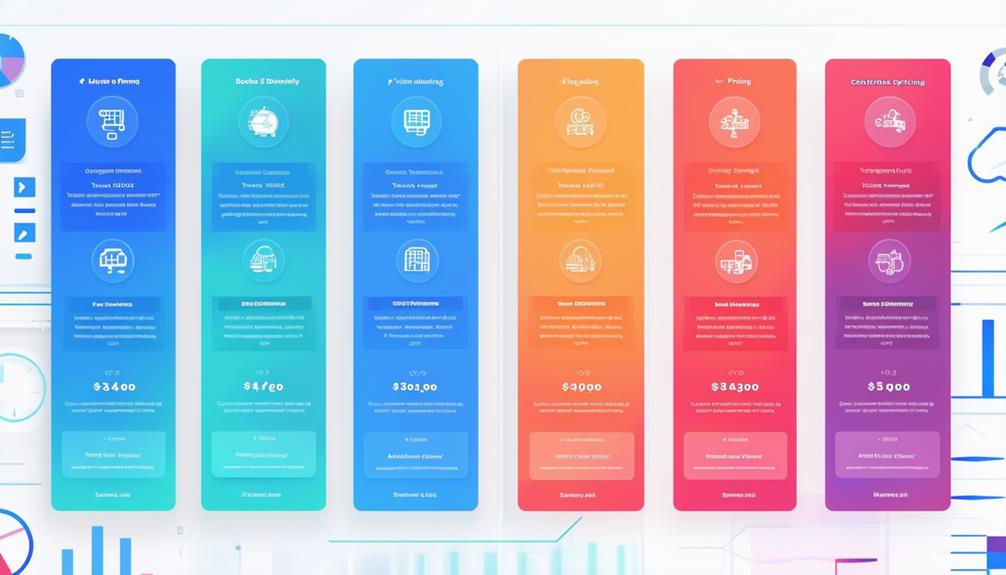
By implementing a tiered pricing model, you offer multiple pricing options that cater to different customer needs, enhancing both flexibility and satisfaction. This approach meets diverse demands and encourages customers to upgrade as their requirements evolve. Let's explore the benefits of tiered pricing and how to effectively implement these tiers in your SaaS business.
Benefits of Tiered Pricing
Tiered pricing allows you to select a plan that aligns with your needs and budget. By offering different service levels at various price points, you can choose a tier that includes the features you actually use. For instance, companies like HubSpot and Salesforce have effectively implemented tiered pricing to cater to diverse customer requirements, providing basic packages for startups and more advanced tiers for established businesses.
This model enhances customer satisfaction and creates opportunities for upselling. As your business expands, you can upgrade to higher tiers with more advanced features, facilitating seamless scalability. This ensures you're not confined to a plan that no longer suits your evolving needs.
Customization is another major benefit. You can tailor the service to your specific requirements, whether you need additional storage, advanced analytics, or premium support. This flexibility makes tiered pricing an appealing option for startups seeking scalable and customizable solutions. With tiered pricing, you're not just acquiring a service; you're investing in a service that evolves with your business.
Implementing Pricing Tiers
To successfully implement pricing tiers, it's crucial to understand your customer segments and their unique needs. Tiered pricing models provide various service levels and features at different price points, enabling you to address diverse customer requirements. This approach enhances customer value perception and creates upsell opportunities by attracting customers with advanced features in higher-priced tiers. Here's a step-by-step guide to effectively implementing pricing tiers:
- Identify Customer Segments: Analyze the diverse needs and budgets of your customer base. For instance, small businesses may require basic features, while larger enterprises might need advanced functionalities.
- Define Service Levels: Establish clear and distinct service levels that demonstrate a progression of value. Companies like HubSpot and Salesforce excel at this by offering multiple tiers tailored to different customer segments.
- Highlight Advanced Features: Ensure that each higher-priced tier includes advanced features that justify the price increase, encouraging customers to consider upgrading.
- Monitor and Optimize: Continuously review your pricing tiers to ensure they align with customer needs and market trends. Make adjustments as necessary to maximize revenue potential.
Platform-as-a-Service (PaaS)
Imagine having a complete software development environment at your fingertips without the hassle of managing infrastructure. This is exactly what Platform-as-a-Service (PaaS) offers. PaaS solutions, such as Google App Engine and Microsoft Azure, provide cloud-based services that eliminate the need for infrastructure management, allowing you to focus solely on software development. These platforms come with built-in collaboration tools, facilitating seamless teamwork.
With PaaS, you can achieve rapid application development through pre-configured environments and automated workflows, enabling you to bring your ideas to life faster. The scalable solutions offered by PaaS ensure that as your application grows, the platform can handle increased demand effortlessly.
Moreover, PaaS environments support a wide range of programming languages and frameworks, giving you the flexibility to choose the best tools for your project. By leveraging PaaS, your startup can save significant time and resources, allowing you to concentrate on creating cutting-edge applications that meet your customers' needs. If you're looking for an efficient way to develop and deploy software, PaaS might be the perfect fit for your startup.
White Labeling Model

Leveraging the white labeling model, your startup can rebrand and resell existing software under its own name, bypassing the substantial costs of development. This SaaS strategy enables rapid and efficient delivery of software solutions, conserving both time and resources. By utilizing customizable existing software, you can adapt the product to reflect your brand's identity and address your customers' specific requirements.
Here's why the white labeling model is an ideal choice for your startup:
- Cost Efficiency: Bypassing the high costs of developing software from scratch allows you to allocate more funds towards marketing and customer acquisition.
- Quick Market Entry: Rebranding and reselling established software enables faster market entry and easier expansion of your product or service offerings.
- Customization: The model offers flexibility to customize the software, ensuring it aligns with your brand and enhances user experience.
- Brand Recognition and Customer Loyalty: Providing tailored software solutions under your own brand builds brand recognition and fosters customer loyalty, as customers value the unique touches you add to the product.
Adopting the white labeling model allows your startup to compete effectively in the SaaS industry while prioritizing growth and customer satisfaction.
Open Source Model
The open source model offers startups a collaborative and adaptable approach to software development. By granting users the ability to access, modify, and distribute the software's source code freely, this model fosters an environment conducive to innovation and community-driven progress. Key benefits include significant cost savings, accelerated development cycles, and enhanced security through the collective effort of a dedicated community.
Central to the open source model is community-driven development. Adopting this strategy allows you to leverage a global pool of talent and ideas, driving the evolution of your software beyond what you might achieve independently. Companies like Red Hat and Docker exemplify the success and commercial viability of open source software.
Engaging with an open source community keeps you at the forefront of technological advancements, as community contributions often lead to rapid iterations and improvements. The transparency of the source code ensures that vulnerabilities are quickly identified and patched, bolstering overall security. For startups aiming to innovate while managing costs, the open source model is a compelling choice.
Key SaaS Metrics

To fully grasp the health of your SaaS startup, it's crucial to monitor key metrics such as Monthly Recurring Revenue (MRR), Churn Rate, and Customer Acquisition Cost (CAC). MRR offers insights into your consistent monthly income, while the churn rate measures customer retention. Additionally, understanding your CAC is vital for assessing the effectiveness of your marketing strategies.
Monthly Recurring Revenue
Monthly Recurring Revenue (MRR) provides an essential snapshot of your SaaS startup's financial health by indicating the predictable income generated each month. MRR is crucial because it reflects the steady revenue from subscriptions, offering valuable insights into your business's growth and stability. To calculate MRR, multiply the total number of paying customers by the average revenue per customer.
Tracking MRR offers several advantages:
- Monitor Revenue Trends: Regularly tracking MRR helps you identify growth patterns and potential downturns, allowing for informed strategic adjustments.
- Optimize Pricing Strategies: Analyzing MRR can reveal the effectiveness of your pricing strategies, enabling data-driven adjustments to maximize revenue.
- Forecast Cash Flow: A clear understanding of MRR allows for more accurate cash flow predictions, facilitating better expense and investment management.
- Set Growth Targets: Use MRR data to set realistic growth objectives and measure your progress towards sustainable growth.
Understanding MRR also aids in enhancing customer retention. By focusing on increasing MRR, you can make informed decisions that drive long-term success for your SaaS startup.
Churn Rate Analysis
Churn rate, defined as the percentage of customers canceling their subscriptions within a specific period, is a critical indicator of a SaaS startup's customer retention health. High churn rates can indicate issues such as product dissatisfaction, poor customer service, or ineffective onboarding processes. Understanding the reasons behind churn is essential for maintaining revenue growth and enhancing customer satisfaction.
To calculate the churn rate, divide the number of customers lost during a period by the total number of customers at the beginning of that period. Analyzing churn rate trends over time provides valuable insights into customer behavior and the effectiveness of retention strategies.
Here's a simple table to illustrate how to track churn rate:
| Month | Customers at Start | Subscription Cancellations |
|---|---|---|
| January | 1000 | 50 |
| February | 950 | 30 |
| March | 920 | 40 |
Reducing churn rate is crucial for the long-term success of a SaaS business. Focus on improving onboarding processes to ensure new customers understand how to use the product effectively. Regularly solicit feedback to gauge customer satisfaction and address any issues promptly. Implementing robust retention strategies, such as loyalty programs or personalized support, can help minimize subscription cancellations and increase overall customer retention.
Customer Acquisition Cost
Customer Acquisition Cost (CAC) is a crucial metric for SaaS startups, indicating the effectiveness of your marketing and sales efforts in securing new customers. Mastering CAC is integral to the success of any SaaS business. Here's how to leverage CAC for sustainable growth and profitability:
- Accurate Calculation: Determine your CAC by dividing total sales and marketing expenses by the number of new customers acquired within a given period. This provides a precise measure of your acquisition costs.
- Evaluate Marketing Strategies: Continuously review and refine your marketing strategies. A lower CAC indicates effective conversion of prospects to paying customers, enhancing scalability.
- Compare CAC to CLV: Ensure your CAC is low relative to your Customer Lifetime Value (CLV). This ratio is vital for sustainable growth; spending more on acquisition than the revenue generated from a customer undermines your business model.
- Monitor Trends: Track CAC trends over time to assess the efficacy of your acquisition efforts. An increasing CAC may signal the need to adjust your marketing strategies or improve your product offering.
Choosing the Right Model
When selecting the optimal SaaS business model for your startup, it's critical to consider the specific needs and preferences of your target market. Understanding your potential customers' requirements and their willingness to pay will help you design a pricing structure aligned with your revenue goals. Analyze industry trends to identify successful strategies used by similar companies and uncover gaps you might address. Evaluate your competitors to understand the models they employ and their effectiveness.
Scalability is another crucial factor. Your SaaS business model should be adaptable to your startup's growth. If it cannot scale efficiently, you may face challenges in the future. Consider how your chosen model will manage an increase in users or the demand for additional features.
Seek feedback from potential customers to gauge their preferences and willingness to pay for different pricing structures. This will help you refine your model to better meet their expectations. Remember, a well-chosen SaaS business model is not just about immediate gains but also about sustainable growth and long-term success. Balancing these elements will position you strongly in a competitive market.
Conclusion
Choosing the right SaaS business model for your startup requires a deep understanding of your target customers and growth objectives. Options include subscription-based, freemium, pay-per-use, tiered pricing, white labeling, and open source models. Aligning your strategy with market demands is crucial. Stay adaptable and monitor successful industry practices. By doing so, you'll set your startup on a path to sustained success and profitability.