
Using Customer Journey Analytics to Enhance SaaS UX
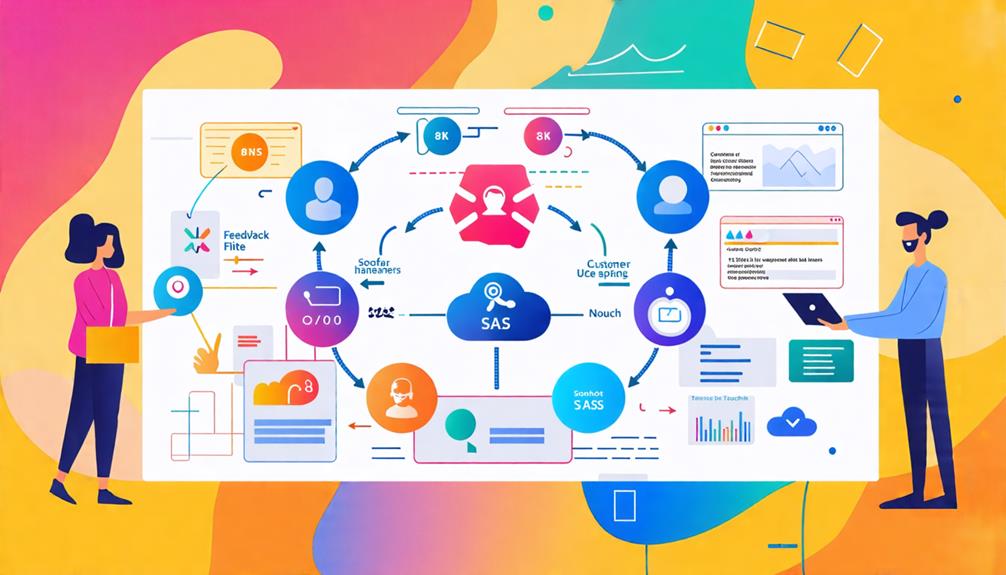
Harnessing the power of customer journey analytics reveals how user interactions can fundamentally transform your SaaS product's user experience. By meticulously tracking user engagement with your platform, you can identify and eliminate barriers that impede user satisfaction, thereby optimizing their journey.
This approach not only enhances your offerings but also fosters higher retention and customer loyalty. To ensure these insights lead to meaningful improvements, consider implementing the following strategies:
- Data-Driven Decision Making: Utilize analytics to make informed decisions based on user behavior patterns and feedback.
- Personalization: Tailor user experiences based on individual user data to increase engagement and satisfaction.
- Continuous Monitoring and Iteration: Regularly update and refine your platform based on ongoing user data and emerging trends.
- Cross-Functional Collaboration: Ensure teams across your organization work together, leveraging insights from customer journey analytics to drive cohesive improvements.
- User Feedback Integration: Actively incorporate direct user feedback into your analytics to validate and enhance your findings.
By adopting these strategies, you can ensure that the insights gained from customer journey analytics translate into actionable and impactful enhancements to your SaaS product.
Understanding Customer Journey Analytics
Customer experience analytics allows you to monitor and understand user interactions across all touchpoints, enhancing the overall experience within your SaaS environment. By examining customer journey analytics, you can gain valuable insights into how users navigate your platform. This involves collecting both qualitative data—such as user feedback—and quantitative data, including conversion and churn rates.
Analyzing these interactions helps identify pain points that disrupt the customer experience. Recognizing these friction areas enables you to make targeted improvements, thereby increasing customer satisfaction. For example, if users frequently drop off at a specific touchpoint, you can investigate their behavior to understand why and adjust your strategies accordingly.
Continuous monitoring of user behavior also helps you stay agile in a fast-paced SaaS landscape. Regular analysis of the customer journey allows you to respond to emerging challenges and refine your offerings to better meet user needs. This proactive approach not only enhances the user experience but also drives retention and loyalty.
Ultimately, understanding customer journey analytics equips you with the tools to create a more satisfying and effective SaaS environment.
Benefits of Customer Journey Analysis
Analyzing the customer journey provides essential insights that enhance user satisfaction and reduce churn rates. By leveraging customer experience analytics, you can pinpoint friction points in your SaaS product, enabling targeted adjustments to improve the customer experience. This proactive approach streamlines interactions, reducing churn and increasing retention.
Additionally, effective customer experience analysis can enhance customer lifetime value by identifying upselling and cross-selling opportunities at various stages. By understanding your customers' needs, you can strategically align your services with their evolving expectations.
Insights from this analysis can also boost marketing effectiveness. By optimizing campaigns based on actual user behavior and preferences, you can lower customer acquisition costs (CAC). This ensures you're not only attracting customers but also retaining them through a seamless experience that meets their needs.
Conducting User Journey Analysis

To effectively conduct a user experience analysis, start by mapping the entire customer journey and identifying user personas at each key stage. This approach helps you understand user interactions and pinpoint customer pain points throughout the SaaS customer journey. Utilize an analytics platform to gather data from various channels, including customer feedback and web analytics.
Once you collect this data, evaluate conversion rates and user progress to identify where users drop off in their journey. Use journey analytics tools to analyze these insights and implement changes at specific touchpoints. Continuous monitoring will help you improve the customer experience and increase retention rates.
Here's a simple table to guide your analysis:
| Key Stage | User Actions | Customer Pain Points |
|---|---|---|
| Awareness | Discovering your service | Lack of information |
| Consideration | Comparing options | Confusing features |
| Purchase | Signing up | Complicated checkout |
| Onboarding | Learning to use the service | Insufficient guidance |
| Retention | Engaging with ongoing support | Slow response times |
This approach ensures semantic accuracy, completeness, consistency, conciseness, relevance, interoperability, and trustworthiness in your user experience analysis.
Key Tools for Analytics
Understanding your users is crucial, and having the appropriate analytics tools is essential. These tools enable you to track user behavior and evaluate engagement metrics efficiently. Let's explore some key tools that can enhance your SaaS user experience analytics.
Essential Analytics Tools
Selecting the right analytics tools is essential for optimizing your SaaS product's user experience and effectively understanding customer journeys. These tools enable you to gather valuable insights into user behavior, track event data, and analyze customer interactions across various touchpoints.
Here's an overview of some key analytics tools:
| Tool | Key Features | Best For |
|---|---|---|
| Userpilot | Event tracking, goal tracking, funnel analysis | Enhancing onboarding experiences |
| Amplitude | Advanced analytics, cohort analysis | Identifying user retention patterns |
| Google Analytics 4 | Real-time tracking, customizable dashboards | Enhancing overall customer experience |
| Woopra | Real-time tracking across touchpoints | Developing personalized marketing strategies |
| Mixpanel | Event-based analytics, user engagement analysis | Optimizing product features |
Tracking User Behavior
Understanding user behavior is crucial for optimizing your SaaS product, and several key tools can help you track and analyze how users interact with your platform. Userpilot, for example, allows you to monitor user actions through event and goal tracking while also gathering feedback with in-app surveys.
Google Analytics 4 provides extensive analytics, including real-time tracking of both web and in-app behavior, helping you visualize user paths and conversions across different stages of the customer experience.
Woopra excels in real-time customer experience tracking, enabling you to identify touchpoints where users engage or drop off. This insight is invaluable for pinpointing areas needing improvement in your SaaS business.
Additionally, tools like Hotjar offer heat maps and session recordings, allowing you to see how users navigate your interface and identify which aspects require refinement to enhance the customer experience.
Evaluating Engagement Metrics
Evaluating engagement metrics is crucial for refining your SaaS product, as it reveals user interactions and identifies areas for enhancement. By leveraging customer experience analytics, you can monitor key engagement metrics such as Customer Satisfaction Score (CSAT) and Net Promoter Score (NPS), offering insights into user satisfaction and the likelihood of product recommendations.
Analytics tools like Google Analytics 4 enable tracking of user interactions across web and in-app environments, providing real-time data on behavior patterns. This data can guide UX improvements to boost user satisfaction.
Tools such as Userpilot allow for detailed event tracking and funnel analysis, identifying friction points where users disengage, thereby facilitating targeted enhancements. Additionally, Amplitude's cohort analysis helps evaluate engagement trends over time, enabling tailored experiences for specific user segments to improve retention.
Monitoring metrics like bounce rates and feature usage allows for product refinement, ultimately enhancing the overall customer experience. Prioritizing these engagement metrics equips you to make data-driven decisions that elevate your SaaS platform's UX.
Enhancing User Experience

By leveraging customer experience analytics, you can accurately identify user pain points and make informed improvements that significantly enhance their overall experience with your SaaS product. Detailed mapping of user interactions allows you to visualize areas where users encounter difficulties or find success. This insight is crucial for improving the overall user experience and satisfaction.
Utilizing product usage metrics and feedback surveys helps you pinpoint specific needs and expectations, enabling you to optimize the user experience effectively. Continuous monitoring of key performance indicators, such as customer satisfaction scores and churn rates, provides actionable insights for refining your strategies.
Personalization also plays a pivotal role in engagement. Tailoring experiences to individual user preferences increases satisfaction and the likelihood of product adoption. By addressing pain points and focusing on retention, you create a more seamless experience that keeps users engaged.
Ultimately, customer experience analytics empowers you to enhance user experience, ensuring your SaaS product not only meets but exceeds customer expectations.
Continuous Improvement Strategies
To continuously enhance user experience, implementing effective improvement strategies is essential for adapting your SaaS product to the ever-evolving needs of customers. Start by analyzing customer journey data to identify friction points that may hinder user engagement. Addressing these issues can significantly boost customer retention, potentially increasing it by 20%.
Utilize A/B testing to refine user flows based on real interactions, thereby enhancing the onboarding process and potentially raising conversion rates by 30%. Regularly gather customer feedback and satisfaction scores as key performance indicators (KPIs) to make timely adjustments to your user experience. This proactive approach can result in a 25% increase in user engagement.
Additionally, keep your customer journey maps updated to reflect evolving user behaviors and preferences, which can improve customer satisfaction by an estimated 15%. Establish a cycle of continuous monitoring and iteration based on user data, enabling your team to adapt swiftly and maintain a competitive edge in the market.
Conclusion
Integrating customer experience analytics into your SaaS strategy can significantly enhance user experience. By analyzing user interactions and pinpointing pain points, you can implement targeted improvements that boost satisfaction and minimize churn.
Equipped with the right tools and a commitment to iterative enhancement, you can't only optimize your service but also create a more personalized experience for your customers. Leveraging these insights drives loyalty and retention, ensuring the long-term success of your SaaS business.