
Freemium Vs. Subscription: Understanding Saas Pricing Models
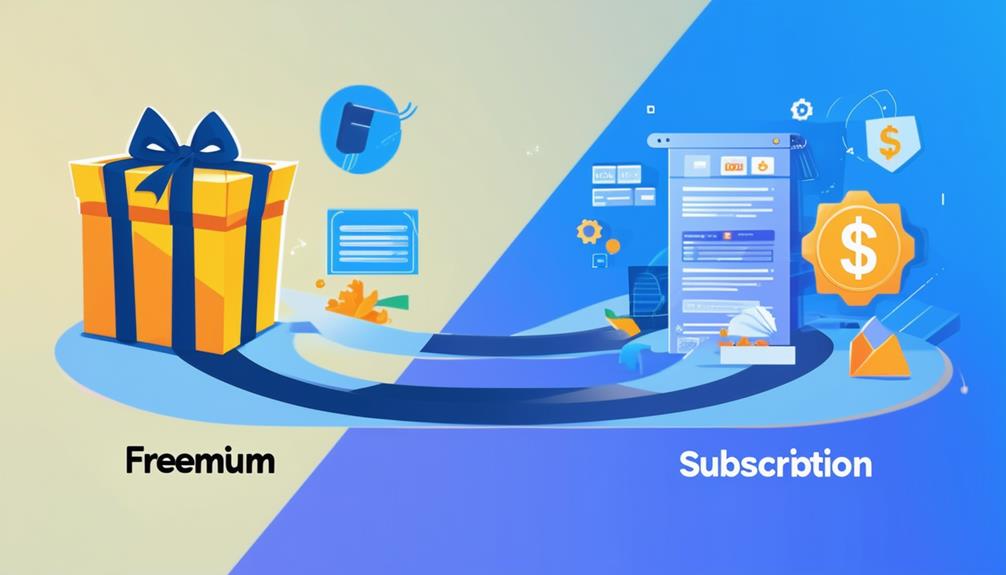
Evaluating SaaS pricing models necessitates an understanding of the differences between freemium and subscription approaches. Freemium models offer users access to basic features at no cost, thereby attracting a wider user base and allowing potential customers to try the product before committing financially. Conversely, subscription models ensure predictable revenue through regular payments and promote customer loyalty. Each strategy has distinct advantages and challenges, making the choice pivotal for your business's success. How do you determine which model best aligns with your goals and market dynamics? Let's explore further.
Key Takeaways
- Freemium models offer basic features for free, with premium features available for a fee.
- Subscription models provide continuous access to all features in exchange for recurring monthly or annual payments.
- Freemium models attract a large user base quickly, facilitating organic growth and upselling opportunities.
- Subscription models ensure predictable revenue and improved customer retention through long-term relationships.
- Choosing the appropriate model depends on the target market, product complexity, and revenue goals.
What Is Freemium?
Freemium is a pricing strategy where basic services are offered for free, while premium features require payment. This model allows users to access essential functionalities at no cost, facilitating product trials and increasing user adoption. By providing free basic services, companies can attract a larger user base, which opens up more opportunities for upselling premium features.
Popular SaaS companies like Dropbox and Spotify have successfully employed the freemium model. This strategy not only boosts customer acquisition but also enhances brand awareness. Users experience the core offering, often leading to higher engagement and a greater likelihood of upgrading to paid plans. However, effective monetization strategies are crucial to cover operational costs and ensure profitability.
The freemium model can generate revenue from a broad audience, but success hinges on striking the right balance between free and premium features. When executed correctly, it drives user engagement and loyalty, making it an effective tool for SaaS companies aiming for market expansion and sustainable growth.
What Is Subscription-Based Pricing?
Subscription-based pricing is a common model in the SaaS industry where customers pay a recurring fee, usually monthly or annually, for continuous access to software services. This model ensures predictable revenue for businesses and encourages customer retention through consistent value delivery.
One of the primary benefits of subscription-based pricing is its scalability. Customers can easily upgrade to higher tiers as their needs evolve, ensuring that their software usage aligns with their business requirements. This flexibility often leads to increased customer lifetime value, making it a popular choice for many SaaS companies.
However, managing customer commitment and reducing churn rates present ongoing challenges. To maintain long-term profitability, businesses must consistently deliver value and ensure high customer satisfaction. By focusing on these areas, companies can minimize the risk of customers canceling their subscriptions.
Pros and Cons of Freemium

For SaaS companies aiming to rapidly expand their user base, offering basic services for free can be a highly effective strategy. The Freemium Pricing Model enables you to attract a broad audience and enhance brand awareness without requiring an upfront cost from users. This approach can facilitate organic growth through word-of-mouth marketing. However, it's essential to weigh the pros and cons.
| Pros | Cons |
|---|---|
| Rapid user base growth | Balancing free and paid features |
| Enhanced brand awareness | Managing costs for free users |
| Upselling opportunities | Potentially low conversion rates |
| Organic growth | Difficulty in optimizing revenue streams |
| Strong value propositions | Challenges in effective monetization strategies |
Freemium models are particularly successful in quickly building a large user base, which is advantageous for upselling premium features and converting free users into paying customers. This model also aids in spreading brand awareness organically.
However, balancing the features between free and paid tiers can be challenging. Managing the costs associated with free users is another concern. Additionally, continuously optimizing revenue streams and developing effective monetization strategies are ongoing issues. Clear value propositions for paid features are crucial to converting users and ensuring the Freemium model's long-term success.
Pros and Cons of Subscription
The Freemium model aims for rapid user base expansion, whereas the subscription model offers SaaS companies the advantage of predictable revenue streams. With fixed monthly fees, you can more accurately forecast your income, aiding in budgeting and growth planning. Additionally, this model improves customer retention rates by fostering long-term relationships. When users commit to a subscription, they are more likely to continue using the service, increasing your customer lifetime value.
However, subscription models present challenges, particularly in managing churn rates. Users may cancel their subscriptions if they do not consistently perceive value in your service, affecting revenue stability. To mitigate this, investing in customer support and continuous product improvements is essential.
Choosing the Right Model
Selecting the right pricing model hinges on understanding your target market, product complexity, and revenue goals. When evaluating your options, you need to weigh the benefits of freemium models against subscription models.
Freemium models attract a broad user base by offering basic features for free, making them ideal if your target market includes users hesitant to pay upfront. This approach can serve as a gateway to upselling premium features, converting free users into paying customers over time.
On the other hand, subscription models provide more predictable revenue streams, which are crucial for long-term planning and stability. These models work well if your product complexity warrants ongoing value that customers are willing to pay for regularly. Understanding customer needs and their willingness to pay is vital when selecting between freemium and subscription pricing models.
Evaluate whether your product's features and benefits align more with a broad, accessible approach or a more exclusive, value-driven one. If your revenue goals prioritize rapid user growth, freemium might be the way to go. Conversely, if sustainability and predictable income are key, a subscription model is more suitable. Understanding SaaS pricing models thoroughly helps you make an informed decision tailored to your unique business needs.
Conclusion
Choosing between freemium and subscription models for your SaaS requires evaluating your goals and audience. Freemium models can accelerate user growth and enhance brand visibility, whereas subscription models offer consistent, predictable revenue and promote long-term customer loyalty. It's essential to consider your target market, product complexity, and revenue goals to align your features with the appropriate pricing strategy. Ultimately, the best choice depends on what aligns most closely with your business's unique needs and objectives.
Related posts