
Why Cloud Hosting Is Ideal for Growing Businesses

If you're navigating the complexities of a growing business, cloud hosting might be the solution you need. It offers unparalleled scalability and flexibility, enabling you to adjust resources according to demand without incurring significant costs.
This adaptability not only optimizes operations but also frees up time to focus on innovation. Moreover, enhanced security measures and collaboration tools allow your team to work more efficiently.
But how exactly does this translate into tangible benefits for your business? Delving into these aspects could uncover what you might be missing.
Scalability and Flexibility
Cloud hosting empowers your business to scale resources on-demand, enabling you to manage traffic spikes without significant infrastructure investments. This scalability is crucial for adapting to the unpredictable nature of customer demand. As your business grows or faces unexpected surges in traffic, you can swiftly allocate additional resources, ensuring smooth service continuity.
Additionally, cloud hosting offers flexibility, allowing you to customize your IT environment to meet current needs. Whether launching a new product or entering a new market, you can easily configure and adjust resources. This accelerates innovation, enabling the rapid deployment of new applications and services without the limitations of traditional hosting solutions.
Adopting cloud hosting also leads to substantial cost savings. With a pay-as-you-go pricing model, you only pay for the resources you use, eliminating the need for large upfront investments and reducing ongoing operational costs.
In a landscape where 90% of organizations utilize cloud services, leveraging scalability and flexibility through cloud hosting positions your business for sustainable growth and agility, ensuring you can adapt seamlessly to changing market demands.
Cost Efficiency
For growing businesses, leveraging cloud hosting can significantly enhance cost efficiency by removing the need for substantial upfront investments in IT infrastructure. This approach allows for efficient resource allocation and reduction of capital expenditures, contributing to better financial health. Pay-as-you-go pricing models ensure that you only pay for the resources you actually use, thereby minimizing operational costs and avoiding expenses associated with unused capacity.
Here's a quick comparison of traditional hosting versus cloud hosting:
| Aspect | Traditional Hosting | Cloud Hosting |
|---|---|---|
| Upfront Costs | High | Low |
| Payment Model | Fixed | Pay-as-you-go |
| Scalability | Limited | Dynamic |
| Maintenance Expenses | High | Low |
| Cost Savings (CIOs) | ~20% | ~50% |
The scalability of cloud services allows for the adjustment of resources based on demand, preventing unnecessary spending during low-usage periods. While there may be initial costs associated with cloud migration, these are often offset by long-term savings on maintenance and upgrades, resulting in significant financial benefits for your growing business.
Innovation Opportunities

Adopting cloud hosting unlocks numerous innovation opportunities, enabling rapid resource scaling and agile responses to market dynamics. Cloud services allow real-time infrastructure adjustments, ensuring optimal resource allocation to meet demand without waste. This adaptability significantly shortens the time-to-market for new products and services.
Additionally, incorporating AI and machine learning into cloud platforms enhances data analytics capabilities, providing actionable insights that shape your innovation strategies. This empowers you to test new concepts and technologies, fostering continuous improvement in your offerings.
Advanced cloud tools also propel creativity by encouraging boundary-pushing initiatives. Collaboration with geographically diverse teams brings varied perspectives, further driving innovation.
In today's fast-paced market, innovation is crucial for business growth. Cloud hosting provides the essential resources and tools to adapt and evolve, keeping you ahead of the competition. Leveraging these opportunities ensures your business not only survives but thrives in an ever-changing landscape.
Enhanced Collaboration
Enhanced collaboration becomes effortless when teams utilize cloud hosting, allowing seamless, real-time access to documents and data from anywhere.
With over 2.6 billion smartphone users leveraging cloud services, sharing information and working together is more accessible than ever, regardless of location. This flexibility boosts productivity and strengthens teamwork.
Here are four key benefits that cloud services offer for improved collaboration:
- Real-Time Document Access: Team members can edit and view documents simultaneously, eliminating version control issues.
- Centralized Data Storage: All essential data is stored in one place, making it easy to find and share information.
- Remote Work Capability: Employees can access crucial resources anytime, facilitating effective collaboration even when working remotely.
- Improved Communication: Cloud-based tools streamline interactions, making it easier to coordinate projects and enhance service delivery.
Improved Security Measures

Cloud hosting provides robust security measures to protect your business's sensitive data from breaches and unauthorized access.
Leading cloud service providers invest heavily in multi-layered security protocols, significantly enhancing data protection. Notably, 94% of businesses report improved security after transitioning to cloud services, underscoring the effectiveness of these measures.
Cloud solutions often include advanced encryption techniques, ensuring your data is securely stored and transmitted, protecting it from cyber threats and offering peace of mind.
Regular updates and maintenance from cloud service providers further strengthen security postures, safeguarding systems against emerging vulnerabilities and threats.
Moreover, compliance with stringent regulations like GDPR is more manageable in cloud environments. Approximately 91% of organizations find that cloud services facilitate meeting government compliance requirements, which is crucial for protecting sensitive information and avoiding costly penalties.
Simplified IT Management
Opting for cloud hosting significantly lowers IT overhead by delegating maintenance and security responsibilities to service providers. This optimized resource management allows you to swiftly scale your IT requirements, enabling your business to adapt quickly to market changes. With simplified infrastructure management, your focus can shift more towards growth and innovation.
Reduced IT Overhead
Many growing businesses find that embracing cloud hosting substantially reduces IT overhead by minimizing the need for costly on-premises hardware. By leveraging cloud computing, you can streamline your operations and focus on what truly matters.
Here are some ways cloud hosting enhances management efficiency:
- Lower Costs: Eliminate hefty capital expenditures on hardware and ongoing maintenance.
- Reduced Staffing Needs: Avoid hiring extra IT staff for routine maintenance, as cloud providers manage security and updates.
- Dynamic Scalability: Quickly adjust IT resources to meet changing demands without the headaches of upgrading physical infrastructure.
- Quick Deployment: Launch applications and services rapidly, allowing you to seize market opportunities swiftly.
With these benefits, reduced IT overhead not only saves money but also frees up resources for innovation and growth. Embracing cloud hosting enables your business to operate more efficiently and adapt to market changes with ease.
Streamlined Resource Allocation
Embracing cloud hosting not only reduces IT overhead but also optimizes resource allocation, simplifying IT management for your business. By offloading infrastructure maintenance to service providers, you can concentrate on core activities and growth strategies. Automated software updates and maintenance ensure your systems are always equipped with the latest security patches and features, reducing the burden on your IT staff.
Real-time monitoring and management tools in cloud environments enable quick responses to resource needs, optimizing performance without the complexities of traditional IT setups. Centralized dashboards from cloud providers make resource allocation straightforward, allowing you to manage your IT assets efficiently.
Furthermore, cloud hosting allows you to adjust resources dynamically on demand, promoting operational scalability and flexibility. This eliminates the need for substantial upfront investments in physical infrastructure, letting you scale resources as your business grows.
Diverse Service Models
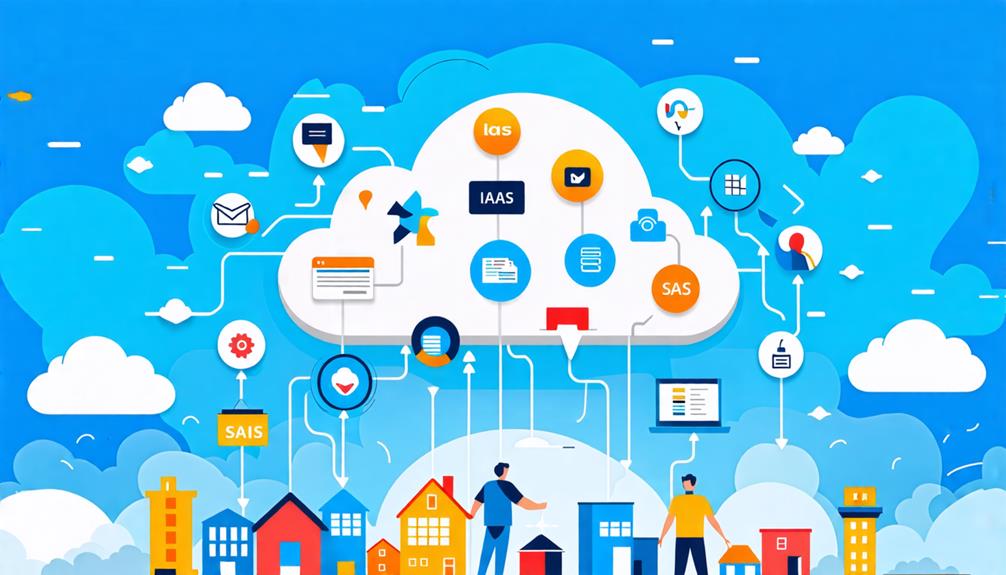
Cloud hosting offers diverse service models such as IaaS, SaaS, and PaaS, allowing you to choose the best solutions for your evolving business needs. These models provide the adaptability required as your requirements change. With 90% of organizations utilizing cloud services, selecting the right model is crucial.
Here are four reasons why diverse service models benefit businesses:
- Tailored Solutions: Align services directly with your operational objectives.
- Cost Efficiency: Pay-as-you-go pricing minimizes upfront costs, facilitating growth investment.
- Scalability: Easily adjust resources as your business expands or contracts.
- Hybrid Options: Combine public and private clouds for optimal data management and cost efficiency.
Cloud service providers increasingly offer multi-cloud strategies, leveraging the strengths of different models. This approach not only enhances performance but also fosters innovation.
Adopting these diverse service models positions your business for success in a dynamic environment.
Business Continuity Solutions
Effective business continuity solutions, particularly through cloud hosting, ensure your business can swiftly recover from disruptions. Robust disaster recovery options allow for quick data recovery—20% of cloud users are operational within four hours of an incident. This rapid recovery is crucial for maintaining operations and minimizing losses.
Cloud environments provide secure offsite backups, reducing the risk of data loss from hardware failures or local disasters. This setup enhances data security and accessibility, giving you peace of mind. Additionally, cloud services offer scalable recovery solutions that grow with your business, ensuring continuity regardless of changes.
Automatic software updates ensure you always have the latest security patches and features, minimizing downtime and operational risks. This proactive approach helps keep your business running smoothly during challenges.
Moreover, utilizing shared cloud resources not only secures your data but also reduces your carbon footprint, aligning your business continuity strategies with sustainability goals.
Adopting cloud hosting for business continuity is a strategic move, preparing you for any eventuality.
Industry Growth Projections

The cloud market is poised for significant expansion, with projections estimating its value will surge from $371 billion in 2020 to over $832 billion by 2025. This dramatic growth presents substantial opportunities for businesses like yours. As you weigh the benefits of cloud computing, it's evident that now is the ideal time to make the transition.
Consider these four compelling reasons to adopt cloud services:
- Widespread Adoption: Around 90% of organizations are already utilizing cloud services, indicating a strong industry shift towards this technology.
- Digital Transformation: Approximately 70% of companies prioritize cloud investments for their digital initiatives, ensuring they remain competitive in the evolving market.
- Multi-Cloud Strategies: 81% of organizations implement multi-cloud approaches, enhancing their operational flexibility and resilience.
- Hybrid Cloud Growth: The adoption of hybrid cloud models is expected to reach 57% by 2025, offering customizable solutions tailored to unique business requirements.
Given these robust industry growth projections, transitioning to cloud hosting isn't merely a trend—it's essential for your business's success.
By embracing cloud computing, you can position your business for growth, agility, and long-term sustainability.
Seize this opportunity to stay ahead in the competitive landscape.
Future Cloud Trends
As you look ahead, several key trends are set to shape the future of cloud computing and influence how businesses operate. The global cloud market is booming, projected to grow from $371 billion in 2020 to over $832 billion by 2025. This robust demand for cloud technology offers you a significant competitive advantage.
Adoption of hybrid cloud strategies is expected to reach 57% by 2025, allowing businesses to balance performance, cost, and security effectively. The integration of AI and machine learning into cloud services will enhance data processing capabilities, leading to faster decision-making. Additionally, edge computing is set to redefine service offerings, improving responsiveness to market changes.
Sustainability is also becoming crucial. Many businesses are prioritizing green technologies to reduce carbon footprints and promote corporate social responsibility. This shift will not only benefit the planet but also strengthen your brand's reputation.
Here's a quick overview of these trends:
| Trend | Impact on Business | Importance for Sustainability |
|---|---|---|
| Cloud Market Growth | Increased opportunities | Investment in green tech |
| Hybrid Cloud Adoption | Cost-effectiveness | Reduced resource waste |
| AI Integration | Improved decision-making | Energy-efficient solutions |
| Edge Computing | Faster response times | Lower latency, less energy |
| Sustainable Practices | Improved brand image | Corporate responsibility |
These trends highlight the evolving landscape of cloud computing and underscore the importance of adopting forward-thinking strategies to stay competitive and sustainable.
Conclusion
In today's fast-paced digital environment, cloud hosting is transformative for growing businesses. It offers the scalability and cost efficiency needed to adapt and thrive. Enhanced collaboration and security measures allow you to focus on innovation while ensuring smooth operations.
By embracing diverse service models and robust disaster recovery solutions, you can maintain business continuity. Staying updated with cloud technology trends will position your business for sustainable success.