
What Is the Difference Between Cloud ERP and SaaS Erp?

When deciding between Cloud ERP and SaaS ERP, it's crucial to understand their distinct impacts on your business. Both are cloud-based, but Cloud ERP provides extensive customization and infrastructure options through IaaS and PaaS, allowing for tailored solutions to meet specific business needs. In contrast, SaaS ERP operates on a subscription model with pre-configured applications, making it simpler and more cost-effective to implement. This distinction influences costs, implementation processes, and overall adaptability. How do you determine which is right for you? Let's delve deeper.
ERP Overview
Enterprise Resource Planning (ERP) software is essential for integrating various business functions such as accounting, inventory management, human resources, and customer relationship management into a unified system. By centralizing these processes, ERP systems enhance organizational efficiency and improve decision-making.
When exploring ERP solutions, you'll come across terms like Cloud ERP and SaaS ERP. Cloud ERP refers to ERP software hosted on cloud platforms, accessible via the internet. This model eliminates the need for on-premises hardware and extensive IT management, simplifying deployment and reducing costs.
SaaS ERP, a specific type of Cloud ERP, is managed by a third-party vendor and typically follows a subscription model. This approach offers predictable costs and automatic updates. However, not all Cloud ERP solutions are SaaS. Cloud ERP can also include deployment models such as Infrastructure as a Service (IaaS) and Platform as a Service (PaaS), providing different levels of customization to meet unique business requirements.
Selecting the appropriate ERP solution requires a thorough understanding of your business processes and user needs. Whether you choose Cloud ERP or SaaS ERP, ensure it aligns with your goals for efficiency, scalability, and customization.
Cloud ERP Definition
A Cloud ERP system is an enterprise resource planning solution hosted on remote servers, accessible via the internet. This cloud-based approach facilitates collaboration and data sharing across various locations, eliminating the need to maintain your own hardware and software infrastructure. Consequently, your IT team can prioritize strategic initiatives over routine maintenance tasks.
Cloud ERP solutions offer flexibility through multiple delivery models, including Software as a Service (SaaS), Infrastructure as a Service (IaaS), and Platform as a Service (PaaS). These options allow you to choose the most suitable model to meet your specific needs. A significant advantage of cloud ERP is the automatic updates and upgrades managed by the vendor, ensuring you always have access to the latest features and security measures with minimal effort.
Scalability is another key benefit. As your business grows or experiences seasonal fluctuations, you can easily adjust resource usage to meet changing demands. This adaptability makes cloud ERP an efficient choice for managing business data and operational processes.
SaaS ERP Definition

Understanding Cloud ERP lays the foundation for grasping what SaaS ERP entails. SaaS ERP, short for Software as a Service ERP, is a type of cloud-based ERP software hosted and maintained by a third-party vendor, eliminating the need for on-premise installation and management. This setup is particularly appealing for businesses aiming to reduce the burden on their IT departments.
Accessing SaaS ERP systems is straightforward—you can use any web browser, allowing for flexible and convenient use from any device with an internet connection. Typically, SaaS ERP is offered on a subscription model, so you only pay for active users, making costs predictable and scalable.
One of the standout features of SaaS ERP solutions is the automatic updates managed by the vendor. You always have access to the latest functionalities and security measures without any extra effort. While SaaS ERP is a specific kind of cloud ERP solution, it's crucial to note that not all cloud ERP systems fall under the SaaS category, as some may include supplementary services like Infrastructure as a Service (IaaS) or Platform as a Service (PaaS).
Cost Implications
When comparing costs, you'll find that cloud ERP often features varied pricing structures like pay-as-you-go, while SaaS ERP usually offers predictable monthly subscriptions. Initial expenses for cloud ERP can be steep due to on-premise infrastructure needs, whereas SaaS ERP minimizes upfront costs by eliminating hardware purchases. Over time, hidden fees in cloud ERP related to maintenance and updates can add up, but SaaS ERP generally offers more transparent and consistent pricing.
Upfront Cost Comparison
Comparing upfront costs between Cloud ERP and SaaS ERP reveals significant differences that can impact your financial planning. Cloud ERP systems often require an initial investment in infrastructure and licensing fees, which can be substantial. This is primarily due to the need for physical servers and IT resources, leading to higher upfront costs.
In contrast, SaaS ERP operates on a subscription model, resulting in lower initial costs since there is no need to purchase hardware. The pay-as-you-go pricing model of SaaS ERP allows for more effective cash flow management, reducing the financial burden at the outset. This model also leads to predictable monthly operating expenses, making budgeting easier.
On the other hand, Cloud ERP might introduce variable costs based on usage and ongoing maintenance requirements, adding an element of financial risk.
Long-term Expense Variations
Long-term expense variations between Cloud ERP and SaaS ERP can significantly influence your financial strategy. Opting for SaaS ERP involves a subscription model with predictable monthly costs, simplifying budgeting and resulting in lower upfront expenses since there's no need for substantial investments in hardware or extensive IT infrastructure. However, be mindful that long-term costs may accumulate due to ongoing subscription fees and potential charges for additional features.
Conversely, cloud ERP software often provides a more flexible pricing model, allowing you to adjust services based on specific needs, which can lead to economic advantages. For both SaaS and cloud ERP, the total cost of ownership is generally lower over time, as vendors handle hosting, implementation, and maintenance. This can substantially reduce hidden costs associated with traditional on-premise systems, such as maintenance and upgrades.
Understanding these variations enables you to accurately assess long-term costs. While SaaS ERP's subscription model might result in higher cumulative expenses, cloud ERP's flexible pricing could offer cost savings tailored to your needs. Both models present economic benefits by minimizing hidden costs, helping you achieve a more predictable and manageable financial plan.
Hidden Cost Considerations
When evaluating the financial implications of Cloud ERP and SaaS ERP solutions, it's crucial to consider hidden costs that may arise. While cloud ERP systems often have lower upfront costs compared to on-premise solutions, ongoing expenses such as data migration, integration, and potential hidden fees for additional features or support can significantly impact your total cost of ownership (TCO).
Similarly, SaaS ERP solutions may appear cost-effective initially due to their subscription model. However, long-term costs can accumulate, particularly as your user base grows and you require more functionalities. It's essential to thoroughly assess the full pricing structures because hidden costs may emerge from maintenance, upgrades, and compliance requirements.
Unexpected expenses can also arise from infrastructure services for cloud ERP systems. As your usage scales, so do the costs, making it vital to monitor these charges closely. Additionally, be wary of vendor lock-in, which can restrict your flexibility and result in higher costs when switching providers.
Implementation Process
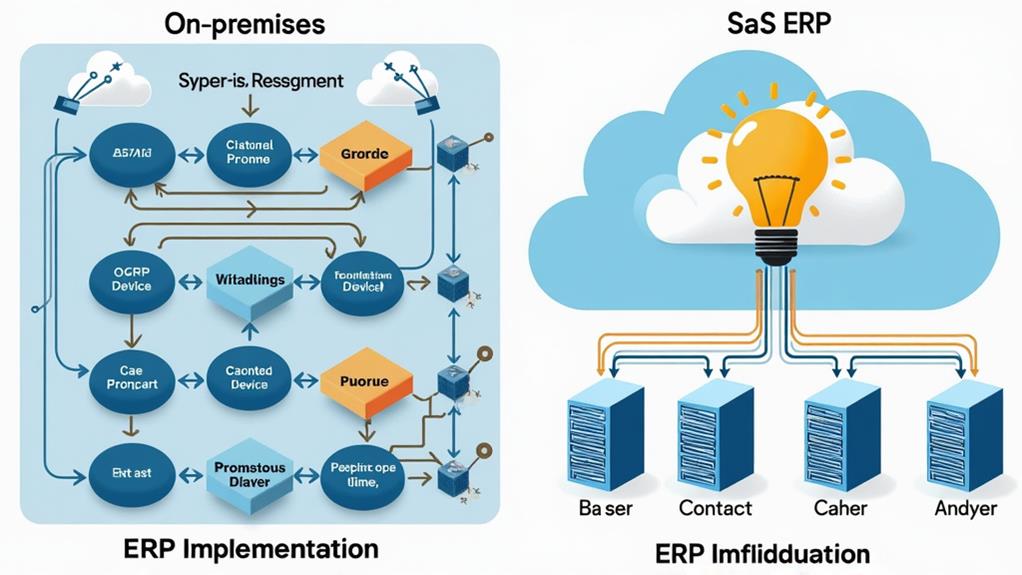
The implementation process for Cloud ERP and SaaS ERP significantly influences how swiftly your business can benefit from these systems. Cloud ERP requires setting up infrastructure and services tailored to your specific business needs, often demanding extensive IT resources for configuration and customization. Conversely, SaaS ERP implementation is generally faster, utilizing pre-configured applications managed by the vendor, which reduces the need for substantial in-house IT involvement due to vendor-managed updates and maintenance.
Data migration and integration also differ between the two. Cloud ERP may require considerable time for these tasks, whereas SaaS ERP typically includes built-in integrations, streamlining the process. The extensive customization options in Cloud ERP can lead to longer deployment times, while SaaS ERP is often ready to use shortly after subscription.
Training and onboarding are additional areas of difference. Cloud ERP implementations might necessitate more comprehensive training due to their complexity. In contrast, SaaS ERP solutions, with their intuitive user interfaces, often facilitate quicker user adoption. By understanding these differences, you can better prepare for a smoother transition and maximize the benefits of your chosen ERP system.
Customization Options
When evaluating customization options, cloud ERP solutions provide significant flexibility, particularly with IaaS and PaaS models, enabling you to tailor systems to specific requirements. Conversely, SaaS ERP generally offers limited customization, adhering to predefined configurations to facilitate system maintenance. While cloud ERP customization can address unique needs, it often entails higher costs and increased implementation complexity.
Levels of Customization
Choosing between cloud ERP and SaaS ERP often hinges on the customization options each provides. Cloud ERP solutions, especially those leveraging IaaS or PaaS models, offer greater customization potential, enabling you to tailor both infrastructure and software to meet your specific needs. This flexibility is ideal for businesses with unique requirements and specialized business processes, allowing you to adjust workflows and deployment options for a more personalized fit.
Conversely, SaaS ERP typically offers limited customization options, designed as a one-size-fits-all solution to meet the general needs of its target industry. While this can be sufficient for many organizations, those with rapidly changing requirements might find SaaS ERP less accommodating. Additionally, any customization in a SaaS ERP system may incur extra fees, potentially limiting the extent to which you can modify the software to suit your operations.
When evaluating cloud ERP versus SaaS ERP, consider the level of customization your business requires. If your processes are highly specialized or frequently changing, the flexibility of cloud ERP could provide more value, despite the more complex deployment options.
Cost Implications
When deciding between Cloud ERP and SaaS ERP solutions, the cost implications of customization play a crucial role. Cloud ERP offers a broader range of services, including infrastructure and platform options, enabling extensive customization. However, this flexibility comes with higher initial costs and ongoing expenses for development and maintenance. These tailored solutions align closely with specific operational needs but require significant long-term investments.
In contrast, SaaS ERP follows a simpler subscription model, resulting in lower initial costs. This approach, however, limits customization options. SaaS ERP solutions are typically standardized and predefined by the vendor to meet common industry requirements. This one-size-fits-all strategy may necessitate compromises on certain functionalities, as extensive customization is not usually available.
If your business demands a high degree of customization, Cloud ERP may be more suitable despite the higher costs, offering a system tailored to your unique needs. Conversely, if you seek a more cost-effective solution with lower initial expenses and can work within predefined configurations, SaaS ERP could be the better choice.
Implementation Complexity
When examining implementation complexity, Cloud ERP solutions are noteworthy for their extensive customization options. Utilizing Infrastructure as a Service (IaaS) or Platform as a Service (PaaS) models, Cloud ERP allows for tailored configurations that align with your specific business needs. However, this flexibility often necessitates substantial infrastructure setup and integration efforts, making the process complex and time-consuming.
In contrast, SaaS ERP generally offers fewer customization features. Designed to cater to the general needs of various industries, SaaS ERP follows a one-size-fits-all model. While this approach may not fully address your unique operational requirements, it does enable quicker deployment due to its pre-configured settings, thereby reducing overall implementation complexity.
When deciding between Cloud ERP and SaaS ERP, consider your organization's specific customization requirements and the available IT resources. If your business demands extensive customization and specialized functionalities, Cloud ERP may be more appropriate. Conversely, if you seek a solution with minimal setup and faster deployment, SaaS ERP could be the better choice. Evaluating these factors will assist you in selecting the right ERP solution for your organization.
Scalability and Flexibility
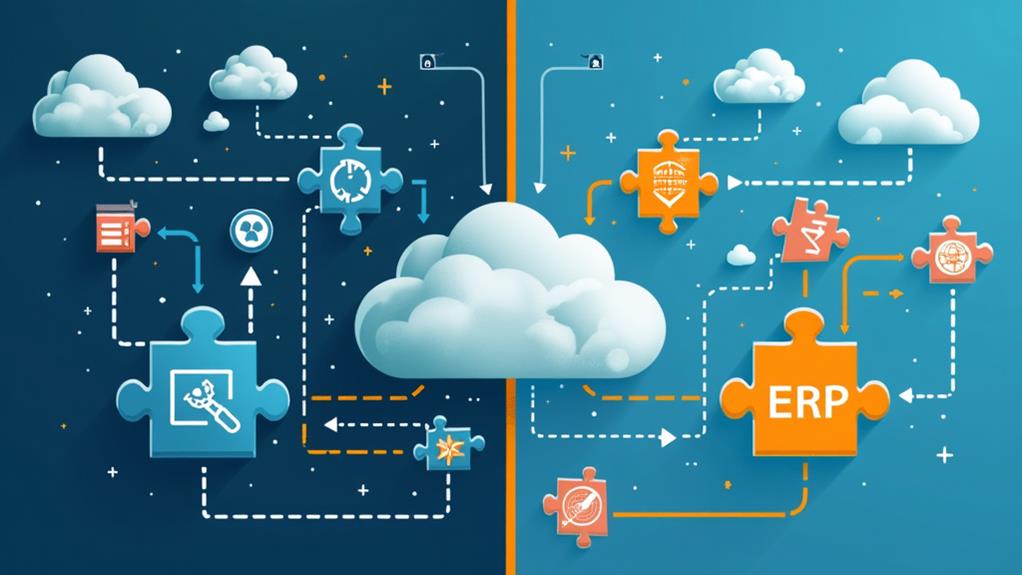
When comparing Cloud ERP and SaaS ERP, scalability and flexibility are critical factors that can significantly impact your business. Cloud ERP offers extensive scalability, allowing you to adjust resources based on demand, which is ideal for businesses experiencing rapid growth. It also offers more customization options, enabling you to tailor the system to meet specific operational needs, which can be crucial for certain industries.
Conversely, SaaS ERP excels in flexibility and ease of use. The vendor manages automatic scaling, enabling you to quickly adjust user counts without significant IT intervention. This is particularly advantageous for businesses with fluctuating demands. Additionally, SaaS ERP typically operates on a subscription-based model, maintaining predictable costs and offering financial flexibility, which is valuable as your business grows or contracts.
However, SaaS ERP may have limited customization options compared to Cloud ERP. If your business requires highly specific configurations, Cloud ERP might be the better choice despite the potentially higher complexity in deployment. In summary, if you need rapid deployment and scalable solutions with predictable costs, SaaS ERP is a strong contender. For tailored scalability and extensive customization, Cloud ERP is likely the better fit.
Data Security
Data security is a crucial factor when choosing between Cloud ERP and SaaS ERP solutions. Cloud ERP vendors typically implement robust security measures, ensuring compliance with industry standards and regulations. This includes encryption, multi-factor authentication, and regular security updates to safeguard your data. However, it is essential to thoroughly evaluate the vendor's security capabilities and practices to ensure they meet your organization's specific requirements.
Similarly, SaaS ERP solutions rely heavily on the provider's security protocols, which can vary significantly. This variability can affect overall data protection, making it imperative to meticulously assess each vendor's security measures before making a decision. In both Cloud ERP and SaaS ERP solutions, the responsibility for data security shifts from your organization to third-party vendors, necessitating careful consideration.
Data sovereignty is another critical factor, especially for cloud ERP solutions. Regulations may mandate that your data remains within specific geographic borders, and non-compliance can result in significant legal consequences. Therefore, it is vital to ensure that both Cloud ERP and SaaS ERP providers adhere to these regulatory requirements.
Maintenance and Updates
Maintaining and updating ERP systems is crucial to business operations. For SaaS ERP solutions, the vendor manages all maintenance and updates. This ensures you always have access to the latest features without any effort on your part. These updates typically occur quarterly, minimizing disruptions to daily operations and allowing your internal IT teams to focus on strategic initiatives instead of routine system upkeep.
On the other hand, maintaining Cloud ERP systems, especially those based on IaaS or PaaS models, requires more involvement from your internal IT resources. While you have greater control and can customize maintenance plans to suit your needs, this also means you are responsible for managing updates and keeping the system current.
Choosing the Right ERP
Selecting the right ERP system for your organization requires a thorough understanding of your specific business needs and long-term objectives. When comparing SaaS ERP and cloud ERP, it is crucial to evaluate factors such as customization, deployment models, cost implications, and scalability.
SaaS ERP, a subset of cloud ERP, provides software as a service on a subscription basis. It generally offers limited customization but benefits from lower upfront costs and predictable operating expenses. The vendor manages everything, including updates and scaling, making it ideal for businesses that prefer a hands-off approach. This model is suitable for organizations seeking cost efficiency and simplicity in their ERP systems.
Conversely, cloud ERP encompasses a broader range of services, including Infrastructure as a Service (IaaS) and Platform as a Service (PaaS), offering greater flexibility in deployment and customization. If your business requires highly tailored infrastructure and software configurations, a cloud ERP solution may be more appropriate. Although it may involve higher initial investments and require you to manage your own scaling processes, it provides unparalleled control and customization.
Ultimately, your choice should align with your organization's specific requirements. Assess your business needs, desired level of customization, and long-term scalability to determine whether SaaS ERP or cloud ERP is the best fit.
Related posts