
What Is Saas in Simple Terms?

Imagine accessing powerful software without the hassle of installation or maintenance. That's what SaaS, or Software-as-a-Service, offers. Instead of buying software outright, you subscribe to it and use it over the internet. This model eliminates large upfront costs and constant updates, as the service provider handles everything. Think of tools like Gmail, Salesforce, or Zoom—each enhances your productivity without IT headaches. But what are the trade-offs, and how does SaaS compare to other software models? Let's explore the details and understand why SaaS is transforming the digital landscape.
Definition and Basics
SaaS, or Software-as-a-Service, is a cloud-based model that allows users to access software applications over the internet without needing to install them locally. Instead of purchasing software outright, users pay a subscription fee, which can be monthly or annual. This subscription-based pricing model makes SaaS appealing to both individuals and businesses due to its cost-effectiveness.
In a SaaS setup, the service provider handles all aspects of the service, including updates, security, and infrastructure maintenance. This relieves users of maintenance responsibilities. Well-known SaaS applications include Gmail for email, Salesforce for customer relationship management, Dropbox for cloud storage, and Microsoft 365 for office productivity.
Accessing these applications is straightforward; an internet connection and a web browser are all you need. This cloud-based approach ensures you can use the software from virtually anywhere, facilitating seamless data access and collaboration. SaaS is designed to be scalable, adapting to your growing needs.
Given its convenience and efficiency, the global SaaS market is projected to reach approximately $623 billion by 2023. The rapid adoption of SaaS across various industries underscores its significant impact.
Key Benefits
Opting for SaaS eliminates the need for substantial upfront investments in hardware and software, offering instead a subscription-based model that is financially manageable. It also enhances collaboration by allowing your team to access applications and data in real-time from any location with an internet connection. These advantages make SaaS a compelling choice for businesses aiming to optimize their resources and increase operational efficiency.
Cost Savings
By leveraging Software as a Service (SaaS), businesses can achieve substantial cost savings by eliminating the need for significant upfront investments in hardware and software. One primary advantage is the initial cost savings from not having to purchase expensive hardware or software licenses. Instead, subscription-based pricing models enable you to pay only for the services you actually use. This approach alleviates the financial burden associated with traditional software purchases, freeing up capital for other critical business areas.
SaaS solutions also reduce IT overhead costs since providers handle updates and maintenance. This allows your IT team to focus on strategic projects rather than routine maintenance tasks. Additionally, as your business grows, the scalable services offered by SaaS let you easily add or remove features, ensuring you only pay for what you need at any given time. This scalability contributes to lower operational expenses, enhancing overall cost efficiency.
Enhanced Collaboration
Beyond cost savings, SaaS platforms significantly enhance collaboration capabilities, boosting team productivity. With cloud-based software, team members can collaborate in real-time, working on the same document or project from different locations. This is especially advantageous for remote teams, ensuring everyone remains aligned regardless of their geographic location.
Tools like Google Workspace and Microsoft 365 offer built-in collaboration features such as chat and comment sections, facilitating seamless communication and feedback. This streamlines discussions, makes it easy to track changes, and enhances overall efficiency. Additionally, the cloud-based nature of SaaS ensures that all users have access to the latest versions of documents and software, eliminating version control issues and reducing confusion.
Moreover, SaaS platforms often integrate with other tools and services, creating an ecosystem that supports collaborative workflows. This integration enhances coordination and simplifies project management by consolidating various tasks in one platform. Fundamentally, SaaS provides the necessary infrastructure to boost productivity and support cohesive, efficient teamwork.
Common Drawbacks

When using SaaS, you might encounter security and compliance challenges since your data is stored on third-party servers, which may not always have the strongest protection. Furthermore, the risk of vendor lock-in means switching providers can become difficult due to data migration issues and proprietary formats. These drawbacks can pose significant risks and limitations for your business.
Security and Compliance
SaaS solutions often store sensitive data on external servers, raising significant concerns regarding data security and potential breaches. Ensuring data security and compliance necessitates a balance of trust and rigorous oversight. Your SaaS provider should implement robust security measures, including strong encryption and access controls, to safeguard your data. Additionally, it is crucial to understand and manage data handling practices to comply with regulatory requirements like GDPR and HIPAA.
Key Considerations:
- Data Security: Ensure your SaaS provider uses advanced encryption and access controls to protect sensitive information.
- Compliance: Both you and your SaaS provider must understand and adhere to regulatory requirements, ensuring data handling practices meet necessary standards.
- Security Measures: Regular audits and compliance checks are essential to maintain the integrity and security of your data.
- Third-Party Providers: Relying on these providers can introduce vulnerabilities, as you may have limited visibility over their security practices.
- Data Integrity: Complex data migration processes can jeopardize data integrity and compliance, so careful planning and execution are crucial.
Vendor Dependency Issues
Relying on a single SaaS provider can expose your business to several significant challenges. One major issue is vendor lock-in, where switching providers becomes difficult and costly due to data migration and compatibility problems. This dependency limits your flexibility and can stifle innovation if your current provider isn't meeting your evolving needs.
Vendor dependency also means you're at the mercy of your provider for software maintenance and updates. If they experience technical issues or outages, your business operations could suffer. Therefore, it is crucial to thoroughly understand and negotiate service level agreements (SLAs) to guarantee uptime assurances and recourse options in case of failures.
Data security and compliance are other pressing concerns. When outsourcing control to a third-party vendor, you are trusting them to implement robust security measures and adhere to relevant regulations. Any lapse on their part could expose your data to risks and legal complications.
SaaS Examples
Popular applications exemplify the power and convenience of Software-as-a-Service (SaaS). Leveraging cloud computing, SaaS applications are transforming how individuals and businesses handle various tasks, from email services and customer relationship management (CRM) to video conferencing and cloud storage. For instance, with an internet connection, you can access Gmail, a widely used email service, without installing any software locally.
Consider these examples:
- Gmail: Accessible via the internet, this email service offers a seamless experience without the need for local installations.
- Salesforce: As a leading CRM platform, Salesforce helps businesses manage customer interactions, track sales, and analyze data effortlessly.
- Zoom: Renowned for its video conferencing capabilities, Zoom enables virtual meetings and webinars from any location, using any device.
- Dropbox: This cloud storage solution allows users to store, share, and access files online, eliminating the need for physical storage devices.
- Shopify: Ideal for e-commerce operations, Shopify empowers users to create and manage online stores without requiring extensive technical skills.
These SaaS applications illustrate the flexibility and efficiency of software as a service, making it easier for individuals and businesses to stay connected and productive in today's online environment.
Saas Vs. Other Models
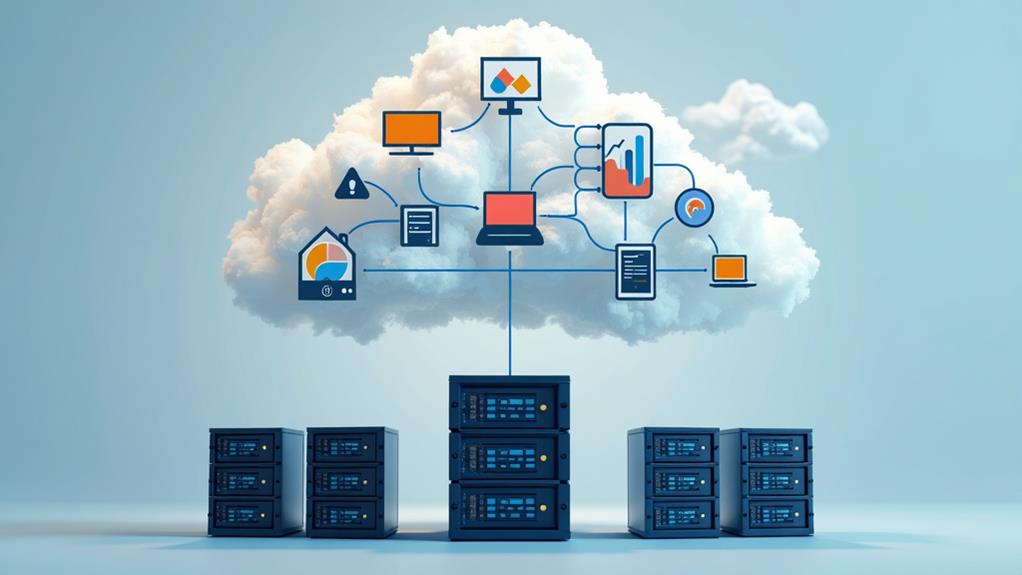
When comparing software delivery models, it's essential to understand their differences and unique advantages. SaaS, IaaS, and PaaS each offer distinct solutions depending on your needs.
SaaS (Software as a Service) delivers fully managed software applications over the internet, allowing you to access them through web browsers without worrying about infrastructure. It's subscription-based, meaning you pay regularly for continued access. SaaS applications run on cloud servers, providing automatic updates and maintenance by the provider. However, SaaS usually has limited customization options compared to other models.
IaaS (Infrastructure as a Service) provides virtualized computing resources. With IaaS, you manage cloud servers and infrastructure yourself, offering more flexibility but requiring more technical expertise.
PaaS (Platform as a Service) sits between SaaS and IaaS, providing tools for application development without needing to manage the underlying hardware. This middle-ground approach allows developers to focus on building applications while the platform handles the infrastructure.
While SaaS focuses on delivering managed software with ease of use, IaaS and PaaS offer greater control and customization options. IaaS is ideal if you need full control over your infrastructure, while PaaS supports streamlined application development without the hassle of managing hardware. Each model has its unique advantages, so your choice depends on your specific requirements.
Future Trends
Understanding the differences between SaaS, IaaS, and PaaS models highlights how each fits unique business needs. As you look to the future trends in the SaaS market, several exciting developments stand out.
Firstly, the SaaS market is expected to soar, reaching $623 billion by 2023, driven by businesses seeking flexibility and cost savings. One key trend is the rise of vertical SaaS solutions, which are specialized applications tailored for niche industries, enhancing both functionality and user experience.
Artificial intelligence (AI) and machine learning (ML) will greatly impact SaaS by integrating improved automation capabilities and robust data analytics into SaaS applications. Furthermore, multi-cloud strategies are becoming more common, allowing businesses to optimize resources and maintain flexibility by using multiple SaaS providers.
Data security and compliance measures are also set to become more essential. As businesses prioritize the protection of sensitive information, there will be a greater emphasis on robust data security protocols within cloud-based models.
- SaaS market growth
- Vertical SaaS solutions
- AI and ML integration
- Multi-cloud strategies
- Enhanced data security and compliance
These trends will shape the future of SaaS, offering powerful tools and capabilities for business applications.
Related posts