
Understanding the Basics of Cloud Hosting Infrastructure

When discussing cloud hosting infrastructure, it's essential to understand how it integrates physical and virtual resources to deliver fundamental computing services over the internet.
Managed by industry leaders like AWS and Microsoft Azure, this infrastructure encompasses various components, such as virtual machines and storage solutions, designed for scalability and security.
However, grasping these elements is just the start. Exploring different delivery models, such as Infrastructure as a Service (IaaS) and Platform as a Service (PaaS), can significantly impact your business outcomes.
Adopting best practices ensures you maximize your investment and enhance operational efficiency. Choices in cloud infrastructure profoundly influence your business's performance and agility.
Overview of Cloud Infrastructure
Cloud infrastructure integrates both physical and virtual resources, allowing access to computing services over the internet without relying on on-premises hardware. This infrastructure is managed by cloud service providers (CSPs) such as Amazon Web Services, Microsoft Azure, and Google Cloud, offering subscription-based access to a variety of computing resources.
At its core, cloud infrastructure comprises essential components like virtual machines (VMs) that facilitate efficient resource utilization and diverse storage solutions supporting various data types. These resources enable you to scale operations in response to fluctuating demands, thereby optimizing performance and cost efficiency.
Networking components are pivotal for ensuring seamless communication and resource sharing across your organization.
Additionally, robust security measures are critical; CSPs implement data encryption, access controls, and compliance protocols to safeguard sensitive information.
This cloud infrastructure ecosystem ensures semantic interoperability, enabling different systems and applications to work together effectively. The trustworthiness of these services is maintained through stringent security practices and regulatory compliance.
Key Components of Cloud Hosting
Understanding the key components of cloud hosting infrastructure helps you realize how these elements work together to deliver scalable and efficient computing resources. At the core, you'll find physical servers, storage devices, and networking components.
Virtualization technology is crucial, enabling multiple virtual machines to run concurrently on a single server, thereby optimizing resource usage within cloud environments.
Storage devices are categorized into block storage, file storage, and object storage, each designed for specific data management needs. Networking components are fundamental for resource sharing and communication, allowing users to connect across public, private, and hybrid networks seamlessly.
To protect your data and resources, security measures such as firewalls and intrusion detection systems are essential. These protections guard against unauthorized access and mitigate cyber threats that could compromise your cloud hosting environment.
Cloud Infrastructure Delivery Models
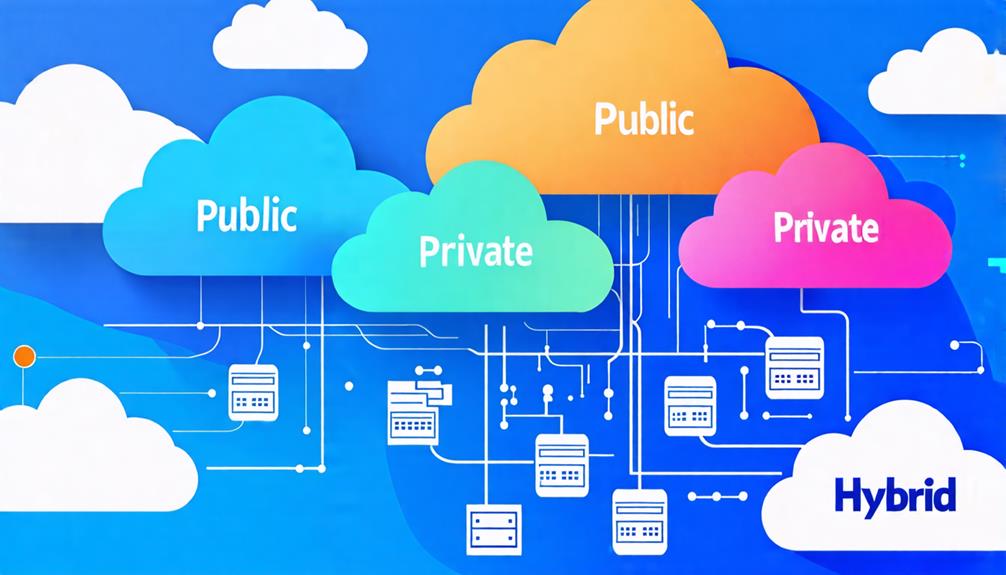
Different cloud infrastructure delivery models cater to diverse business needs, offering flexibility and efficiency in managing IT resources. Each model provides unique advantages tailored to specific requirements:
- Infrastructure as a Service (IaaS): This model offers virtualized computing resources on a subscription basis, allowing you to rent servers, storage, and networking as needed without heavy upfront investments. You retain control over the operating systems, applications, and middleware while the cloud provider manages the hardware and virtual machine infrastructure.
- Platform as a Service (PaaS): PaaS provides a comprehensive development environment for building, testing, and deploying applications. You can focus on development and application management while the cloud service provider handles the underlying infrastructure, including servers, storage, and networking, as well as middleware and runtime.
- Software as a Service (SaaS): SaaS delivers fully functional applications via the internet, enabling you to access software like Gmail or Office 365 without the need for hardware or software installations. The cloud provider handles all aspects of application management, including updates, security, and infrastructure.
- Hybrid Cloud: This model combines public and private cloud resources, allowing you to leverage the scalability and cost-efficiency of public clouds while maintaining control over sensitive data and critical applications in private clouds. Hybrid cloud solutions facilitate workload portability, orchestration, and management across multiple environments.
Choosing the right cloud infrastructure delivery model can streamline your operations and enhance your cloud hosting experience.
Therefore, it's crucial to carefully evaluate each option based on your specific business needs and objectives.
Benefits and Challenges
Embracing cloud hosting infrastructure offers a mix of significant benefits and notable challenges that organizations must navigate carefully.
| Benefits | Challenges |
|---|---|
| Cost Efficiency | Vendor Lock-in |
| Flexibility | Data Breaches |
| Scalability | Service Downtimes |
| Enhanced Security | Compliance Issues |
One of the most appealing advantages is cost efficiency, enabling organizations to reduce upfront hardware investments and pay only for the resources they use. Flexibility and scalability allow for quick adjustments in resource allocation to meet changing demands without the constraints of physical infrastructure. Enhanced security measures, including tools like firewalls and encryption, help protect sensitive data, but vigilance against potential data breaches remains crucial.
However, challenges exist. Vendor lock-in can complicate migration to different providers, making it difficult to adapt as needs change. Service downtimes, although generally minimized by high-availability infrastructure, can still disrupt operations. Compliance issues may also arise, requiring organizations to meet various regulatory standards and ensuring data protection. Balancing these benefits and challenges is essential for maximizing the advantages of cloud hosting while mitigating its risks.
Best Practices for Security

Balancing the benefits and challenges of cloud hosting requires a strong focus on security best practices to protect sensitive data and maintain operational integrity. Implementing these strategies can significantly reduce risks associated with data breaches and unauthorized access.
- Multi-Factor Authentication (MFA): Implement MFA to ensure users provide multiple verification factors before accessing cloud services. This significantly enhances protection against unauthorized access.
- Encryption: Encrypt sensitive data both at rest and in transit. This is crucial for safeguarding information from data breaches, which affect nearly half of all organizations.
- Regular Security Audits and Vulnerability Assessments: Conduct these assessments routinely. They help identify potential weaknesses in your cloud infrastructure, minimizing the risk of human error—a factor in 95% of cybersecurity incidents.
- Security Awareness Training: Invest in training programs for your staff. This education reduces risks associated with human error and fosters a culture of security mindfulness.
Conclusion
To summarize, understanding the fundamentals of cloud hosting infrastructure is essential for making well-informed decisions about your business's IT requirements. By comprehending its core components and various delivery models, you can leverage its advantages while addressing potential challenges.
Implementing robust security practices will safeguard your data and enhance performance. Adopting cloud technology not only boosts scalability but also prepares your business for future growth in an increasingly digital landscape.