
Smart Home Monitoring: Which Problems Can Sensors Catch Early?
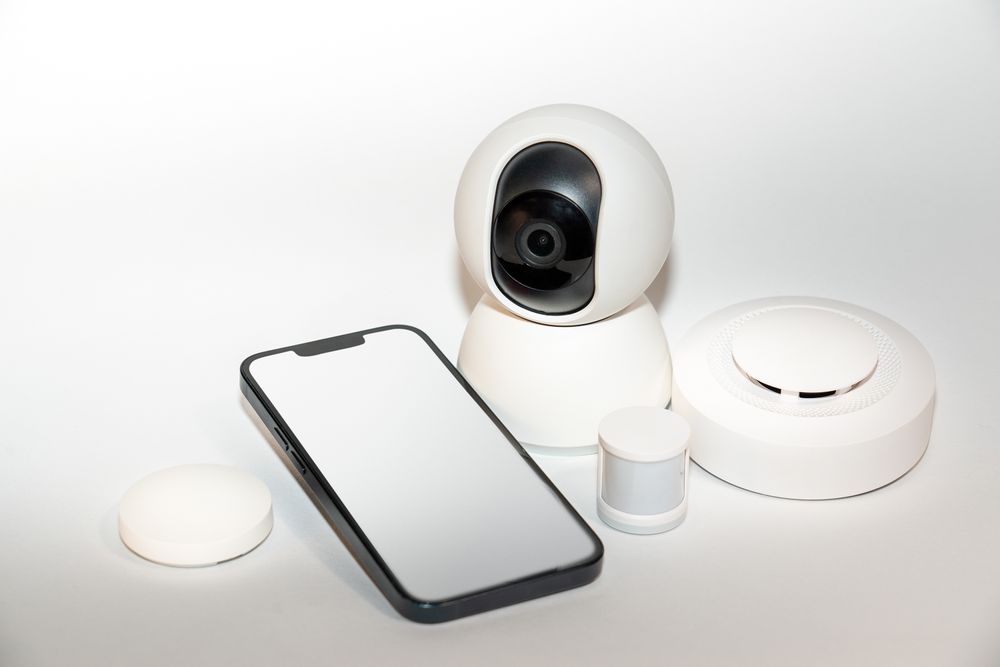
Home monitoring technology can give homeowners an earlier indication that something may be changing behind the scenes. In some cases, that early warning can make it easier to investigate the issue before deciding whether an electrician or another professional needs to be called.
How A Smart Home Monitoring System Works
Smart home monitoring uses connected sensors and devices to track conditions inside a home and identify changes that may deserve attention. Depending on the system, it may monitor water flow, moisture, temperature, humidity, electrical use, HVAC operation, doors, windows, smoke, carbon monoxide, or other conditions.
A sensor begins by measuring a physical condition. A leak detector may sense moisture on the floor, for example, while a whole-home water monitor may measure flow rate and duration. The monitoring platform then compares those readings with preset limits, learned usage patterns, or rules established by the homeowner.
The important part is not the sensor reading itself. A temperature sensor reporting 54°F, a flow meter recording 0.3 gallons per minute, or an energy monitor measuring 900 watts is simply producing data. The smart home monitoring system becomes useful when it adds context.
Systems generally create warnings in several ways. A threshold alert is triggered when a measurement crosses a preset limit, such as a pipe-area temperature falling below a chosen temperature. A duration alert considers how long a condition continues, such as water flowing continuously for 45 minutes. A pattern-based alert looks for behavior that is unusual for the property, such as significant water use at a time when the house is usually inactive. A trend alert can identify gradual changes, such as an HVAC system taking progressively longer to cool the house.
Useful warnings usually come from context rather than a single number. Continuous water flow at 3 a.m., a basement temperature approaching freezing, or unusually high electricity consumption from a normally predictable circuit may trigger an alert because the pattern falls outside expected conditions.
The most informative systems also compare several pieces of information. Suppose indoor temperature is rising even though the air conditioner has been running continuously. Either observation alone has several possible explanations. Together, they provide a stronger indication that cooling performance has changed.
Some systems also learn normal household patterns over time, helping them identify unusual activity more accurately. Establishing what is normal for a particular house makes deviations easier to recognize.
This is why homeowners should think of monitoring as change detection rather than simply a collection of sensors. The practical value is earlier awareness. Smart home monitoring can give homeowners an opportunity to investigate a developing problem before it becomes more damaging, expensive, or disruptive.
Plumbing Warnings From Smart Home Sensors
Water-related smart home sensors can help identify several common plumbing problems before visible damage becomes extensive.
Different plumbing problems leave different signatures, so homeowners may benefit from combining point-of-use moisture sensors, whole-home flow monitoring, and temperature sensors.
Point-of-use leak sensors are typically placed near water heaters, washing machines, dishwashers, toilets, sinks, sump pumps, refrigerators with water lines, and other leak-prone locations. They can issue an alert when water reaches the sensor.
Whole-home water monitors provide a broader view. By measuring flow through the main water line, they may identify water running continuously when the home is normally quiet, unusually long showers or irrigation cycles, a toilet that continues refilling, a faucet or fixture that has been left running, gradual increases in household water use, flow occurring while the home is vacant, or patterns consistent with a larger pipe leak or burst.
Those patterns can provide clues about the type of problem. Repeated short bursts of unexplained water use may be associated with a toilet that periodically refills. Persistent low flow can be consistent with a dripping fixture or small leak. A sudden, sustained increase in flow can indicate a substantially larger leak. These patterns are clues rather than diagnoses because normal household activities can sometimes produce similar readings.
Some systems can automatically shut off the home's water supply when a serious leak pattern is detected. Automatic shutoff can be particularly valuable in vacation homes or properties that remain unattended for long periods.
Freezing creates a different monitoring challenge. A pipe can become dangerously cold without using any water, so a flow monitor may have nothing unusual to detect. Temperature sensors near vulnerable plumbing can warn that conditions are approaching a freezing risk before a pipe fails. Common locations include crawl spaces, garages, exterior walls, utility rooms, basements, and unheated areas.
Homeowners should also remember that the most serious water damage may occur after a frozen pipe begins to thaw. A system combining low-temperature alerts with water-flow monitoring or automatic shutoff can therefore cover more stages of the problem than either sensor alone.
Sensors generally detect conditions associated with a plumbing problem rather than diagnose the exact cause. The alert tells the homeowner where investigation should begin.
Electrical Alerts Through Smart Home Monitoring
Electrical monitoring systems can provide useful visibility into how a home consumes power. Whole-home energy monitors may track overall electrical demand, while circuit-level systems provide more detail about individual appliances or circuits. Some systems attempt to identify individual appliances from their electrical signatures, although identification accuracy can vary.
Monitoring can reveal sudden changes in electricity consumption, equipment that appears to run longer than usual, unusually high standby use, or a significant shift in a home's typical energy pattern. These changes may help homeowners identify inefficient equipment or appliances whose operating behavior has changed. Smart home monitoring can make these changes easier to notice when current readings are compared with established household patterns.
For example, a refrigerator that normally follows a fairly consistent cycle may begin running substantially longer each day. A well pump may operate more frequently. An HVAC system may consume more electricity while providing similar heating or cooling. A circuit that usually shows activity may suddenly stop drawing power.
These changes do not establish that a component has failed, but they can identify equipment worth investigating.
Power monitoring can also help with outage detection. A system with an independent communication path may report that utility power has disappeared. This can be particularly useful when a property contains sump pumps, freezers, heating equipment, networking equipment, or other devices affected by prolonged outages.
Electrical consumption data should not be treated as a complete electrical safety diagnosis. Ordinary energy monitoring generally cannot determine whether wiring insulation is deteriorating, a terminal connection is loose, a conductor is overheating, grounding is inadequate, or an electrical component is internally damaged.
Those conditions may require equipment and protective technologies designed for specific purposes, including arc-fault or ground-fault protection, thermal imaging, insulation testing, voltage and current measurements, power-quality analysis, or inspection by a qualified electrician.
Energy data can therefore reveal that electrical behavior has changed without necessarily revealing the electrical defect responsible for the change.
Homeowners should also avoid installing panel-level monitoring equipment themselves unless the product is specifically designed for homeowner installation. Devices involving the electrical panel or service conductors may require professional installation.
HVAC Warnings From Smart Home Sensors
Temperature and humidity monitoring becomes most useful when homeowners watch patterns over time rather than isolated readings. The strongest clues often come from relationships among measurements rather than from a single temperature reading.
Temperature sensors placed in several rooms can reveal uneven heating or cooling. Persistent temperature differences between floors or rooms may relate to airflow, ductwork, insulation, air leakage, solar exposure, thermostat location, closed vents, or changes in system performance.
Monitoring can also show how quickly the home reaches its thermostat setting and how long heating or cooling equipment runs. If the same system previously lowered indoor temperature by several degrees within a predictable period but now requires substantially longer under similar weather conditions, something affecting cooling performance may have changed.
Increasing HVAC runtime without a corresponding increase in heating or cooling output can justify closer inspection. Frequent short cycles can also be informative because they differ from long periods of steady operation.
Some smart thermostats and HVAC monitoring platforms track equipment runtime, indoor and outdoor temperatures, filter reminders, and system performance. They may identify patterns such as prolonged cooling without the expected temperature reduction.
Humidity adds another layer of information. Persistently high indoor humidity can contribute to condensation and conditions that support mold growth. Very low humidity can affect comfort and building materials. Seasonal changes are normal, so trends and sustained readings are generally more informative than short fluctuations.
During cooling season, an air-conditioning system affects both temperature and moisture. A house reaching the desired temperature while remaining unusually humid may point to a ventilation, drainage, equipment-sizing, operating, or moisture-control issue that temperature monitoring alone would not show.
Homeowners can also watch how quickly bathroom humidity returns to its normal level after showers. If it previously returned to baseline relatively quickly and now remains elevated much longer, ventilation performance may deserve attention.
Ventilation monitoring may incorporate humidity, carbon dioxide, particulate matter, or other indoor-air measurements. These readings can help homeowners recognize rooms that may have inadequate ventilation or conditions that change significantly when occupancy increases.
Comparisons are most useful when conditions are reasonably similar. An HVAC system running longer on an unusually hot day is expected. Increasing runtime under comparable outdoor conditions is a more meaningful change.
Monitoring does not determine every underlying cause. Similar temperature or humidity patterns can result from several different problems, so persistent changes often warrant inspection of filters, vents, ductwork, insulation, drainage, and HVAC equipment.
Where To Place Smart Home Sensors
Smart home sensors should be placed according to the locations where a problem is most likely to occur and where an unnoticed problem could cause significant damage.
A useful priority is any location where a failure is reasonably possible, damage could become significant before someone notices, and the area is not inspected frequently.
For water monitoring, useful locations include beneath sinks and near toilets, washing machines, water heaters, dishwashers, refrigerators with supply lines, sump pumps, boilers, water softeners, and basement plumbing. Sensors should generally be positioned where leaking water is likely to collect first rather than simply placed near the appliance. A detector placed beside a water heater may remain dry if the floor slopes in another direction.
Temperature sensors are especially useful in areas vulnerable to freezing or large temperature swings, including garages, crawl spaces, attics, mechanical rooms, basements, exterior-wall plumbing areas, and seasonal properties. Temperature sensors should be placed where vulnerable plumbing experiences the coldest conditions, not necessarily where people spend time.
Humidity sensors may be valuable in bathrooms, basements, crawl spaces, laundry areas, attics, and rooms that have previously experienced condensation or moisture problems.
For HVAC monitoring, a single thermostat reading gives an incomplete picture of many homes. Sensors on different floors, in distant rooms, bedrooms, rooms over garages, additions, or areas that historically have comfort problems can show whether conditioned air is being distributed consistently.
Another useful principle is to monitor the failure point and the consequence point separately. A sump pump's electrical consumption can indicate whether the pump is operating, while a water-level or moisture sensor can reveal whether the area is nevertheless beginning to flood. Monitoring both provides more information than either measurement alone.
It is also worth checking each manufacturer's placement instructions. Sensor range, mounting orientation, operating temperature, wireless signal strength, and exposure to dust or moisture can affect reliability.
Alerts And Outages In Remote Home Monitoring Systems
Most remote home monitoring systems send information from sensors to a hub, router, gateway, or cloud service. When the system detects a condition that meets its alert criteria, the homeowner may receive a push notification, text message, email, automated phone call, or alert inside the manufacturer's app.
A sensor first detects or measures a condition. Depending on the system, it may communicate with a local hub or directly with the home's Wi-Fi network. The router and internet connection then transmit information to the provider's cloud service, which processes the event and sends the alert.
Some remote home monitoring systems can also notify multiple household members or designated contacts. Higher-end platforms may integrate with professional monitoring services or trigger automated actions such as closing a water shutoff valve.
That chain matters because remote home monitoring can be affected by failure at several points. A battery-powered leak sensor may still be operating during a blackout while the home's router and modem are not. A Wi-Fi outage can prevent a fully powered sensor from reaching the cloud. A working internet connection does not help if a sensor has a depleted battery or has lost communication with its hub.
Some systems continue to record information locally and upload it when the connection returns. Others provide little or no monitoring during the outage.
For important monitoring applications, homeowners should investigate whether the system provides battery backup, cellular backup, local alarms, offline automation, and communication-loss notifications. These features can be especially important when remote home monitoring is used for an unattended or seasonal property.
Local automation can be particularly important. A leak detector that can command a local shutoff valve without first communicating with a remote server may still be able to stop water during an internet outage, depending on the system's design.
Another valuable capability is supervision of the monitoring equipment itself. A smart home monitoring system should ideally indicate when a sensor has stopped checking in, a hub has gone offline, or a battery is near depletion.
Without this type of health monitoring, silence can be ambiguous: nothing may be wrong, or the device responsible for reporting problems may no longer be communicating.
False Alarms And Responses In Remote Home Monitoring
The first step is to look at what changed and whether the reading makes sense in context.
Instead of deciding whether an alert is important based on the notification alone, homeowners can examine five characteristics: magnitude, duration, recurrence, context, and correlation. Magnitude describes how far the measurement moved from normal. Duration shows whether the event lasted seconds or hours. Recurrence reveals whether the same condition keeps returning. Context considers what was happening in the home at the time. Correlation looks for changes in other sensors or systems.
For example, a brief rise in bathroom humidity following a shower is easily explained. Humidity that remains unusually high for many hours is different. If the same pattern occurs repeatedly and is accompanied by condensation or reduced exhaust-fan airflow, it provides stronger evidence that the condition deserves investigation.
Water alerts can be evaluated similarly. Unexpected flow while a washing machine is running has an obvious explanation. Repeated water use every hour throughout the night deserves a closer look.
Historical data is extremely useful here. Homeowners who can compare an alert with the previous day, week, or season have much more context than someone looking at a single reading.
After an alert, the homeowner should first determine whether immediate protective action is required. Significant active water flow may justify shutting off the water supply. For non-emergency warnings, inspect the affected area, compare current and historical readings, note whether the condition persists, and determine whether a recent household activity explains it. Document unusual readings or visible damage, and contact the appropriate professional if the cause is unclear or the condition involves electrical, structural, HVAC, plumbing, fire, or gas-related safety concerns.
Critical safety alarms require a different response from convenience alerts. Smoke, carbon monoxide, natural-gas, fire, or serious electrical warnings should be handled according to the device manufacturer's safety instructions and applicable emergency guidance rather than treated as routine smart-home notifications.
Repeated unexplained warnings are worth investigating even when each individual event appears minor. A recurring warning can indicate a poorly positioned sensor, weak battery, connectivity problem, incorrect threshold, or an actual condition that occurs intermittently.
Homeowners can improve alert quality by adjusting thresholds, schedules, occupancy settings, device names, and notification preferences. Systems that learn household patterns may also become more useful after they have collected enough normal operating data.
Choosing A Smart Home Monitoring System: Features, Costs, And Privacy
The best comparison begins with what the homeowner wants to monitor. A system designed primarily for security may offer limited plumbing or environmental monitoring, while a water-monitoring platform may provide no meaningful information about electricity or HVAC performance.
When comparing a smart home monitoring system, homeowners should consider what it will still be able to do several years after installation, not simply what appears on its feature list at purchase.
Compatibility deserves close attention. Homeowners should check whether the system works with their existing Wi-Fi network, smartphone, smart-home platform, thermostat, alarm equipment, shutoff valves, voice assistants, and other devices they expect to connect. Check which communication standards the devices use, whether a proprietary hub is required, and whether replacement or additional sensors can be purchased individually.
Communication technology also matters. Some devices use Wi-Fi directly, while others rely on Zigbee, Z-Wave, Thread, Bluetooth, proprietary radio networks, or a dedicated hub. The choice can affect wireless range, battery life, installation complexity, and what happens if a hub fails.
It is also useful to determine which functions happen locally and which depend on the manufacturer's servers. A system that relies heavily on cloud processing may lose important functions during an internet outage or if the service is eventually discontinued. Local alarms and local automations can provide another layer of resilience.
Subscriptions deserve detailed scrutiny. Determine whether payment is required for remote notifications, historical data, multiple properties, additional household members, cellular backup, advanced analytics, professional monitoring, video storage, or automatic emergency responses.
Data ownership can be surprisingly important. Homeowners may accumulate years of temperature, energy, water, or environmental history, so it is worth checking whether that information can be viewed beyond a limited period or exported for personal use.
Homeowners should also examine privacy and security practices. Privacy policies should explain what information is collected, where it is stored, how long it is retained, whether information is shared with third parties, and how account or device data can be deleted. Systems that support multi-factor authentication and ongoing security updates provide additional account protection. Homeowners should also check what happens to stored data if the subscription ends and whether core devices remain functional if the manufacturer discontinues a service.
For remote home monitoring, compare notification methods, response speed, outage detection, battery backup, cellular backup, user permissions, alert history, automation capabilities, and the ability to monitor more than one property. Look specifically at escalation options. Can several people receive alerts? Can critical warnings be delivered differently from routine notifications? Can a property manager, family member, or neighbor receive selected alerts without receiving full account access?
Remote home monitoring systems should also be compared based on their ability to report their own condition. Low-battery warnings, sensor-disconnection alerts, hub status, internet-loss notifications, and last-contact timestamps can be just as important as the environmental measurements themselves.
Long-term support is worth considering as well. Smart-home hardware may remain installed for many years, so software support, replacement sensors, battery availability, and the manufacturer's track record can matter as much as the initial feature list.
Smart Home Monitoring Limits And Maintenance Needs
Smart home sensors only detect the conditions they are designed, positioned, and configured to measure.
A floor-mounted moisture sensor cannot detect a pipe slowly leaking inside a wall until water reaches the sensor. A humidity sensor may reveal excess moisture but cannot determine whether the source is a roof leak, plumbing failure, groundwater, cooking, inadequate ventilation, or humid outdoor air.
A whole-home water monitor may recognize abnormal flow yet have difficulty distinguishing among several fixtures operating at the same time. Some moisture problems do not involve the monitored water supply at all. Roof leaks, groundwater intrusion, condensation, blocked drains, and certain appliance leaks may not create an obvious whole-home water-flow signature.
Temperature monitoring may also miss highly localized problems. A temperature sensor can reveal a cold area without identifying whether the cause is insulation, ductwork, equipment performance, or air leakage. A room can remain at a normal temperature while a pipe inside an exterior wall becomes much colder.
Electrical monitoring has similar limitations. It may identify unusual energy patterns without detecting damaged wiring or a deteriorating connection. A circuit can consume a normal amount of electricity while containing a connection that is deteriorating or overheating. Conversely, unusual energy use can identify that something has changed without identifying the defective component.
HVAC runtime data can show that system behavior has changed without identifying the failed component.
Sensors themselves create another source of uncertainty. Batteries fail, devices lose connectivity, probes become obstructed, wireless signals weaken, software can malfunction, network outages can occur, and homeowners sometimes place detectors where the relevant condition never reaches them. Improperly configured alert thresholds can also prevent useful warnings.
For this reason, sensor coverage should be treated as partial visibility rather than proof that every monitored system is healthy. Smart home monitoring works best as an additional source of information within a broader home-maintenance routine.
Routine maintenance remains necessary because it catches conditions that monitoring may never observe. Homeowners should continue checking plumbing fixtures, roofs, gutters, drainage, appliances, HVAC filters, exterior penetrations, electrical equipment, smoke and carbon-monoxide alarms, and other home systems at appropriate intervals. Physical inspection can reveal corrosion, deterioration, loose components, blocked drainage, damaged roofing, deteriorated hoses, abnormal sounds, worn seals, dirty equipment, or other visible changes.
Professional inspections remain important when specialized knowledge or equipment is required. Plumbers, electricians, HVAC technicians, roofers, building professionals, and other qualified specialists can inspect conditions that consumer sensors cannot reliably evaluate.
A well-designed monitoring system gives homeowners better visibility between those inspections. Remote home monitoring should be treated as another source of information rather than a replacement for physical inspection, and remote home monitoring systems still depend on correct sensor placement, communication, and maintenance. Their strongest role is noticing changes early, preserving a record of what happened, and helping homeowners decide where closer investigation is warranted. They can reveal that something has changed days, weeks, or months before the change becomes obvious during normal household use.