
How Usage-Based SaaS Models Work and Why They Matter
Usage-based SaaS models provide a flexible alternative to traditional subscription plans by charging for actual usage. This approach allows businesses to manage costs more effectively and align expenses with their specific needs. Pricing is determined based on metrics such as data storage, API calls, and active users. This model enhances transparency and customer satisfaction by offering tailored solutions. Interested in how this can transform your business strategy and improve customer retention? We'll explore the key components and real-world examples next.
Key Takeaways
- Usage-based SaaS models charge customers based on actual service consumption, ensuring they only pay for what they use, thus enhancing budget control and preventing overpayment.
- These models offer flexible and cost-effective pricing structures, fostering customer satisfaction and retention.
- Tracking user activity through metrics like API calls and data storage ensures fair and transparent billing, aligning costs with the actual value delivered to customers.
- Adoption of real-time tracking and billing systems further enhances transparency and trustworthiness.
- Flexible billing cycles (daily, weekly, monthly) improve cost control and transparency, contributing to greater customer satisfaction.
Understanding Usage-Based SaaS Models
Usage-Based SaaS models enable you to pay solely for the services you utilize, offering a flexible and cost-effective pricing strategy. Companies like AWS and Snowflake implement this model by charging customers based on their actual usage, fostering a pay-as-you-go structure. This means you're invoiced at the end of each billing cycle for the specific features or resources you consumed, ensuring you only pay for what you use.
This approach offers several advantages. Firstly, it provides scalability, allowing your costs to directly correlate with your usage. As your business expands, your usage can increase without the need for renegotiating contracts or encountering unforeseen expenses. Conversely, during slower periods, your costs naturally decrease, helping you manage your budget more effectively.
Additionally, usage-based pricing enhances value metrics by establishing a clear link between expenditure and usage. This transparency can attract a diverse range of customers, from startups to large enterprises, as they can easily perceive the value they receive for their investment. By adopting these models, you can avoid long-term commitments and benefit from a more predictable, manageable billing cycle, all while retaining the flexibility to scale your usage according to your needs.
Key Components of Usage-Based Pricing
When implementing usage-based pricing, two critical components must be considered: pricing metrics and billing frequency. Pricing metrics define how you will measure and charge for usage, while billing frequency determines how often customers will be invoiced. Properly understanding and setting these elements ensures that your pricing aligns with actual user consumption, enhancing customer satisfaction and fostering trust.
Pricing Metrics
In usage-based SaaS models, tracking user activity and measuring consumption levels are critical to pricing metrics. These metrics ensure that the billing model aligns with customer usage data, making the pricing structure fair and transparent. Common usage metrics include data storage, API calls, active users, and transactions, which are utilized to determine charges.
Adopting a usage-based pricing model means embracing a consumption-based approach. This involves continuously monitoring and analyzing usage data to optimize pricing strategies and ensure accurate customer billing. By aligning revenue with actual customer usage, you enhance customer satisfaction and reduce the likelihood of disputes.
The success of this model hinges on a thorough understanding of pricing metrics and their impact on customer billing. A well-designed usage-based pricing model not only reflects true consumption but also builds trust with your customers. Therefore, it is crucial to track the right usage metrics and maintain a transparent pricing structure to effectively implement usage-based pricing and achieve your business goals.
Billing Frequency
Billing frequency in usage-based pricing plays a pivotal role in how customers manage their expenses and perceive the service's value. By adjusting based on usage within a billing cycle, this model ensures you pay only for what you use, enhancing cost control and transparency. The billing frequency can vary from daily to monthly, depending on your consumption patterns and the specific service or product.
Here are four key points about billing frequency in usage-based pricing:
- Flexibility: Choose a billing cycle that fits your needs—daily, weekly, or monthly. This flexibility ensures your expenses align with your actual usage.
- Cost Control: Being billed for the exact amount used at the end of each cycle gives you greater budget control, eliminating guesswork and overpayment.
- Consumption Alignment: Billing frequency matches how you consume the service, making it intuitive and easier to manage.
- Transparency: The clear link between usage and billing enhances transparency, allowing you to see exactly where your money goes and understand the service's value.
This approach ensures you remain in control and have a clear understanding of the costs involved.
Types of Usage-Based Pricing Models
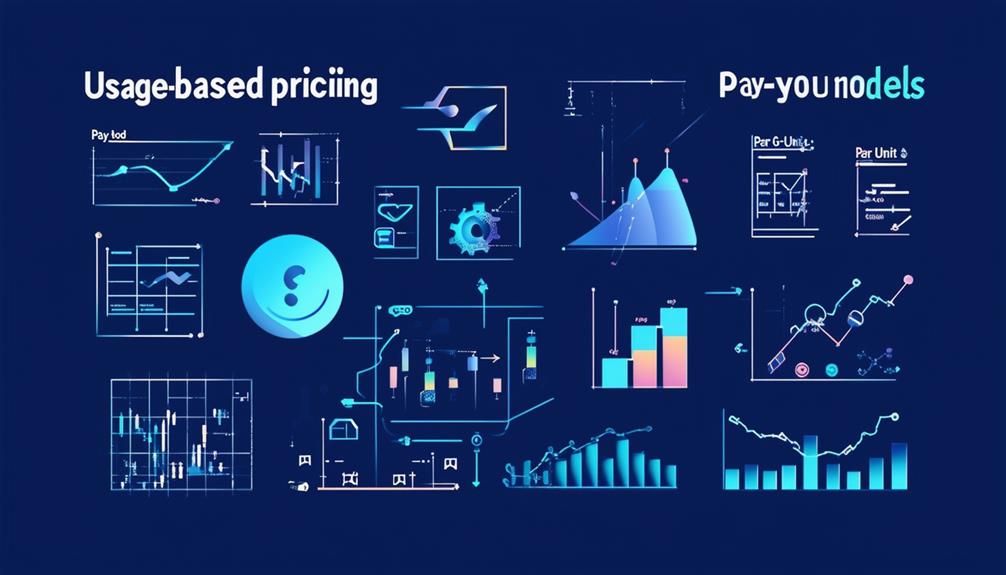
Understanding the various types of usage-based pricing models is crucial for selecting the best fit for your SaaS business. Usage-based pricing, also referred to as consumption-based pricing, offers flexibility by aligning costs directly with value. This approach can drive customer retention and support product-led growth.
Simple Usage-Based Pricing: This model charges customers based on their exact usage at a constant rate, ensuring that costs are directly tied to the value received.
Block Linear or Stair-Step Pricing: Usage is divided into predefined blocks or batches, offering predictability in billing. Customers have a clear understanding of costs, which aids in budgeting and can smooth cash flow for the business.
Volume-Based Pricing: Discounts are provided as usage volume increases, incentivizing customers to use more of the service. This model encourages scalability and can foster long-term customer loyalty.
Tiered Pricing: Different pricing levels are set based on usage thresholds. Each tier offers a package with specific features or limits, helping customers find an option that meets their needs while balancing predictability and cost savings.
Selecting the appropriate usage-based pricing model ensures your pricing strategy aligns with your business objectives and customer expectations, ultimately driving growth and satisfaction.
Examples of Usage-Based SaaS
Several leading SaaS companies exemplify the effectiveness of usage-based pricing models by aligning costs with actual customer usage, guaranteeing flexibility and scalability. These companies demonstrate how such models work in practice:
- Twilio: Twilio charges customers based on the number of text messages or phone calls made. This usage-based pricing model allows businesses to scale their communication needs without upfront costs.
- Zapier: Zapier offers a pricing model where customers pay based on the number of tasks or automated workflows executed. This approach provides cost control, as users only pay for the automation they actually use.
- Courier: Courier charges customers per message sent through their platform. This alignment of costs with actual usage ensures that businesses can manage their messaging expenses effectively.
- Snowflake: Snowflake, a cloud data platform, implements a usage-based pricing model where customers pay for the amount of data stored and processed. This offers scalability and cost efficiency, making it easier for businesses to handle large data volumes.
- AWS (Amazon Web Services): AWS utilizes a usage-based pricing structure, allowing customers to pay for computing power, storage, and other resources on demand. This model ensures that you only pay for what you use, providing a cost-effective solution for managing cloud resources.
Benefits for SaaS Businesses

Usage-based SaaS models offer substantial benefits to businesses by aligning revenue with customer usage, enhancing scalability, and fostering customer loyalty. Flexible pricing in these models caters to the diverse needs of customers, making the services more appealing. Customers appreciate paying only for what they use, which lowers the barrier to entry and boosts customer satisfaction.
A key advantage is the potential for a dynamic revenue stream. As customers increase their usage, your usage-based revenue can experience significant growth. This model encourages customer engagement by providing value directly correlated with their usage. Offering discounts based on usage can further strengthen customer loyalty and retention.
From a financial perspective, usage-based models can lead to higher net dollar retention, a critical metric that measures the recurring revenue generated from existing customers. This metric highlights the value delivered to customers. When customers perceive direct benefits from their payments, they are more likely to stay and expand their usage. This fosters a cycle of ongoing customer satisfaction and loyalty, making your business more resilient and profitable in the long term.
Prerequisites for Implementation
To successfully implement a usage-based SaaS model, ensure that your technical infrastructure supports dynamic pricing and real-time usage tracking. Develop a robust pricing strategy by analyzing customer usage patterns and market trends. Additionally, establish effective user data collection methods to gain insights and optimize your approach.
Technical Infrastructure Requirements
To successfully implement a usage-based SaaS model, a robust technical infrastructure is essential for accurate billing and user activity tracking. The key components to focus on include:
- Billing System: Implement a billing system that can handle real-time data to precisely calculate usage fees. Ensure seamless integration with data collection tools and payment gateways for efficient processing.
- APIs and Data Collection Tools: Utilize APIs to collect user activity data in real-time. Employ advanced data collection tools to monitor consumption levels and provide actionable insights into user behavior.
- Scalable Cloud Storage: Adopt a scalable cloud storage solution to manage varying data volumes effectively. Ensure the storage can dynamically expand and contract based on demand, optimizing resource use and maintaining performance.
- Analytics and Reporting: Leverage sophisticated analytics and reporting tools to analyze usage patterns. These insights are crucial for refining pricing strategies and identifying opportunities for improvement.
Pricing Strategy Design
Building upon a robust technical infrastructure, understanding customer usage patterns and value metrics is crucial for designing an effective usage-based pricing strategy. SaaS businesses must analyze their cost structures and competition to determine the most suitable pricing model. This involves evaluating your technological capabilities and considering any regulatory implications that could impact the pricing strategy.
Understanding customer needs and preferences is vital. By aligning your pricing strategy with market trends, you can enhance the customer experience. It's important to continuously monitor and adjust your pricing models in real time to ensure they remain effective and competitive.
Here's a quick overview of the prerequisites for implementing a successful usage-based pricing strategy:
| Prerequisite | Description |
|---|---|
| Technical Infrastructure | Ensure systems can track and analyze customer usage in real time. |
| Cost Structure Analysis | Evaluate costs to determine sustainable pricing. |
| Competitive Analysis | Assess competitors' pricing models to stay competitive. |
| Technological Capabilities | Ensure your technology supports a usage-based model. |
| Regulatory Considerations | Comply with relevant regulations. |
User Data Collection
Collecting user data is essential for a successful usage-based SaaS model. To implement this effectively, you need to focus on tracking and analyzing customer usage patterns. This data is crucial for determining your pricing strategy and ensuring your usage-based billing system aligns with customer needs.
Here are four key steps to get you started:
- Monitor Logins: Track user login frequency to gauge engagement levels. This information can help establish initial pricing tiers.
- Feature Usage: Monitor which features are used and how often. This insight is vital for understanding what customers value and optimizing your pricing strategy accordingly.
- Data Storage: Measure the amount of data users store. This can be a significant factor in your pricing model, especially if your service involves large data volumes.
- Analyze Patterns: Regularly analyze the collected data to identify trends and anomalies. This helps refine your pricing tiers and enhance user experience.
Accurate user data collection ensures your pricing aligns with customer needs, ultimately maximizing your revenue. By understanding and leveraging customer usage patterns, you can tailor your services to provide the most value.
Choosing the Right Pricing Model
Selecting an appropriate pricing model hinges on a comprehensive understanding of your customers' expectations and usage patterns. To align your SaaS pricing model with customer needs, start by analyzing your customer base. This involves examining how frequently they use your service, the features they prioritize, and how their needs evolve over time. This analysis ensures you choose a pricing model that aligns with customer expectations and drives satisfaction.
Engaging with your customers is critical. Regularly collect customer feedback to understand their pain points and preferences. Experiment with different pricing models and assess the responses. Ensuring value alignment between what you offer and what customers perceive is key to their satisfaction and loyalty.
A hybrid pricing model can offer the flexibility some customers need. It combines fixed and usage-based elements, catering to a broader range of customer needs and enhancing operational efficiency. Utilizing modern tools like Wingback can streamline this process, making it easier to adapt and refine your pricing strategies.
Here's a quick comparison of key considerations:
| Aspect | Importance | Example Strategy |
|---|---|---|
| Customer Usage | High | Usage-based pricing |
| Customer Expectations | Critical | Regular feedback collection |
| Value Alignment | Vital | Transparent pricing tiers |
| Customer Satisfaction | Vital | Hybrid pricing model |
| Operational Efficiency | Important | Tools like Wingback |
Selecting the right model not only enhances customer satisfaction but also increases Average Contract Value (ACV) and revenue.
Implementing Usage-Based Pricing
To implement usage-based pricing effectively, it is crucial to understand your customers' usage patterns and align your pricing models with their specific needs. This ensures you're delivering value and fairness, which can lead to increased customer satisfaction and loyalty.
Here are four steps to successfully implement a usage-based pricing model:
- Analyze Customer Usage Patterns: Start by collecting data on how your customers use your service. Identify key usage metrics and trends to tailor your pricing model to their actual needs.
- Evaluate Hybrid Models: Consider combining fixed rates with usage fees to offer more flexibility. Hybrid models address both predictable revenue streams and variable customer usage, balancing stability and adaptability.
- Offer Multiple Pricing Options: Provide both fixed-rate and consumption-based pricing to accommodate different customer preferences. This flexibility can attract a broader range of customers and meet diverse needs more effectively.
- Monitor Competitors: Keep an eye on your competitors' pricing strategies. Analyzing their effectiveness can offer insights and inspiration, helping you refine and optimize your own usage-based pricing model.
Evaluating Pros and Cons

Evaluating the pros and cons of usage-based SaaS models helps you understand their impact on both your business and your customers. One major advantage is cost transparency, allowing customers to pay only for what they use, which can significantly improve customer acquisition. The pay-as-you-go model aligns costs with actual usage, promoting customer retention by offering tailored pricing structures that match usage patterns. Additionally, this model can enhance customer satisfaction, as they feel they're receiving fair value.
However, there are challenges to consider. Revenue predictability can be difficult, as income fluctuates with customer usage, complicating financial planning. Clear communication on pricing is essential to prevent customer confusion, as complex pricing structures can deter potential clients. Monitoring market trends and competitors is crucial to remain competitive and optimize your usage-based pricing strategy.
| Pros | Cons | Key Considerations |
|---|---|---|
| Cost transparency | Revenue predictability issues | Clear communication on pricing |
| Flexible pricing | Potential customer confusion | Monitoring market trends |
| Higher customer retention | Complex pricing structures | Aligning costs with usage patterns |
| Tailored to usage patterns | Financial planning difficulties | Staying competitive in the SaaS industry |
Understanding these aspects will help you determine if a usage-based SaaS model aligns with your business goals.
Conclusion
Usage-based SaaS models can significantly enhance your business by aligning costs directly with the value provided. This approach not only improves customer satisfaction but also drives retention. Understanding the key components and choosing the right pricing model are crucial steps. By implementing these strategies effectively, you can offer fair and transparent pricing. Adopting this flexible approach meets your customers' needs and elevates your business's success.
Related posts