Best SaaS Solutions for Training and Development

To enhance your training and development initiatives, selecting the right SaaS solution is crucial. Platforms like TalentLMS, Docebo, and SAP Litmos offer features tailored to various organizational needs, such as user-friendly interfaces and robust analytics.
The key challenge is integrating these tools into your existing framework while leveraging their unique benefits. Let's explore the factors that can influence your decision and help identify the best choice for your team.
What Is a Saas Lms?
A SaaS LMS is a cloud-based platform designed for creating, managing, and delivering training programs and eLearning courses online, eliminating the need for local installations. As a Software as a Service solution, it offers flexibility and accessibility, allowing users to access training materials from any location with an internet connection. The platform includes course authoring tools that simplify the creation of engaging content for learners.
One of the key features of a SaaS LMS is its scalability, enabling easy adjustment of user slots and addition of new features as organizational needs evolve. This adaptability is essential for sustaining an effective training program. Additionally, these systems are equipped with integration capabilities, facilitating seamless data flow by connecting with other business applications.
Furthermore, a SaaS LMS provides robust tracking of learner progress, offering valuable insights into performance metrics. This centralized approach enhances the training experience and simplifies eLearning course management, making it a crucial asset for organizations aiming to advance their training initiatives.
Benefits of SaaS LMS
Embracing a SaaS LMS offers numerous advantages that enhance training efficiency and adaptability for organizations of all sizes. These systems are not only scalable but also improve accessibility, enabling employees to access training programs anytime, anywhere. This flexibility is crucial for effective employee training and development, especially in today's fast-paced environment.
Here's an overview of the key benefits:
| Benefit | Description | Impact on Organization |
|---|---|---|
| Scalability | Easily adjust user slots based on business needs | Supports growth and changing demands |
| Accessibility | Cloud-based architecture allows anytime access | Promotes flexible learning environments |
| Automated Updates | Regular updates keep features current | Reduces downtime and IT intervention |
| Integration | Seamless connection with HRIS and CRM systems | Improves functionality and data flow |
| Analytics and Reporting | Track training effectiveness and learner progress | Enables data-driven decision-making |
With built-in analytics and reporting tools, you can monitor training effectiveness and engagement metrics, ultimately leading to improved employee performance and satisfaction. This data-driven approach enables your organization to make informed decisions about training strategies.
Comparing SaaS and Hosted LMS
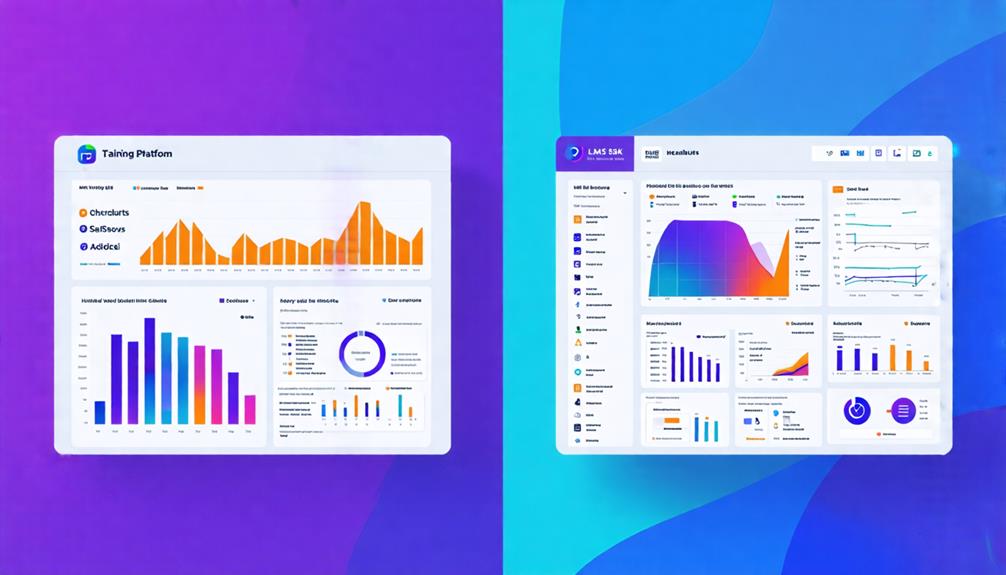
When evaluating training solutions, comparing SaaS and hosted LMS reveals considerable differences in accessibility, maintenance, and total costs that can impact your organization's training strategy. A SaaS LMS is cloud-based, allowing access to training materials from anywhere with internet connectivity. In contrast, a hosted LMS requires installation on company servers, limiting access to specific locations.
Maintenance costs also differ significantly. With a SaaS LMS, automatic updates are provided by the vendor, ensuring you always have the latest features without downtime. Conversely, a hosted LMS relies on your in-house IT team for manual updates, which can lead to longer downtimes and increased maintenance costs.
Regarding total cost of ownership, SaaS LMS solutions typically offer a lower TCO due to reduced infrastructure expenses. They also provide excellent scalability, allowing your organization to easily adjust user slots and features based on growth. Hosted LMS may struggle with this flexibility and often requires considerable investment in resources and time to accommodate changes.
Lastly, SaaS LMS platforms boast robust integration capabilities, enhancing functionality and data transfer, while hosted LMS may face challenges with external system integration.
Top SaaS LMS Solutions
When evaluating top SaaS LMS solutions, it's crucial to compare key features, pricing, and integration capabilities. Each platform offers unique benefits tailored to different needs, whether for small businesses or educational institutions. Let's explore what differentiates these options to help you find the perfect fit for your training and development objectives.
Key Features Comparison
When comparing top SaaS LMS solutions to ensure they meet your training and development needs, consider these key features:
- User Engagement: Prioritize intuitive interfaces that enhance learner interactions, such as those offered by TalentLMS and Docebo.
- Analytics and Reporting: Look for platforms with comprehensive analytics tools, like SAP Litmos, to monitor learner progress and assess training effectiveness.
- Content Deployment: Opt for LMS solutions with integrated authoring tools and content libraries, such as iSpring Learn, to facilitate the creation and distribution of training materials.
- Integration Capabilities: Ensure the LMS integrates seamlessly with your existing business systems, including HRIS and CRM, to enhance operational efficiency.
- Scalability: Choose SaaS LMS platforms like EdApp that support organizational growth and allow flexible user management as your needs evolve.
Pricing and Plans
Understanding the pricing and plans of top SaaS LMS solutions is crucial for choosing a platform that aligns with your training and development budget. TalentLMS, for example, offers a free plan for up to 5 users, with paid plans beginning at $59/month for additional features and user slots. For a more flexible and cost-effective option, Moodle starts at $120/year after a free trial, making it suitable for smaller organizations.
iSpring Learn features a unique pricing model at $2.99 per user per month, billed annually, and includes a free trial to explore its capabilities. For organizations with extensive training needs, Docebo provides custom pricing upon request, tailored for larger teams.
Similarly, SAP Litmos offers custom pricing designed for enterprise-level training, focusing on compliance and course delivery.
Integration Capabilities
Integrating leading SaaS LMS solutions with existing business applications enhances training efficiency and streamlines user access. These platforms, equipped with robust integration capabilities, offer a modern approach to training programs by ensuring seamless interoperability with a variety of tools and systems.
Key integration features include:
- Native Integration: Effortlessly connect with popular HRIS and CRM systems to ensure efficient data transfer.
- Single Sign-On (SSO): Simplify user access across multiple applications, improving the overall user experience.
- Video Conferencing Tools: Integrate with platforms like Zoom and Microsoft Teams for real-time, interactive training sessions.
- APIs: Customize and extend LMS functionalities to suit specific workflow requirements.
These features collectively ensure semantic accuracy, completeness, consistency, conciseness, relevance, interoperability, and trustworthiness in your training ecosystem.
Pricing Models Overview
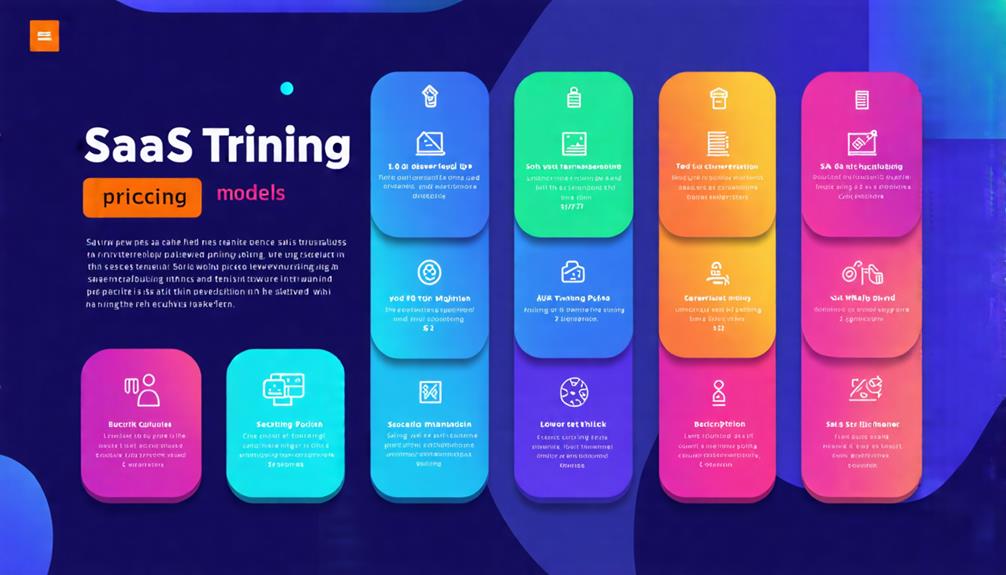
Many SaaS LMS platforms offer a variety of pricing models to accommodate different business needs and budgets. Options range from tiered pricing structures to custom pricing solutions tailored to your organizational growth and user counts. This flexibility allows you to choose a plan that aligns with your training goals without breaking the bank.
Here's a quick overview of some common pricing models:
| Platform | Pricing Model | Notes |
|---|---|---|
| TalentLMS | Tiered pricing starting at $59/month | Accessible for small businesses |
| iSpring Learn | $2.99 per user/month (annual billing) | Cost-effective for corporate training |
| Docebo & Gyrus LMS | Custom pricing options | Costs vary based on features |
Many platforms also provide flexible payment plans, ensuring that you can scale your training programs as your organization grows. Some, like Google Classroom and Edmodo, offer free basic functionalities, while premium features may incur additional costs. By understanding these pricing models, you can make informed decisions that suit your specific training needs.
User Experience Features
Selecting the right pricing model for your SaaS LMS is crucial in creating an optimal user experience. Features such as intuitive interfaces and mobile compatibility can significantly enhance your training programs.
To elevate your learning environment, consider incorporating the following user experience features:
- Intuitive Interfaces: Streamline navigation for both learners and administrators to facilitate effortless content access.
- Mobile Compatibility: Allow users to access training materials anytime, anywhere, ideal for remote or mobile employees.
- Gamification Elements: Integrate badges, leaderboards, and rewards to boost learner engagement and motivation.
- Advanced Reporting: Obtain real-time insights into learner progress and course effectiveness for informed decision-making.
Integration Capabilities

When evaluating integration capabilities, consider how effectively your SaaS LMS connects with essential applications like HRIS and CRM systems. Implementing Single Sign-On (SSO) can streamline user access across multiple platforms, enhancing the user experience and boosting organizational productivity. This seamless compatibility is crucial for maintaining a cohesive and efficient workflow.
Application Compatibility
SaaS LMS platforms integrate seamlessly with essential business tools, enhancing functionality and ensuring application compatibility across your organization. This compatibility is critical for streamlining processes, improving user experience, and maximizing the effectiveness of your training programs.
Key integration capabilities to consider include:
- HRIS and CRM Systems: Connect your human resources information systems and customer relationship management tools for efficient data management.
- Video Conferencing Tools: Enhance virtual learning by integrating platforms like Zoom or Microsoft Teams for live training sessions.
- Data Transfer APIs: Facilitate seamless data transfer between your LMS and other systems, improving reporting and analytics accessibility.
- Reporting and Analytics: Use integrated tools to gain insights into training effectiveness and participant engagement.
Single Sign-On Benefits
Single Sign-On (SSO) simplifies access for users by allowing them to log in once and seamlessly navigate multiple applications using a single set of credentials. This significantly enhances the user experience, particularly in training environments where learners frequently access diverse resources.
By eliminating the need to remember multiple usernames and passwords, SSO reduces password fatigue, leading to stronger password practices and improved security. Organizations that implement SSO generally experience fewer credential-related breaches due to more robust access controls.
Many SaaS LMS platforms, such as TalentLMS and Docebo, offer easy integration with popular identity providers, making it straightforward to implement SSO. This integration not only streamlines the login process but also accelerates onboarding, enabling new users to quickly access essential tools without dealing with individual account setups.
Implementing SSO can also save time; studies indicate that employees save an average of 15 minutes per week by avoiding repetitive logins. Overall, SSO is a powerful solution that enhances both security and efficiency in training and development initiatives.
Selecting the Right SaaS LMS
Choosing the right LMS entails a thorough evaluation of its integration capabilities with your existing tools, such as HRIS and CRM systems, to ensure seamless data flow and comprehensive reporting. A well-integrated SaaS LMS facilitates efficient management of user data, thereby enhancing your corporate training programs.
Key factors to consider when selecting an LMS include:
- Integration Capabilities: Ensure the LMS can smoothly integrate with your current systems.
- Scalability: Confirm the platform can accommodate growth, supporting an increasing number of users and training programs without complications.
- User-Friendliness: Opt for intuitive interfaces that enhance the learning experience for both administrators and learners.
- Pricing Model: Evaluate different pricing structures—such as per-user fees or custom pricing—to match your budget.
Future Trends in SaaS LMS

As the eLearning landscape evolves, future trends in Learning Management Systems (LMS) are increasingly influenced by personalized learning experiences and enhanced integration capabilities. The growing eLearning market, projected to reach $375 billion by 2026, is driving the demand for Software as a Service (SaaS) LMS solutions.
Mobile-first learning strategies are essential, enabling users to access training materials anytime, anywhere. Seamless integration with existing business tools, such as Human Resource Information Systems (HRIS) and Customer Relationship Management (CRM) systems, is crucial for data flow and comprehensive reporting. Additionally, AI-driven tools are revolutionizing course customization, leading to more engaging and personalized learning experiences.
Gamification elements, including badges and leaderboards, are becoming more popular, enhancing motivation and enriching the learning experience, especially in corporate training programs.
Here's an overview of these trends:
| Trend | Description |
|---|---|
| Personalized Learning | AI-driven tools create tailored learning experiences |
| Mobile-First Learning | Access training materials anytime, anywhere |
| Integration Capabilities | Seamless integration with business tools |
| Gamification Elements | Badges and leaderboards to boost engagement |
| Remote Training Solutions | Flexible options for distributed workforces |
These trends are pivotal for the future success of SaaS LMS platforms.
Conclusion
In conclusion, selecting the right SaaS Learning Management System (LMS) can revolutionize your training and development initiatives. Platforms such as TalentLMS, Docebo, and SAP Litmos offer user-friendly interfaces, comprehensive analytics, and features designed to engage learners effectively.
When evaluating your options, consider factors like pricing, integration capabilities, scalability, and emerging trends in the industry. By making a well-informed choice, you can streamline your training processes and create a more efficient and impactful learning environment for your team.
Happy training!
Related posts