
What Is the Difference Between FAAS and Serverless?
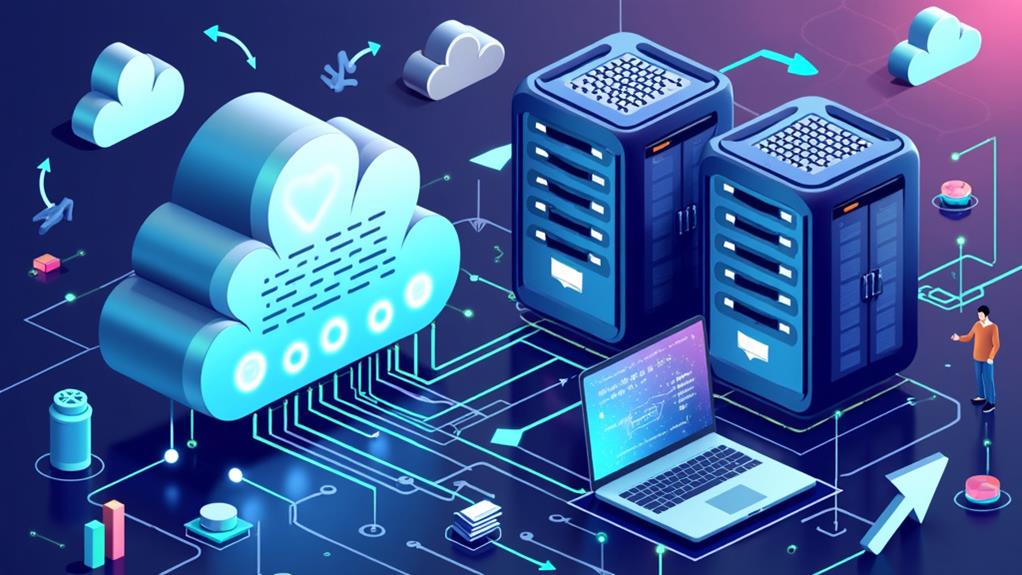
When discussing FaaS and serverless, it's crucial to understand that they are related but not identical. FaaS, or Function as a Service, enables the execution of individual functions in response to specific events, making it ideal for microservices and event-driven applications. Serverless, in contrast, encompasses a broader range of services, offering more extensive resource management and scalability options. Additionally, the cost structures differ: FaaS charges based on function invocations, whereas serverless may include additional fees for managed services. Understanding these distinctions can help you decide which approach is best suited for your next project.
Defining Serverless Architecture
Serverless architecture eliminates the need for server management, allowing you to focus exclusively on writing code without worrying about the underlying infrastructure. This cloud computing model abstracts the complexities of infrastructure management, enabling you to concentrate on development. With serverless architecture, you benefit from automatic scaling, which adjusts resources based on demand. This ensures your applications can efficiently handle varying workloads without manual intervention.
Despite the name "serverless," actual servers are still involved. These servers are managed by cloud service providers, who handle deployment, maintenance, and other operational concerns. This setup lets you focus solely on writing and optimizing code. Serverless architecture is particularly effective for event-driven applications and microservices, promoting rapid innovation by reducing deployment time and operational overhead.
A key feature of serverless architecture is the pay-as-you-go model. You only pay for the resources consumed during execution, making it a cost-effective solution for many workloads. Function as a Service (FaaS) is a fundamental component, allowing you to execute code in response to specific events. Ultimately, serverless architecture empowers developers to build scalable, efficient applications without the burden of infrastructure management.
Understanding FaaS
Function as a Service (FaaS) allows you to run individual functions in response to specific events without managing the underlying infrastructure. As a key component of serverless computing, FaaS lets you focus on writing code rather than managing servers. Its event-driven architecture triggers code snippets with events like HTTP requests or messages in a queue, boosting efficiency.
FaaS offers a pay-as-you-go pricing model, charging you only for the execution time of your functions, which can significantly reduce operational costs compared to traditional server management. It supports a microservices architecture, enabling the development and deployment of small, independent functions that scale automatically based on demand.
Major cloud providers such as AWS Lambda, Google Cloud Functions, and Azure Functions offer robust FaaS capabilities. These platforms integrate seamlessly with other cloud services, allowing you to build complex application logic without infrastructure concerns. By adopting FaaS, you streamline development and leverage the scalability and efficiency of cloud functions.
Key Differences

When distinguishing between FaaS and serverless, it's crucial to understand that FaaS is a specialized subset within the broader serverless ecosystem. FaaS focuses specifically on executing individual code functions in response to events. This event-driven architecture allows you to run microservices that are triggered by specific actions, such as HTTP requests or database updates.
On the other hand, serverless encompasses a wider range of services, including backend services like databases and authentication. Serverless architecture manages various components, providing a more comprehensive environment for deploying and managing applications. While both FaaS and serverless offer automatic scalability, FaaS scales individual functions automatically, whereas serverless scales the entire backend infrastructure.
The pricing model is another key difference. FaaS typically operates on a pay-as-you-go model, charging you based on the number of function invocations and execution duration. In contrast, serverless may involve additional costs for other managed services, making budgeting slightly more complex.
Understanding these distinctions helps you choose the right solution for your cloud-based development needs. If your focus is on handling event-driven tasks efficiently, FaaS might be the way to go. However, if you need a more comprehensive environment for backend services and deployment, serverless architecture could be more suitable.
Serverless Architecture Use Cases
When considering serverless architecture, its powerful applications in real-time stream processing and dynamic web applications stand out. This approach allows you to process data as it arrives, making immediate decisions without the need to manage underlying infrastructure. Additionally, it simplifies the task of scaling web applications to meet fluctuating user demands.
Real-Time Stream Processing
With real-time stream processing integrated into a serverless architecture, there's no need to wait to analyze data. Utilizing cloud services such as AWS Lambda and Google Cloud Functions enables you to process and analyze data instantaneously as it is generated. These event-driven functions trigger actions based on data events from sources like IoT devices, social media feeds, or financial transactions, allowing for the development of highly responsive applications.
Serverless architecture streamlines data processing tasks by abstracting the underlying infrastructure, allowing you to concentrate on writing specific functions for various data processing tasks without concerns about scaling or resource management. This setup ensures the efficient use of resources, with automatic scaling to accommodate fluctuating data streams.
Consider these practical applications:
- Fraud detection: Instantly identify and respond to suspicious activities in financial transactions.
- Real-time analytics: Monitor user engagement on your platform in real-time to make immediate adjustments.
- IoT monitoring: Track sensor data from IoT devices and respond instantly to anomalies.
Dynamic Web Applications
Leveraging the advantages of real-time stream processing, serverless architecture offers substantial benefits for dynamic web applications. It allows for automatic scaling of resources in response to varying user traffic, ensuring peak performance without manual intervention. This enables your web application to handle usage spikes seamlessly, enhancing the user experience.
Serverless frameworks facilitate rapid development and deployment by allowing developers to focus on coding rather than server management complexities. Event-driven triggers enable real-time interactions, making applications more responsive to user actions such as form submissions or button clicks. This is crucial for maintaining a smooth and interactive user experience.
Integrating Backend as a Service (BaaS) components within a serverless architecture simplifies backend management. It streamlines data storage and authentication processes, freeing developers from the intricacies of infrastructure management.
Moreover, the pay-as-you-go model ensures cost efficiency by charging only for the resources consumed during peak usage times. This model not only enhances the financial viability of projects but also allows for efficient resource scaling based on real-time demands.
FaaS Use Cases

FaaS, or Function as a Service, excels in scenarios where event-driven applications are crucial. With FaaS, functions are executed in response to triggers such as HTTP requests or messages from a queue, making it ideal for serverless architectures. This allows developers to focus on writing code without the burden of infrastructure management, fully leveraging the advantages of cloud environments.
Consider building serverless APIs that automatically scale based on incoming traffic. You don't need to manage servers, and your applications can seamlessly handle varying loads. Here are some compelling use cases for FaaS:
- Data Processing Tasks: Functions can be triggered to process images or videos on-demand, efficiently handling uploads and transformations.
- IoT Applications: Real-time data processing is simplified as FaaS executes functions to analyze sensor data immediately upon arrival.
- Microservices Architecture: Deploy small, focused functions independently, enhancing maintainability and scalability.
FaaS excels in event-driven computing, offering scalability and usage-based pricing as significant advantages. By adopting FaaS, developers can build robust, scalable applications that dynamically respond to various events within a flexible cloud environment. This makes FaaS an indispensable tool for modern developers.
Advantages of Serverless
Opting for a serverless architecture eliminates the need for server management, allowing you to concentrate on writing code and innovating. This approach automatically scales resources in real-time based on demand, ensuring optimal application performance. Additionally, the pay-as-you-go model means you only pay for the resources you use, providing substantial cost savings.
Maintenance-Free Environment
A maintenance-free environment is one of the most compelling advantages of serverless architecture. With serverless computing, infrastructure management is handled by your cloud service provider, allowing you to focus on writing code. This enables developers to concentrate on building features and innovating, as the serverless platform manages all backend tasks.
Serverless and Function as a Service (FaaS) platforms like AWS Lambda offer automatic scaling, adjusting resources based on demand. This ensures efficient application performance without the need for manual intervention. This dynamic resource management is transformative, enabling rapid deployment and faster time-to-market for applications.
The pay-as-you-go model in serverless computing charges only for actual resource usage, leading to significant cost savings compared to traditional server setups. This eliminates the need to pay for idle servers or over-provision resources just to handle peak loads.
Consider these benefits:
- Reduced operational burden: Focus solely on development without worrying about server maintenance.
- Cost efficiency: Pay only for what you use, eliminating resource waste.
- Speed: Deploy updates and new features rapidly, staying ahead of competitors.
This maintenance-free environment empowers your team to innovate and deliver value more effectively.
Automatic Scalability
One of the standout features of serverless architecture is automatic scalability, which allows applications to dynamically adjust resources based on real-time demand. This ensures optimal performance without manual intervention. Serverless platforms automatically provision and deprovision compute resources in response to incoming requests, enabling seamless handling of variable workloads. This eliminates the need to predict traffic patterns or manage server capacity, significantly reducing operational complexity.
With serverless, applications can scale down to zero during periods of inactivity, resulting in considerable cost savings as you only pay for resources consumed during active use. Automatic scalability across multiple geographic regions enhances your application's performance and user experience by minimizing latency, regardless of user location.
In essence, automatic scalability in a serverless architecture provides an efficient way to manage resources, ensuring optimal application performance, easing operational management, and offering cost-effective solutions by dynamically adjusting resource allocation. This makes serverless an attractive option for modern application development.
Advantages of FaaS
Leveraging the advantages of FaaS can revolutionize your development workflow by optimizing costs and simplifying deployment. In a serverless environment, you are relieved from managing infrastructure, allowing developers to concentrate on writing code for stateless compute instances that execute functions only when invoked.
Here are the key advantages:
- Cost Efficiency: The pay-as-you-go model ensures you are only billed for the compute resources utilized during function execution, significantly reducing costs, particularly for applications with sporadic workloads.
- Automatic Scaling: FaaS inherently scales to manage varying workloads, ensuring your application remains responsive during peak usage without requiring manual intervention.
- Microservices Architecture: Decomposing applications into smaller, reusable functions fosters a microservices architecture, enhancing maintainability and accelerating deployment.
FaaS eliminates the complexities of server management, enabling a streamlined deployment process for rapid rollout of new features or updates. The automatic scaling and cost efficiency make it an ideal solution for applications with unpredictable traffic patterns. By harnessing these benefits, your development team can innovate more quickly and effectively.
Choosing the Right Model
While the advantages of Function as a Service (FaaS) can significantly enhance your development workflow, it's crucial to consider how to select the appropriate model for your specific requirements. Begin by evaluating your application's complexity. FaaS excels in managing microservices and event-driven functions, offering high scalability and automatic resource allocation. This makes it ideal for applications with fluctuating workloads.
Conversely, serverless architecture provides broader control over your application's configurations, including backend services, databases, and more. If your application necessitates extensive management and a variety of services, serverless architecture might be the more suitable option.
Comparison Overview
| Criteria | FaaS | Serverless |
|---|---|---|
| Focus | Event-driven functions | Extensive service management |
| Scalability | High and automatic | High, with broader resource control |
| Cost Structure | Function invocation and duration | Additional costs for managed services |
| Application Type | Microservices, event-based | Complex, multi-service applications |
| Resource Allocation | Automatic during execution | Customizable and broad |
Cost is another critical factor. FaaS typically charges based on the number of function invocations and execution duration, whereas serverless architecture may incur additional costs due to the variety of managed services.
Ultimately, the right choice depends on your organizational needs. FaaS enhances agility for small, independent tasks, while serverless architecture offers a comprehensive infrastructure solution for managing a wide array of services.