
What Is BAAS? | Backend-As-A-Service Vs. Serverless
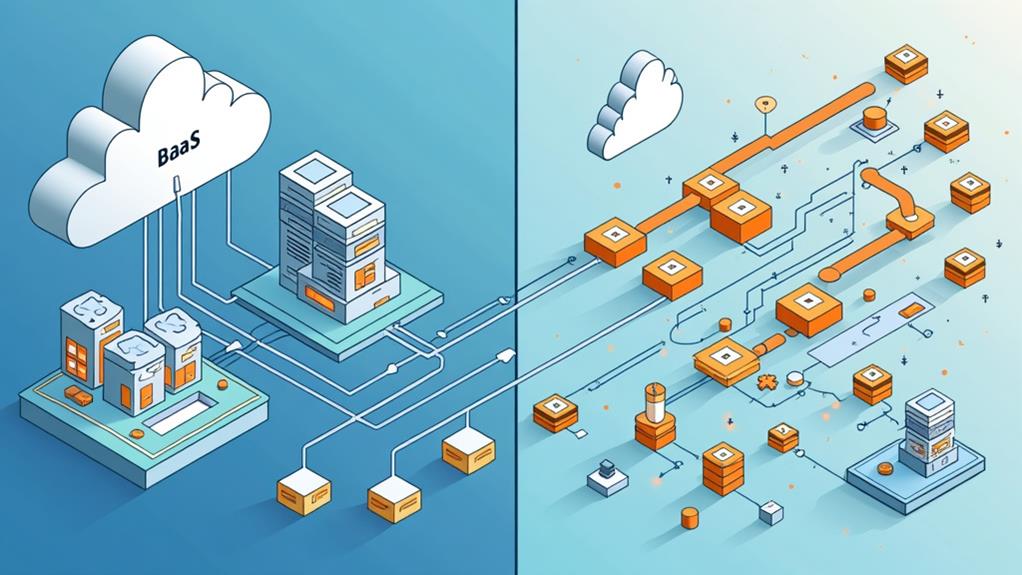
When developing an application, selecting the appropriate backend solution is crucial for the project's success. Backend-as-a-Service (BaaS) provides a ready-made infrastructure, allowing developers to concentrate on the frontend without the burden of server management. Conversely, serverless architecture offers automatic scaling and event-driven execution, which is particularly advantageous for projects with variable workloads. Both options come with unique benefits and potential drawbacks. How do you determine which is best for your needs? Let's explore the key features and differences to help you make an informed decision.
Understanding BaaS
Understanding BaaS is fundamental for modern app development. Backend as a Service (BaaS) empowers developers by providing pre-built backend infrastructure, enabling you to focus on frontend tasks without the complexities of server-side management. With BaaS, you gain access to essential features like user authentication, database management, and cloud storage, which are crucial for building robust applications.
Leveraging BaaS can significantly accelerate your development process. Ready-to-use APIs and SDKs facilitate seamless integration, making it easier to launch your app quickly. The pre-built infrastructure also supports real-time updates via push notifications, keeping your users engaged with the latest information.
One of the main advantages of BaaS is its serverless architecture, which eliminates the need to maintain physical servers. This model allows for seamless scalability, adapting to your app's growth without manual intervention. However, while BaaS simplifies backend management, it comes with trade-offs such as limited customization options, potential vendor lock-in, and dependency on third-party service provider updates.
Baas Vs MBAAS
While BaaS offers a robust backend infrastructure for a wide range of applications, MBaaS tailors these services specifically for mobile development. Both BaaS and MBaaS deliver essential backend services like user authentication and database management, but MBaaS goes a step further by addressing mobile-specific needs.
Key Differences:
- Focus on Mobile Applications: MBaaS is designed to optimize backend services for mobile platforms, including features like push notifications and mobile analytics. This specialization makes MBaaS ideal for developers aiming to enhance the mobile user experience.
- Enhanced Mobile User Experience: MBaaS provides functionalities such as offline data synchronization, ensuring that mobile applications remain functional even without an internet connection. This feature is crucial for maintaining user engagement and satisfaction.
- Platform Integration: Providers like Google Firebase offer both BaaS and MBaaS services, allowing developers to choose tools based on their project's specific needs. Whether developing for web or mobile, Firebase's versatility makes it a valuable choice.
Key Features of BaaS

Backend as a Service (BaaS) revolutionizes backend development by offering essential functionalities such as user authentication, database management, and cloud storage. This allows developers to concentrate more on frontend development while the backend is efficiently managed. One of the standout features is remote updating, which ensures users always have the latest features and fixes without needing to download updates.
BaaS platforms come with pre-built APIs and SDKs, facilitating the easy integration of backend services into mobile and web applications. These pre-built solutions save time and effort, accelerating the application development cycle. For example, Google Firebase offers additional functionalities like push notifications to enhance user engagement.
Moreover, BaaS automates backend management tasks, speeding up the development process and significantly reducing infrastructure costs. By handling database management and cloud storage, BaaS allows developers to focus on creating a superior user experience. In summary, BaaS provides an efficient, cost-effective solution for managing backend functionalities, ensuring seamless app maintenance and rapid development.
Comparing BaaS and Serverless
After exploring the key features of BaaS, it's crucial to compare it with another groundbreaking backend solution: serverless computing. Both BaaS and serverless computing offer unique benefits tailored to different backend development needs.
- Pre-built Backend Functionalities vs. Event-Driven Execution:
- BaaS provides pre-built backend functionalities like user authentication, database management, and push notifications, allowing developers to focus on frontend development.
- Serverless Computing (also known as Function-as-a-Service or FaaS) excels in executing application logic triggered by specific events without the need to manage server infrastructure.
- Scaling and Request Limits:
- BaaS typically requires manual scaling and may impose request limits, which can constrain high-demand applications.
- Serverless Computing automatically scales based on demand, promoting operational efficiency and cost-effectiveness by ensuring you only pay for the resources you use.
- Application Suitability:
- BaaS is ideal for applications with complex backend requirements that need consistent performance and pre-built services.
- Serverless is perfect for applications with unpredictable workloads, where functions are executed based on events, providing a flexible and scalable solution for dynamic environments.
Understanding these differences helps you choose the right approach for your project's backend development needs.
Baas Vs Paas

When selecting a backend solution for your application, it's crucial to distinguish between BaaS (Backend as a Service) and PaaS (Platform as a Service). BaaS offers pre-built backend services designed to simplify application development, automating tasks such as user authentication and database management. This automation speeds up development cycles, particularly for mobile and web applications, by providing ready-to-use services.
Conversely, PaaS provides a platform for developers to build applications without including pre-built backend logic. With PaaS, you gain more flexibility in application design and architecture, supporting a wide range of application types, including enterprise-level solutions. However, this flexibility often necessitates more time for backend setup and configuration compared to the streamlined approach of BaaS.
Both BaaS and PaaS eliminate the need for manual backend management, but BaaS excels by offering more out-of-the-box functionality for backend tasks. If your priority is rapid application development with minimal backend infrastructure concerns, BaaS is an attractive option. On the other hand, if you require extensive customization and control over your application's backend, PaaS may be more appropriate. Understanding these distinctions helps you make an informed decision for your project.
Advantages and Disadvantages
When comparing BaaS and serverless, it's crucial to consider the advantages and disadvantages of each. BaaS simplifies development by managing backend services but may restrict customization and lead to vendor lock-in. Conversely, serverless provides flexibility and scalability but can introduce complexities in managing stateless functions and unpredictable costs.
BaaS: Pros and Cons
BaaS, or Backend-as-a-Service, simplifies backend development by offering pre-built services such as user authentication, database management, and cloud storage. This enables developers to concentrate more on frontend tasks, enhancing the user experience without the burden of backend complexities.
Pros of BaaS
- Reduced Server Maintenance: BaaS handles server maintenance and database administration, speeding up development cycles and potentially lowering infrastructure costs.
- Quick Deployment: Utilizing pre-built backend services allows for faster product launches, making use of components like cloud storage and user authentication without the need to build them from scratch.
- Focus on Frontend Development: Offloading backend responsibilities lets developers focus on improving the user interface and experience, making applications more engaging and user-friendly.
Cons of BaaS
- Limited Customization: BaaS solutions often adopt a one-size-fits-all approach, limiting the ability to customize backend services to meet specific application needs.
- Vendor Lock-In: Dependence on a specific BaaS provider can restrict project flexibility and adaptability, complicating future scaling or migration efforts.
- Security Risks: Reliance on third-party BaaS services introduces security risks, as the responsibility for updates, feature enhancements, and vulnerability protection lies with the provider.
FaaS: Benefits and Drawbacks
While BaaS simplifies backend development, FaaS, or Function as a Service, offers another approach by enabling automatic scaling based on events and demand. This method allows you to execute specific functions without the hassle of managing server infrastructure, thereby reducing operational overhead. FaaS operates within a serverless computing model, making it an excellent fit for event-driven architectures. This is particularly suitable for applications requiring quick responses to variable loads, such as real-time processing and chat applications.
One of the major advantages of FaaS is its cost structure. You are billed based on actual execution time rather than fixed server costs, making it more cost-effective for sporadic workloads. However, FaaS has its drawbacks. It often struggles with complex backend tasks and can pose challenges when transferring code to local environments for testing.
Security concerns also arise with FaaS. Since functions execute automatically without manual intervention, managing execution permissions and access controls becomes crucial. This limited control can be a significant issue during crisis events. Ultimately, while FaaS reduces the need for server management, you must remain vigilant about these security aspects to ensure a robust backend infrastructure.
Top BaaS Providers

When selecting a BaaS provider, consider top options like Firebase, AWS Amplify, and Back4App, each offering distinct features tailored to various project requirements. Evaluate criteria such as real-time data handling, scalability, and user-friendliness to determine the best fit for your needs. This section will guide you through the leading providers and highlight what makes each stand out.
Leading Industry Options
In the constantly evolving landscape of application development, leading BaaS providers are making significant strides by offering robust and versatile backend solutions. These providers streamline the development process by handling backend functionality, allowing developers to focus more on their application code.
- Firebase: As a top BaaS provider, Firebase offers a comprehensive suite of tools, including real-time databases, user authentication, and cloud storage. It is particularly well-suited for mobile app backend services, making it easier to build and scale applications.
- AWS Amplify: Known for its extensive cloud services, AWS Amplify provides a robust set of tools for developing scalable web and mobile applications. With features like machine learning and analytics, it supports serverless architectures, enabling developers to deploy applications without managing servers.
- Back4App: Built on the open-source Parse framework, Back4App simplifies the deployment of applications with features like push notifications and database management. It is an excellent choice for developers seeking a quick and efficient way to deliver backend functionality.
Other notable mentions include Azure App Service, which integrates seamlessly with other Azure cloud services, offering extensive customization and scalability, and Kumulos, which focuses on performance monitoring and analytics for mobile apps.
Provider Selection Criteria
Selecting the right Backend as a Service (BaaS) provider requires thorough evaluation beyond just picking a popular name. Assess the scalability options of providers like Firebase and AWS Amplify, which offer robust infrastructures capable of adapting to varying user demands. Evaluate the range of backend services available, ensuring they include essential features such as user authentication, database management, and cloud storage that align with your project's specific needs.
Security is paramount. Choose providers with strong security measures and compliance certifications to safeguard sensitive user data and adhere to regulatory standards. Pricing models are also crucial; providers like Back4App and Azure offer flexible plans, including subscription and usage-based options, accommodating projects of various sizes.
Integration capabilities should not be overlooked. The ability to seamlessly connect with third-party services and APIs can significantly enhance your application's functionality and development speed. Thoroughly researching these aspects will ensure that the provider supports your current needs and can scale as your project grows. By making an informed decision, your BaaS provider will simplify backend complexities, allowing you to focus on delivering an exceptional user experience.