
What Are KPIs in SaaS?

When managing a SaaS business, understanding Key Performance Indicators (KPIs) is crucial for measuring success and making informed decisions. Familiar terms like Monthly Recurring Revenue (MRR) and Customer Acquisition Cost (CAC) are essential, but metrics such as churn rates and Lead Velocity Rate (LVR) also significantly impact your overall strategy. These metrics provide not just snapshots but actionable insights that can guide your company toward sustained growth. How do these KPIs interconnect and influence each other? Let's explore the significant roles these indicators play in your SaaS journey.
Importance of KPIs in SaaS
Understanding the significance of KPIs in SaaS is crucial. KPIs are essential for measuring key performance metrics like Monthly Recurring Revenue (MRR) and Customer Acquisition Cost (CAC), both of which directly influence your company's financial health and growth strategies. Effective KPI tracking enables you to monitor customer retention rates, helping identify issues and implement strategies to reduce customer churn, thereby ensuring a stable revenue stream.
By analyzing KPIs such as Customer Lifetime Value (CLV) and Net Promoter Score (NPS), you gain valuable insights into customer satisfaction and loyalty. These insights can inform your product development and marketing efforts, allowing you to create offerings that better meet customer needs. Regularly reviewing these metrics enables you to adapt swiftly to market trends, maintain competitiveness, and allocate resources effectively to high-impact areas.
A well-defined set of KPIs aligns teams across departments, fostering a data-driven culture. This alignment enhances decision-making and overall business performance within the SaaS model. Essentially, KPIs are the backbone of your SaaS business, providing the critical data needed to drive growth, improve customer satisfaction, and maintain financial stability.
Understanding Churn Rate
The churn rate is a crucial metric for SaaS businesses, measuring the percentage of customers who cancel their subscriptions within a specific period. It is calculated using the formula: (Number of Customers Lost During a Period / Total Customers at the Start of the Period) x 100. This metric offers vital insights into customer retention and satisfaction.
A high churn rate can indicate problems with product value, customer service, or market fit. SaaS companies must monitor this metric regularly. Industry benchmarks suggest that a churn rate of 5% or lower is healthy, although this can vary based on the specific market and customer base. Understanding your churn rate allows you to identify areas needing improvement, whether enhancing product features or elevating customer service quality.
Effective churn management strategies are essential for business sustainability. Improving customer support and continuously enhancing product value are two key strategies to reduce churn rates significantly. By concentrating on these areas, you can boost customer satisfaction and retention. Regularly compare your churn rate against industry benchmarks to ensure you are on the right track. Managing your churn rate effectively supports long-term growth and stability for your SaaS business.
Monthly Recurring Revenue (MRR)
Understanding Monthly Recurring Revenue (MRR) is crucial for assessing the financial health of a SaaS business. MRR is calculated using the formula: MRR = (total number of accounts) x (average revenue per account). This metric helps in forecasting revenue and tracking growth systematically. Monitoring MRR enables you to identify trends in new sales, upsells, renewals, and churn, providing a comprehensive view of your company's performance.
Importance of MRR
Why is Monthly Recurring Revenue (MRR) so significant for SaaS businesses? MRR is a crucial metric that provides a stable and predictable revenue stream, essential for precise financial forecasting. By tracking MRR, you can monitor growth trends, including new sales, upsells, and churn, which are vital for strategic planning and resource allocation. This makes MRR one of the most important key performance indicators (KPIs) in SaaS metrics.
MRR's importance extends to understanding customer acquisition cost (CAC) and customer lifetime value (LTV), helping gauge the efficiency of sales and marketing efforts. A consistent increase in MRR signals strong customer satisfaction and effective customer success strategies, while a decline might highlight issues with product value or market fit. Furthermore, MRR can be broken down into components such as expansion MRR (upgrades), contraction MRR (downgrades), and churned MRR (cancellations), offering deeper insights into revenue dynamics and customer behavior.
Additionally, tracking MRR aids in calculating annual recurring revenue (ARR), providing a broader view of your company's financial health. By focusing on reducing revenue churn and maximizing customer retention, you can ensure long-term sustainability and growth for your SaaS business.
Calculating MRR Effectively
Understanding the significance of Monthly Recurring Revenue (MRR) is just the beginning; now, let's delve into how to calculate it effectively. MRR is calculated by multiplying the total number of active customer accounts by the average revenue per account (ARPA) for a given month. However, analyzing MRR through various segments offers a more detailed insight into your financial health.
Here's a straightforward breakdown:
| MRR Type | Description | Calculation |
|---|---|---|
| New MRR | Revenue from new customers | New accounts * ARPA |
| Expansion MRR | Revenue from upgrades by existing customers | Upgraded accounts * ARPA |
| Contraction MRR | Revenue loss from downgrades | Downgraded accounts * ARPA |
Tracking churned MRR, which comes from canceled accounts, is equally important. Consistent monitoring of these segments aids in accurate forecasting and provides a clear picture of your company's revenue health.
To ensure a healthy MRR growth rate, aim for approximately a 10% month-over-month increase. This growth rate is indicative of business viability. Implementing strategies for customer retention and upselling is crucial, as they help to ensure that the lifetime value (LTV) of customers significantly surpasses the customer acquisition cost (CAC).
Revenue Churn Rate
Now, let's examine Revenue Churn Rate. This KPI is crucial for understanding revenue loss and identifying high-value accounts at risk. By monitoring it, you can devise effective customer retention strategies, ensuring your SaaS business maintains robust financial growth.
Understanding Revenue Loss
In the dynamic world of SaaS, closely monitoring your Revenue Churn Rate is essential. This metric measures the percentage of revenue lost due to customer cancellations over a specific period, offering deeper financial insights than customer churn alone. To calculate it, divide the revenue lost from downgrades and cancellations by the total revenue at the beginning of the period, then express it as a percentage.
Regularly tracking your Revenue Churn Rate, whether monthly or quarterly, helps you identify trends and spot high-value customers at risk of leaving. This allows for the implementation of effective retention strategies. A high Revenue Churn Rate often points to issues with product satisfaction or pricing strategy. If customers are unhappy with your product or find your pricing too high, they are more likely to cancel, negatively impacting your overall revenue.
Your Revenue Churn Rate should ideally be significantly lower than your Monthly Recurring Revenue (MRR) growth rate to ensure sustainable financial health. By focusing on reducing revenue loss through strategic improvements, you can enhance customer retention and maintain a strong financial foundation for your SaaS business.
Tracking High-Value Accounts
How can you ensure your SaaS business thrives in a competitive market? By effectively tracking high-value accounts and managing your Revenue Churn Rate. The Revenue Churn Rate measures the percentage of revenue lost from existing customers due to cancellations or downgrades within a specific period. It is calculated as follows:
Revenue Churn Rate = (Revenue lost from churned customers / Total revenue at the beginning of the period) x 100
Monitoring the Revenue Churn Rate on a monthly or quarterly basis is essential for identifying trends and assessing the impact of customer retention efforts on overall profitability. A high Revenue Churn Rate can indicate issues with customer satisfaction or product value, requiring strategic interventions.
Here's a quick reference to assist you:
| Metric | Frequency | Purpose |
|---|---|---|
| Revenue Churn Rate | Monthly | Identifying trends and assessing financial health |
| Customer Retention Rate | Monthly/Quarterly | Evaluating customer satisfaction and retention effectiveness |
| High-Value Accounts | Ongoing | Prioritizing accounts that significantly impact revenue |
| Targeted Retention Strategies | Quarterly | Implementing strategic adjustments to enhance profitability |
Understanding your Revenue Churn Rate enables you to focus on high-value accounts at risk, facilitating targeted retention strategies that bolster your SaaS business model's financial health.
Strategizing for Retention
Crafting effective retention strategies hinges on understanding and managing your Revenue Churn Rate. This crucial metric measures the percentage of revenue lost due to customer cancellations, offering insights that go beyond mere customer churn. To retain high-value customers, monitor this rate monthly or quarterly to identify trends signaling dissatisfaction or issues like pricing and competition.
Implementing targeted retention strategies is essential for maintaining customer satisfaction and financial health. A high Revenue Churn Rate can significantly impact your Monthly Recurring Revenue (MRR) growth. It is crucial that this rate does not exceed your MRR growth rate. By analyzing Revenue Churn Rate alongside Customer Lifetime Value (CLV), you can gauge the long-term profitability of your customer base. This dual approach helps pinpoint high-value customers at risk of leaving, enabling you to take proactive steps to retain them.
For SaaS companies, prioritizing retention strategies that enhance customer satisfaction and address the root causes of churn is key. Regularly review your offerings and services to ensure they meet customer expectations. By doing so, you can boost overall profitability and secure a more sustainable future.
Annual Recurring Revenue (ARR)

Annual Recurring Revenue (ARR) is a pivotal metric for SaaS companies, representing the total revenue expected from subscriptions over a one-year period. By multiplying Monthly Recurring Revenue (MRR) by 12, companies can project future income and assess business growth. This metric is essential for evaluating customer satisfaction and retention, as consistent or increasing ARR generally indicates a stable or expanding customer base.
Tracking ARR enables more informed decision-making during forecasting and budgeting processes. With accurate revenue projections, SaaS companies can allocate resources more effectively and plan for future investments. Industry benchmarks suggest a healthy ARR growth rate of 20-30% annually, reflecting strong market demand and robust business performance.
Understanding ARR is crucial for aligning strategies with long-term business goals. It aids in setting realistic revenue projections and evaluating how well customer needs are being met. An increasing ARR often signals high customer satisfaction and retention, which are positive indicators for business growth. In summary, closely monitoring ARR is fundamental for sustaining and scaling your SaaS company.
Customer Lifetime Value (CLV)
While Annual Recurring Revenue (ARR) provides a snapshot of your SaaS business's financial health, it's equally crucial to focus on Customer Lifetime Value (CLV). CLV estimates the total revenue a single customer is expected to generate throughout their relationship with your business, offering insights into long-term profitability.
To calculate CLV, use the formula: CLV = (1 / churn rate) x Average Revenue Per Account (ARPA). This underscores the importance of both customer retention and revenue generation. Ideally, your company's CLV should be at least four times higher than its Customer Acquisition Cost (CAC) to ensure sustainable growth and profitability.
Monitoring CLV trends enables effective allocation of marketing budgets and identification of high-value customer segments. Understanding these segments allows you to tailor retention strategies, enhancing customer satisfaction and reducing churn rates. A high CLV often signifies strong customer loyalty, which directly correlates with improved overall business health.
Customer Acquisition Cost (CAC)

Calculating Customer Acquisition Cost (CAC) is crucial for evaluating the effectiveness of your marketing strategies. To determine CAC, divide your total sales and marketing expenses by the number of new customers acquired within a specific period. This metric provides valuable insights into the cost-efficiency of your customer acquisition efforts.
For SaaS companies, maintaining a healthy CAC is essential, as it directly influences profitability and scalability. A key benchmark to aim for is a CLV to CAC ratio of 3:1, which indicates sustainable profitability. If your CAC is high, it may suggest issues with targeting or messaging effectiveness in your marketing campaigns.
Monitoring CAC trends over time helps identify inefficiencies in your marketing and sales processes. By tracking these trends, you can adjust your customer acquisition strategies and employ more effective customer engagement tactics.
Managing CAC effectively ensures that your marketing expenses are justified by the revenue generated from new customers. Lowering your CAC while maintaining or increasing your CLV can significantly enhance your business's efficiency and scalability. Always strive to optimize your marketing strategies to achieve the best possible balance between CAC and CLV.
Lead Velocity Rate (LVR)
While managing your Customer Acquisition Cost (CAC) is crucial, equally important is focusing on Lead Velocity Rate (LVR). LVR measures the month-over-month growth in qualified leads within your sales pipeline, providing valuable insights into your future revenue potential. For SaaS companies, maintaining a stable or positive LVR is essential as it indicates a healthy sales pipeline and the likelihood of meeting revenue targets.
To calculate LVR, subtract the number of qualified leads in the previous month from the current month's qualified leads, then divide the result by the previous month's total qualified leads. This metric enables you to assess the effectiveness of your lead generation efforts and refine your marketing strategies accordingly.
A positive LVR typically correlates with increased sales and sustainable business growth, making it a critical KPI to track regularly. By consistently monitoring your LVR, you can identify trends and make data-driven decisions to enhance your lead generation and overall business strategy.
Net Promoter Score (NPS)
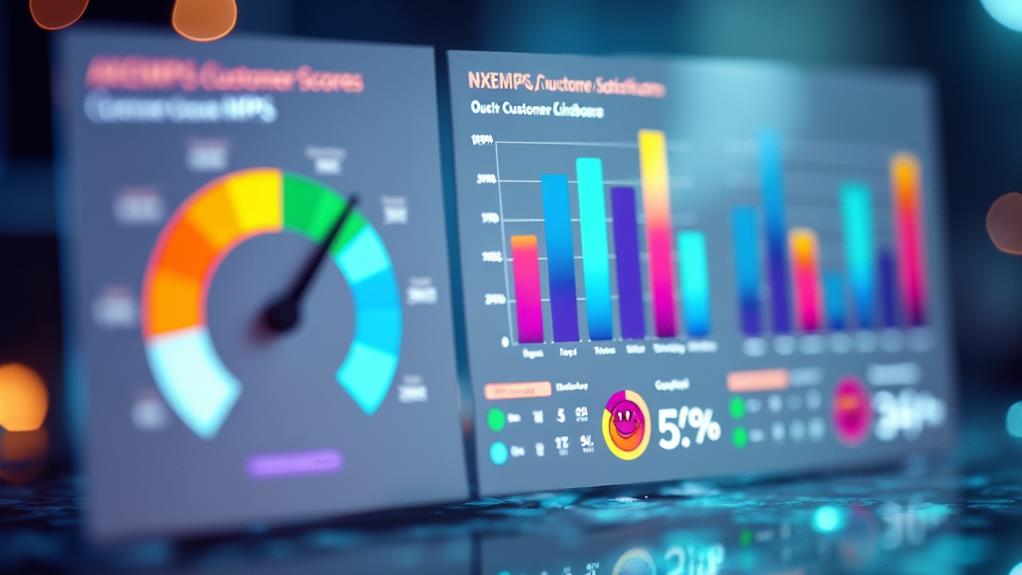
Customer loyalty and satisfaction are crucial for any SaaS business, and the Net Promoter Score (NPS) is an important metric in this context. NPS measures how likely customers are to recommend your product or service on a scale from 0 to 10. To calculate NPS, subtract the percentage of detractors (scores 0-6) from the percentage of promoters (scores 9-10), resulting in a score that ranges from -100 to +100.
A high NPS indicates strong customer loyalty and satisfaction, suggesting that your SaaS business is performing well. Conversely, a low NPS highlights potential issues that could lead to increased churn rates. By regularly measuring NPS, you gain valuable insights into customer sentiment, enabling you to identify areas for improvement in your offerings and customer support.
Understanding your NPS can guide efforts to enhance customer retention, as satisfied customers are more likely to remain loyal. Additionally, happy customers often become promoters, driving word-of-mouth referrals that can boost revenue growth. Monitoring your NPS ensures you are meeting customer needs and fostering a loyal user base, which is essential for long-term success in the SaaS industry.
Role of Dashboards
Recognizing the critical role of the Net Promoter Score (NPS) in assessing customer loyalty and satisfaction, we turn our attention to how dashboards are crucial for managing these and other key performance indicators (KPIs) in a SaaS environment. Dashboards provide a visual representation of essential metrics, making data interpretation simpler and enhancing overall employee engagement. By consolidating KPI data from various systems, they enable a cohesive understanding of performance across departments such as sales, marketing, and customer success.
Effective dashboards can be tailored to highlight the most relevant metrics, allowing teams to monitor performance in real-time and make informed decisions swiftly. This real-time insight is invaluable for customer success teams striving to improve client retention, or for marketing departments refining their strategies. Utilizing dashboards enhances transparency in KPI tracking, which can bolster employee accountability and comprehension of business objectives through clear data representation.
Regular updates and real-time insights from dashboards fuel continuous improvement initiatives, empowering SaaS companies to respond promptly to market changes and customer feedback. Here's why investing in effective dashboards is beneficial:
- Improved Transparency: Clearly tracked KPIs foster accountability.
- Real-Time Monitoring: Immediate insights facilitate quick decision-making.
- Cohesive Understanding: Provides a unified view of performance across departments.
Related posts