
The Role of Data Analytics in SaaS Performance Optimization

In the competitive SaaS landscape, optimizing performance is essential. Data analytics offers critical insights that enable informed decision-making, enhancing user experiences and driving growth.
By focusing on key metrics such as Monthly Recurring Revenue, you can identify trends and behaviors that might otherwise go unnoticed. Effectively harnessing this data can help overcome common challenges and ensure long-term success.
Understanding SaaS Analytics
SaaS analytics involves gathering and analyzing user data to gain insights into customer behavior and business performance. By leveraging data analytics, you can monitor key performance indicators (KPIs) such as Monthly Recurring Revenue (MRR) and Customer Lifetime Value (CLTV). These metrics are essential for assessing SaaS performance and making data-driven decisions.
Real-time data insights help you understand customer acquisition trends and engagement levels, enabling you to refine your marketing strategies. Effective SaaS analytics tools offer customizable dashboards that facilitate the integration and visualization of data, thereby enhancing your decision-making process.
Focusing on user metrics not only optimizes product development but also improves user satisfaction. Analyzing user behavior helps identify pain points and areas for improvement, leading to better retention rates.
Ultimately, data-driven decision-making in SaaS transforms your approach to customer support and overall business strategy. Embracing SaaS analytics provides the knowledge needed to remain agile and responsive in a competitive environment, ensuring your business meets customer needs effectively.
Key Features of Analytics Tools
Analytics tools are essential for optimizing business performance, offering features that enhance data visualization, usability, and overall analysis capabilities. By leveraging these features, you can significantly improve data-driven decision-making and user engagement.
Here are some critical features to consider:
- Customizable Dashboards: Tailor your insights to focus on the performance metrics that matter most to your business.
- Integration Capabilities: Seamlessly connect with existing software such as CRM and marketing platforms for comprehensive data analysis.
- Scalability: Ensure your analytics tools can grow with your business, accommodating increasing data volumes and expanding user bases.
- User-Friendly Interfaces: Intuitively navigate the tools to promote data investigation, making it easier for your team to engage with the analytics.
Selecting analytics tools with these features will empower your organization to optimize performance and confidently make data-driven decisions.
Enhancing User Experience
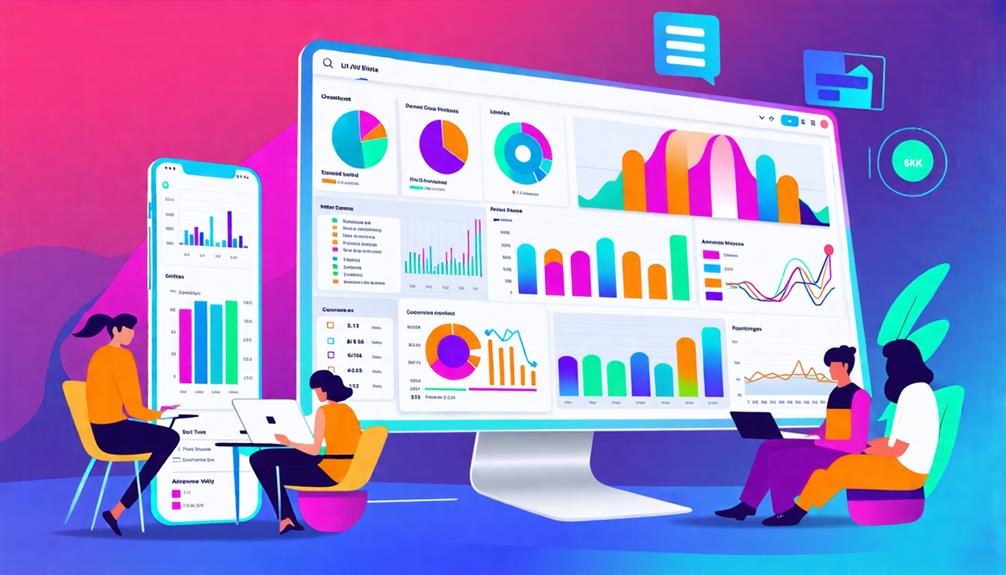
To enhance user experience, analyze user behavior to uncover patterns in how users interact with your SaaS product. This data can be leveraged to implement personalized engagement strategies that resonate with users. Such a targeted approach not only improves usability but also boosts overall satisfaction and retention.
User Behavior Analysis
Understanding user behavior is essential for enhancing user experiences and driving engagement in the competitive SaaS landscape. By leveraging user behavior analysis, businesses can gain valuable, data-driven insights into customer actions, which helps in optimizing performance and increasing user satisfaction.
Key components of user behavior analysis include:
- User interactions: Examine how users navigate your platform to identify and address friction points.
- Engagement patterns: Use clickstream data and heatmaps to visualize feature usage and user engagement.
- Segmentation: Categorize users based on their behavior to tailor experiences more effectively.
- Churn rates: Track trends to proactively reduce the likelihood of users discontinuing your service.
SaaS companies that implement user behavior analysis often see significant benefits, such as reducing churn rates by up to 50% and achieving profitability 19 times higher than those relying solely on intuition.
Focusing on data-driven insights not only enhances user experiences but also boosts customer retention and business growth. Understanding how users engage with your platform is a powerful tool for performance optimization, enabling you to maintain a competitive edge.
Personalized Engagement Strategies
Leveraging insights from user behavior analysis, personalized engagement strategies can significantly enhance user experience by tailoring interactions to individual preferences. By utilizing data analytics, you can identify specific user behavior patterns, facilitating effective segmentation. This targeted approach not only boosts customer satisfaction but can also increase acquisition rates by up to 23 times for data-driven organizations.
Employing tools such as heatmaps and clickstream analysis allows you to identify which features resonate most with users, enabling the creation of personalized onboarding experiences. Additionally, customer journey mapping through data analytics provides a detailed view of each user's path, which 90% of organizations find crucial for improving service delivery and reducing churn rates.
Incorporating real-time analytics into your strategy allows for immediate adaptation of marketing efforts based on user engagement data. This agility ensures timely adjustments that enhance the overall user experience and improve retention. By focusing on personalized engagement strategies, you won't only foster deeper connections with your users but also drive long-term loyalty and growth for your SaaS business.
Data-Driven Decision Making
Data-driven decision-making revolutionizes how SaaS companies function, enabling strategic choices based on empirical evidence rather than intuition. By leveraging data analytics, you can significantly enhance your SaaS performance, leading to improved outcomes across various domains.
Key aspects of data-driven decision-making include:
- Understanding user behavior: Analyzing user interactions with your platform helps refine features and enhance the user experience.
- Reducing customer churn: Identifying at-risk customers through churn analysis allows for targeted interventions, potentially reducing churn rates substantially.
- Optimizing customer acquisition costs: Data insights enable more efficient marketing strategies, streamlining customer acquisition.
- Utilizing key performance indicators (KPIs): Tracking data-derived KPIs helps measure success and align operational strategies with business goals.
Measuring Success and ROI
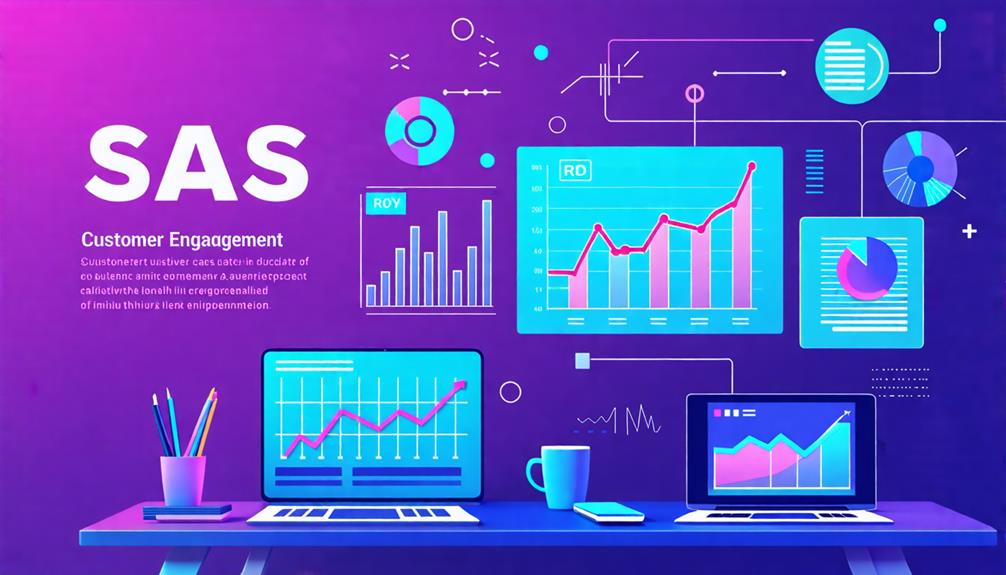
Measuring success and ROI in SaaS analytics requires tracking key performance indicators (KPIs) that accurately reflect your business's performance. Essential metrics such as Monthly Recurring Revenue (MRR), Customer Acquisition Cost (CAC), and Churn Rate are vital for assessing progress. Analyzing these metrics provides insights into customer retention and overall performance.
To calculate ROI, evaluate performance improvements post-implementation of analytics solutions, particularly focusing on increases in customer retention rates and revenue growth. Data-driven businesses are 23 times more likely to acquire customers, underscoring the significant impact of effective analytics.
Implementing robust analytics can lead to a 50% reduction in customer churn rates, significantly enhancing profitability and sustainability. Real-time data visualization tools enable continuous monitoring of ROI metrics, offering immediate feedback that supports rapid strategy adjustments.
This ensures alignment with business objectives, driving optimal results. By prioritizing these KPIs and adopting a data-focused approach, you can achieve consistent improvement in SaaS performance, leading to sustained success and ROI.
Overcoming Integration Challenges
When addressing integration challenges, it's crucial to ensure data quality and system compatibility. Poor data quality can result in inaccurate insights, while incompatible systems can hinder effective analytics.
Ensuring Data Quality
Ensuring data quality is essential for deriving accurate insights from analytics. Integrating multiple data sources often introduces challenges that can undermine the reliability of your results. By prioritizing data quality, you enhance the dependability of your analytics, leading to more informed decision-making.
Here are key strategies to address integration challenges:
- Establish robust data collection methodologies: Standardizing data formats ensures consistency across varied sources, facilitating seamless integration.
- Invest in integration tools: Implement APIs or data pipelines to consolidate data into a centralized repository, enabling comprehensive analysis.
- Regularly clean and maintain data: Periodically remove duplicates and correct errors to maintain data integrity.
- Implement effective data governance frameworks: Ensure compliance with regulations and maintain data security through structured governance practices.
Prioritizing data quality not only supports the accuracy of insights but also fosters trust in your analytics processes. By proactively addressing integration challenges, you can ensure your analytics efforts yield meaningful and actionable results, thereby facilitating informed decision-making within your organization.
Seamless System Compatibility
To enhance the insights derived from data analytics, ensuring seamless system compatibility is fundamental in overcoming the integration challenges faced by many organizations. With 70% of companies struggling to merge data from disparate sources, seamless integration is crucial for comprehensive analysis. Implementing a robust data integration strategy can greatly reduce data silos, leading to a 20-30% increase in operational efficiency by making all relevant data accessible for analysis.
Utilizing API-led connectivity is another effective way to advance your analytics capabilities. Approximately 60% of companies acknowledge that this approach boosts integration efficiency, allowing for smoother data exchange between systems.
However, it's essential to implement strong data governance frameworks to ensure compliance and security throughout the integration process, addressing the concerns of 58% of data professionals regarding data privacy.
Finally, the importance of keeping your integration tools updated can't be overstated. About 63% of organizations find that outdated systems increase maintenance costs and hinder analytical performance.
Best Practices for Implementation

Establishing clear goals and key performance indicators (KPIs) aligned with your business objectives is crucial for effectively implementing data analytics in SaaS performance optimization. This foundation ensures that your analytics efforts are focused and that you collect relevant data for informed decision-making.
Consider these best practices:
- Automate data collection: Centralize data from various sources to streamline processes and minimize manual errors.
- Implement data governance policies: Maintain high standards of data quality and accuracy to ensure reliable analytics.
- Choose the right analytics tools: Select tools based on their usability, scalability, and ability to integrate with existing systems.
- Conduct regular training sessions: Equip your team with the necessary skills to effectively use analytics tools and promote a data-driven culture.
Future Trends in SaaS Analytics
As the SaaS analytics landscape evolves, emerging trends like AI integration and real-time data processing are set to redefine how businesses optimize performance and improve user experiences. Staying informed about these trends is crucial for maintaining a competitive edge.
| Trend | Impact on User Experience |
|---|---|
| AI and Machine Learning | Enhances predictive analytics, leading to better user engagement |
| Real-Time Analytics | Enables swift responses to changes in user behavior |
| Embedded Analytics | Offers seamless insights without the need to switch platforms |
| Data Privacy Regulations | Ensures user trust through transparent and compliant practices |
The SaaS analytics market is projected to grow significantly, making investing in advanced analytics tools essential. Real-time analytics will allow you to respond quickly to evolving user behaviors, while embedded analytics will enhance the usability of your application. Incorporating AI and machine learning will provide predictive insights that drive performance optimization. Adhering to data privacy regulations, such as GDPR, is critical for maintaining user trust. By embracing these trends, you will be well-equipped to improve user experiences and achieve your business objectives.
Conclusion
In conclusion, leveraging data analytics is essential for optimizing SaaS performance. By analyzing user behavior and key metrics, you can enhance user experiences, make informed decisions, and ultimately boost ROI.
Adopting best practices and proactively addressing integration challenges will position you for success in this competitive landscape. Staying informed about evolving trends in SaaS analytics will ensure you continue to meet your customers' needs effectively and efficiently.