
SaaS Metrics Dashboard: What to Include and Why

When developing a SaaS metrics dashboard, it is essential to include key performance indicators that provide a comprehensive view of your business performance. Foundational metrics such as Monthly Recurring Revenue (MRR), Customer Acquisition Cost (CAC), and churn rate are crucial, but equally important are user engagement indicators. Understanding the interplay between these metrics can guide your strategic decisions and foster growth.
So, what combination of metrics will offer the insights needed to optimize operations and enhance customer satisfaction? Let's explore the fundamental components that can transform your dashboard into a powerful decision-making tool:
- Revenue Metrics:
- Monthly Recurring Revenue (MRR): Tracks predictable revenue and helps in forecasting future growth.
- Average Revenue Per User (ARPU): Measures the average revenue generated per user, providing insights into customer value.
- Customer Metrics:
- Customer Acquisition Cost (CAC): Calculates the cost of acquiring a new customer, critical for budgeting and ROI analysis.
- Customer Lifetime Value (CLTV): Projects the total revenue from a customer over their entire relationship with your business.
- Retention Metrics:
- Churn Rate: Indicates the percentage of customers who cancel their subscriptions, crucial for understanding retention.
- Renewal Rate: Measures the percentage of customers who renew their subscriptions, reflecting customer satisfaction and loyalty.
- Engagement Metrics:
- Active Users (Daily/Monthly): Monitors user activity, providing insights into product engagement and usage patterns.
- Feature Adoption Rate: Tracks how often new features are used, helping to gauge their success and impact.
- Operational Metrics:
- Support Tickets: Measures the volume of support requests, indicating potential issues or areas for improvement.
- Response and Resolution Times: Tracks the efficiency of your support team, influencing customer satisfaction.
By incorporating these metrics into your SaaS dashboard, you gain a holistic view of your business, enabling data-driven decisions that optimize operations and enhance customer satisfaction.
Overview of SaaS Metrics Dashboards
A SaaS metrics dashboard provides a centralized view of key performance indicators, enabling data-driven decision-making in real time. By integrating critical metrics such as Monthly Recurring Revenue (MRR), Customer Acquisition Cost (CAC), and churn rate, the dashboard offers a comprehensive overview of your financial and customer health. This insight allows for quick assessments of business performance and identification of areas needing adjustment.
User engagement metrics, such as active users and feature usage, enhance your understanding of customer interaction with your product. Visualizing these metrics helps identify trends and pinpoint areas for improvement, ultimately driving user satisfaction.
Customizable dashboards allow you to focus on specific business goals tailored to your unique needs. Whether monitoring sales performance or tracking marketing effectiveness, these dashboards consolidate various data sources into one accessible location.
This streamlined analysis eliminates the need to switch between multiple platforms, providing the clarity required for swift, informed decision-making. In a rapidly changing market, a robust SaaS metrics dashboard is essential for maintaining a competitive edge.
Importance of SaaS Dashboards
SaaS dashboards are essential for real-time performance monitoring, keeping you informed about key metrics. This immediate data access enhances decision-making, enabling swift responses to changing conditions.
Real-Time Performance Monitoring
Real-time performance monitoring through dashboards provides immediate insights into critical metrics, enabling swift, data-driven decision-making that propels your business forward. SaaS dashboards centralize data from various domains, offering visibility into key performance indicators (KPIs) such as Monthly Recurring Revenue (MRR) and customer churn rates. This real-time monitoring allows for rapid responses to performance fluctuations and fosters a data-driven culture within your organization.
| Metric | Purpose | Benefit |
|---|---|---|
| MRR | Track recurring revenue | Understand revenue trends |
| Customer Churn | Monitor customer retention | Identify potential retention issues early |
| Sales Conversion | Assess sales effectiveness | Optimize marketing and sales strategies |
Having the latest data readily available empowers you to make informed decisions that enhance operational efficiency. Regular monitoring helps identify trends and potential issues before they become critical. Moreover, real-time data visualization encourages collaboration across teams, as everyone can access the same up-to-date insights. This shared understanding not only streamlines discussions but also enhances strategic planning efforts, ensuring your SaaS business remains agile and competitive in a rapidly evolving marketplace.
Enhanced Decision-Making Capability
Effective decision-making relies on having access to centralized dashboards that deliver critical metrics and insights instantly. SaaS dashboards provide real-time visibility into key performance indicators (KPIs) such as Monthly Recurring Revenue (MRR) and Customer Acquisition Cost (CAC). This immediate access allows you to adapt strategies swiftly in response to market changes and shifting customer behaviors.
Customizable visualizations make it easy to identify trends and assess product performance, enabling you to detect potential issues before they escalate. The actionable insights derived from these dashboards foster data-driven discussions among your team, promoting collaboration and ensuring alignment with business objectives.
Timely access to consolidated metrics streamlines your decision-making process, reducing the need to sift through multiple reports. This efficiency allows you to respond quickly to critical business queries, making informed choices that propel your company forward.
Whether analyzing growth opportunities or refining marketing strategies, SaaS dashboards empower you to make smarter decisions, thereby enhancing overall performance. Embrace these tools to transform your approach and elevate your decision-making capabilities.
Essential Metrics to Include
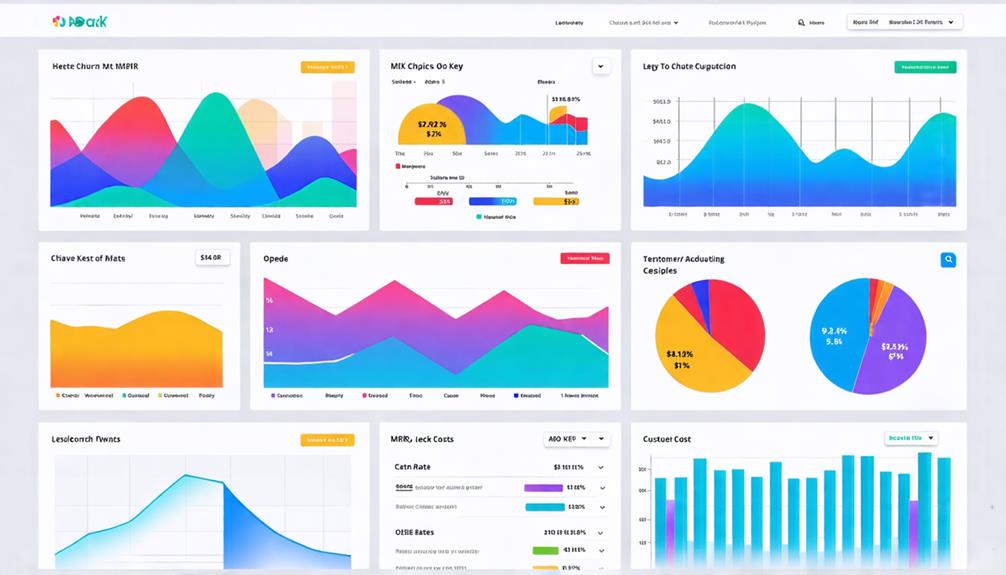
Including crucial metrics like Monthly Recurring Revenue (MRR) and Customer Acquisition Cost (CAC) can significantly enhance your understanding of your business's performance and growth potential. MRR offers insights into the predictable revenue generated from subscriptions each month, while CAC helps you evaluate the efficiency of acquiring new customers.
Another vital metric to monitor is the Churn Rate, which indicates the percentage of customers who cancel their subscriptions. A high churn rate can signal customer dissatisfaction and negatively impact retention. To counterbalance this, focus on Customer Lifetime Value (LTV), which estimates the total revenue expected from a customer over their relationship with your business.
User Engagement Metrics, such as Daily Active Users (DAU) and Monthly Active Users (MAU), are also important. They track how frequently customers interact with your product, providing insights into user satisfaction and product stickiness.
Types of SaaS Dashboards
When managing a SaaS business, leveraging various dashboards can offer valuable insights into different aspects of your operations and customer interactions.
A Product Usage Dashboard tracks key user engagement metrics such as Daily Active Users (DAU) and feature usage, allowing you to identify valuable features and refine your retention strategies. The User Retention Dashboard measures retention rates for new users over time, highlighting user behaviors and the effectiveness of your onboarding processes.
To assess how well you're converting new sign-ups, the New Users Activation Dashboard visualizes the conversion rate from sign-ups to activated users, helping you enhance onboarding efficiency. The NPS Dashboard aggregates customer feedback from Net Promoter Score surveys, offering insights into customer satisfaction and loyalty, thereby guiding product improvements.
Finally, the SaaS Growth Dashboard focuses on metrics like Monthly Recurring Revenue (MRR) growth and Customer Acquisition Costs (CAC), providing a comprehensive view of your company's performance trajectory.
Building Custom Dashboards
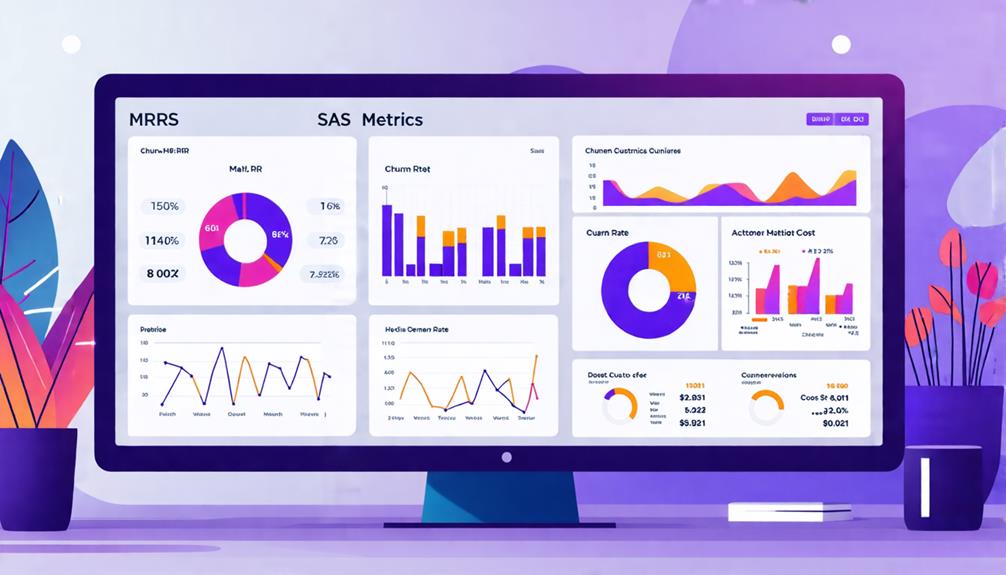
Building custom dashboards requires a clear understanding of your organizational goals and the key performance indicators (KPIs) that are most relevant to your success. By establishing a robust framework, you can efficiently track metrics such as customer lifetime value and monthly recurring revenue (MRR).
To build an effective custom dashboard, follow these steps:
- Define Specific Goals: Clearly outline your objectives before you begin the design process.
- Identify Relevant KPIs: Choose the KPIs that have the most significant impact on your business outcomes.
- Utilize Customization Options: Leverage Userpilot's customization features, such as widget arrangement and data filters, to create tailored views.
- Ensure Real-Time Data Updates: Verify that your dashboard provides real-time data updates to keep you informed about current performance metrics.
- Prioritize Implementation and Testing: Focus on thorough implementation and testing to ensure the accuracy and functionality of your dashboard.
User Engagement Strategies
Effective user engagement strategies are crucial for building a loyal user base and ensuring that your product meets user needs efficiently. Monitoring key metrics, such as Daily Active Users (DAU) and Monthly Active Users (MAU), provides a clear picture of user interaction levels.
To boost retention, incorporate features like personalized onboarding experiences and timely reminders for feature usage. These initiatives help keep users engaged and encourage them to explore your product further. Analyzing feature usage trends is equally important, as it enables you to focus development efforts on popular features while refining or eliminating less effective ones. This directly enhances user satisfaction.
Customer feedback is invaluable. Regularly gather insights through surveys and Net Promoter Score (NPS) assessments to better understand user needs. These insights can inform your marketing strategies and product development, ensuring alignment with user expectations.
Ultimately, consistently tracking user engagement metrics allows for proactive adjustments that enhance the overall user experience, fostering loyalty and driving long-term success.
Leveraging Feedback Mechanisms

Leveraging feedback mechanisms in your SaaS dashboard provides real-time insights that can directly influence product enhancements and feature development. Implementing user feedback channels allows you to gather valuable data, highlighting customer expectations and areas needing improvement. This proactive approach not only boosts user satisfaction but also enhances retention rates.
Consider these key aspects of integrating feedback mechanisms:
- User Feedback Collection: Encourage users to share their thoughts through surveys and comment sections.
- Engagement Platform: Create a community space where users can discuss best practices and insights, enriching the product experience.
- Continuous Improvement: Regularly analyze feedback to identify pain points and make necessary adjustments.
- Feature Development Alignment: Ensure that new features align with user needs and market trends, maintaining relevance.
Conclusion
In summary, a well-designed SaaS metrics dashboard is crucial for monitoring your business's health and growth. By including key metrics such as Monthly Recurring Revenue (MRR), Customer Acquisition Cost (CAC), churn rate, and user engagement statistics, you can make informed decisions that drive success.
Customizing your dashboard to meet your specific needs enables you to focus on the most critical aspects, while actively engaging with your users helps foster loyalty. Implementing these strategies will set you on the path to achieving your business objectives.
Related posts