
Measuring User Engagement in SaaS Applications

To effectively measure user engagement in your SaaS application, it's essential to focus on the right metrics. While tracking Daily Active Users (DAUs) and conversion rates is important, understanding the implications of these metrics is equally crucial.
These numbers can offer insights into how users interact with your product, but a deeper layer of analysis is often needed to fully inform your strategy. Let's explore the key metrics that can provide clarity and drive meaningful engagement, ensuring a comprehensive understanding of user behavior.
Understanding User Engagement Metrics
User engagement metrics are essential for understanding how users interact with your SaaS product and assessing their satisfaction levels over time. By monitoring active users, such as Daily Active Users (DAUs) and Monthly Active Users (MAUs), you can identify trends and spot potential issues in user engagement. High retention rates indicate that users find value in your product, while low conversion rates, such as trial-to-paid users, may signal areas for improvement.
The Net Promoter Score (NPS) is another critical metric, measuring customer satisfaction and loyalty by evaluating how likely users are to recommend your product. A strong NPS can drive organic growth through referrals, enhancing your user base. Additionally, the Product Engagement Score (PES) combines various interaction metrics, providing a simplified view of overall engagement and product stickiness.
Selecting the Right Metrics
When selecting metrics for user engagement in your SaaS application, it's crucial to focus on key performance indicators (KPIs) that align with your business objectives. Metrics such as conversion rates and user activation offer valuable insights into user interactions with your product.
Key Engagement Metrics
Selecting the right engagement metrics is crucial for effectively measuring how users interact with your SaaS application and perceive its value. By focusing on key metrics, you gain valuable insights into user behavior and can improve your application accordingly.
Here are four essential engagement metrics to evaluate:
- User Activation Rate: This metric tracks the percentage of users who complete key actions after signing up. It helps gauge the effectiveness of your onboarding processes, providing insights that can improve customer retention.
- Product Onboarding Engagement Rate: By measuring this rate, you can assess user engagement during the onboarding phase. It highlights areas where enhancements can drive better user adoption and overall satisfaction.
- Feature Adoption Rate: This metric indicates the percentage of users utilizing specific product features. It provides valuable insights into which features resonate most with users and drive overall engagement.
- Product Engagement Score (PES): This consolidated metric simplifies the measurement of user interaction by incorporating various metrics such as product adoption and stickiness. It offers a comprehensive view of user engagement, aiding in strategic decision-making.
Aligning Metrics With Goals
Aligning engagement metrics with your specific product goals is crucial for deriving actionable insights that drive growth and improvement. To effectively measure user engagement, it's important to select metrics that directly correlate with your objectives. Key metrics like conversion rates, user activation rates, and retention rates should be prioritized, as they offer valuable insights into user interactions with your product.
Incorporating both quantitative data—such as usage statistics—and qualitative data, like user feedback, ensures a comprehensive understanding of the customer experience. Regularly reviewing these metrics to reflect performance trends helps maintain their relevance and effectiveness in tracking user engagement over time.
Benchmarking against industry standards can further validate the effectiveness of your chosen metrics, providing context for evaluating user engagement performance. By aligning your engagement metrics with your product development strategies, you can focus on areas that truly matter, leading to improved retention rates and a stronger user connection.
This approach fosters an environment where actionable insights drive continuous improvement and innovation.
Key Engagement Metrics to Track
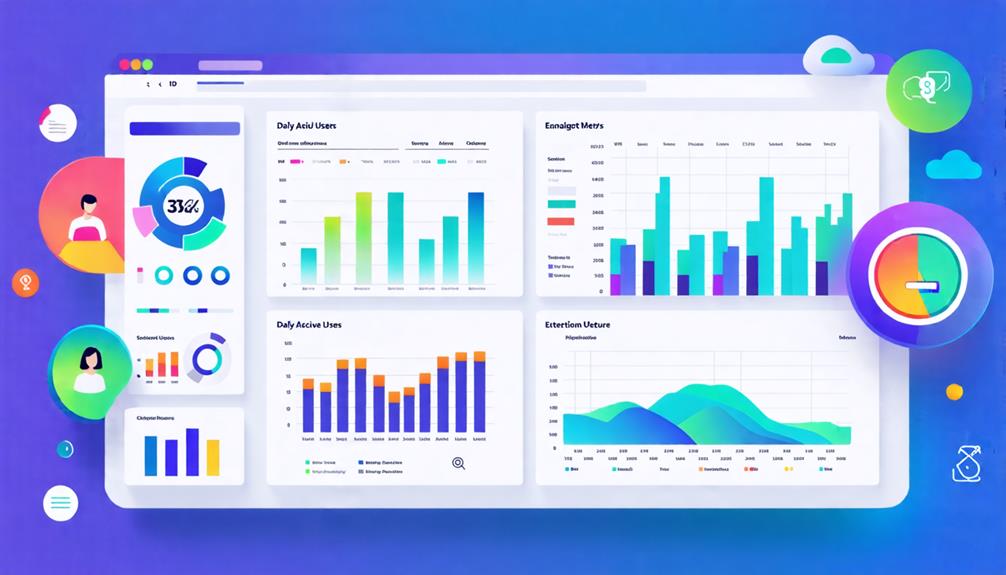
Evaluating user engagement requires focusing on key metrics such as conversion rates and user activation strategies. These indicators not only demonstrate how effectively users progress through your sales funnel but also identify areas for potential improvement.
Conversion Rates Analysis
Tracking conversion rates is crucial for understanding user engagement and evaluating how effectively your SaaS application converts potential customers into paying subscribers. By focusing on key metrics, you can gauge the success of your product and refine your strategies.
Here are four significant conversion rates to monitor:
- Trial to Paid Conversion Rate: This metric indicates the percentage of users who upgrade from a free trial to a paid subscription. High rates suggest strong product value and user engagement.
- Freemium to Premium Conversion Rate: This measures how many users transition from a free version to a premium version. It's critical for assessing the appeal and effectiveness of your premium features.
- Overall Conversion Rate: Calculated using the formula (Number of Conversions / Total Visitors) x 100, this metric provides insights into the effectiveness of your marketing campaigns.
- Customer Satisfaction Correlation: Regularly analyzing conversion rates helps identify trends, enabling you to adjust engagement tactics to improve user satisfaction.
User Activation Strategies
Monitoring user activation strategies is essential for enhancing engagement and ensuring users realize the full value of your SaaS application.
Start by tracking the User Activation Rate, which indicates the percentage of users completing significant actions post-signup. This metric is crucial for understanding long-term engagement and retention.
Next, focus on the Product Onboarding Engagement Rate. By analyzing how well users interact with onboarding resources, you can identify areas for improvement. Higher completion rates generally lead to better user adoption, so it's important to optimize your onboarding process accordingly.
Additionally, consider the Feature Adoption Rate. This metric shows the percentage of users utilizing specific product features, helping you determine which aspects drive engagement and which may need more attention.
Don't overlook Active Users metrics, such as Daily Active Users (DAU) and Monthly Active Users (MAU), to gauge user interaction over time.
Lastly, monitor your Retention Rate to see how many users continue using your product. A high retention rate signals effective engagement strategies, reflecting positive customer behavior and comprehensive user engagement.
Analyzing Conversion Rates
Analyzing conversion rates reveals how effectively users transition from free trials or freemium versions to paid subscriptions, highlighting their engagement and the perceived value of your product. By focusing on key metrics like the Trial to Paid Conversion Rate and the Freemium to Premium Conversion Rate, you can gain valuable insights into user behavior and identify areas for improvement.
Here are four critical aspects to consider:
- User Engagement: High conversion rates often indicate strong user engagement, suggesting that users find substantial value in your offering.
- Perceived Product Value: Understanding user perceptions of your product's value can guide enhancements in features and marketing strategies.
- User Onboarding: Optimizing the onboarding process is crucial as it can significantly impact conversion rates by ensuring users comprehend the benefits of upgrading.
- Growth Opportunities: Regularly benchmarking your conversion rates against industry standards helps SaaS companies uncover growth opportunities and refine their user engagement strategies.
Evaluating User Activation

User activation is vital for gauging how effectively users engage with your SaaS application post-signup. A high user activation rate indicates successful onboarding processes, guiding users to complete essential actions, thereby enhancing user satisfaction and retention.
Key factors influencing user activation include:
| Factor | Description | Impact on Engagement |
|---|---|---|
| User Activation Rate | Percentage of users completing key actions | Directly correlates with retention rates |
| Cohort Analysis | Analyzing specific user segments | Helps tailor your engagement strategy |
| Tracking Metrics | Tools to monitor user performance | Informs improvements in onboarding processes |
To boost user engagement, implement clear onboarding processes that emphasize the product's value. Successful activation milestones will differ by product, so employ cohort analysis to understand varying user behaviors. Use tracking tools like Userpilot to monitor metrics, optimize your engagement strategy, and enhance product retention. Effective user activation leads to sustained user engagement.
Tracking Active Users
Tracking active users provides essential insights into how well your SaaS application retains its audience and fosters ongoing engagement. By monitoring these metrics, you can understand user behavior and refine your strategies to enhance customer satisfaction.
Here are four key aspects to examine when tracking active users:
- Daily Active Users (DAUs): Measure the number of unique users interacting with your application each day, offering a snapshot of daily engagement.
- Monthly Active Users (MAUs): Monitor user activity over a month to assess long-term engagement trends and retention rates.
- Engagement Rate: Calculate this by dividing the number of active users by the total user base. A higher engagement rate reflects effective retention strategies.
- User Behavior Insights: Analyzing trends in active user data helps identify potential issues. A decline may indicate engagement problems that need immediate attention.
Measuring Feature Utilization

Understanding how well users are embracing the features of your SaaS application is essential. The Feature Adoption Rate metric is crucial as it shows the percentage of users actively utilizing specific product features, reflecting their value and alignment with user needs. Tracking Core Feature Usage helps identify which features drive user retention, guiding your product development efforts effectively.
To measure feature utilization accurately, collect data on user interactions, such as clicks and time spent on features. This provides insights into user behavior and preferences. Regular analysis of Feature Utilization Metrics can significantly improve user engagement and customer retention.
Key metrics to evaluate include:
| Metric | Description |
|---|---|
| Feature Adoption Rate | Percentage of users using specific features |
| Core Feature Usage | Key features driving user retention |
| Engagement Metrics | Data showing user interaction levels |
| Cohort Analysis | Assessment of different user segments over time |
Utilizing cohort analysis allows you to identify how different user segments engage with features. This enables the implementation of targeted strategies to improve adoption rates, particularly among less engaged users.
Customer Loyalty Metrics
Customer loyalty metrics offer crucial insights into user satisfaction and engagement with your SaaS application. Monitoring these metrics can enhance customer interactions, boost retention rates, and expand your customer base.
Here are four key loyalty metrics to track:
- Net Promoter Score (NPS): This metric assesses customer loyalty by asking users how likely they're to recommend your product. A high NPS indicates robust engagement and satisfaction.
- Customer Satisfaction Rating (CSAT): This measures satisfaction levels across various support channels, typically on a scale of 1 to 5. It helps identify areas needing improvement.
- Customer Retention Rate (CRR): This percentage reflects the number of customers you retain over a specific period. A high CRR signifies effective engagement strategies and strong customer loyalty.
- Churn Rate: This metric calculates the percentage of customers lost during a given timeframe. A high churn rate may indicate issues with product fit or customer satisfaction.
Additionally, consider Customer Lifetime Value (CLV) to predict total revenue generated from customers, influenced by retention rates and average order value.
Tracking these metrics helps foster deeper customer loyalty and drive business growth.
Tools for Engagement Measurement

Effectively measuring user engagement in your SaaS application requires using the right tools that provide comprehensive insights into user interactions. Userpilot is one such tool, offering features for tracking various engagement metrics, including onboarding checklists and gamification elements. By tagging product features, you can analyze user paths and accurately calculate adoption and retention rates.
Heap is another valuable tool that tracks specific engagement events, allowing you to collect data on customer interactions and evaluate the effectiveness of your engagement strategies. Data visualization platforms like Google Analytics help you identify trends and inform strategic decisions. These platforms often provide role-based dashboards that consolidate multiple KPIs, making it easier to analyze the data.
Regularly using user behavior tools and feedback mechanisms is crucial for optimizing user experience. These tools allow you to adjust your engagement strategies based on real user data, ensuring you effectively meet customer needs. Implementing the right combination of these tools can enhance user engagement in your SaaS products, leading to improved adoption and retention rates.
Conclusion
In summary, measuring user engagement in your SaaS application is crucial for understanding user interactions with your product. By tracking key metrics such as Daily Active Users (DAUs), Monthly Active Users (MAUs), and conversion rates, you gain valuable insights into user behavior and satisfaction.
This data enables you to refine your strategies, enhance onboarding processes, and ultimately boost customer loyalty. Leveraging tools like Userpilot and Google Analytics can streamline this process, making it easier to improve user experiences and drive long-term success.
Related posts