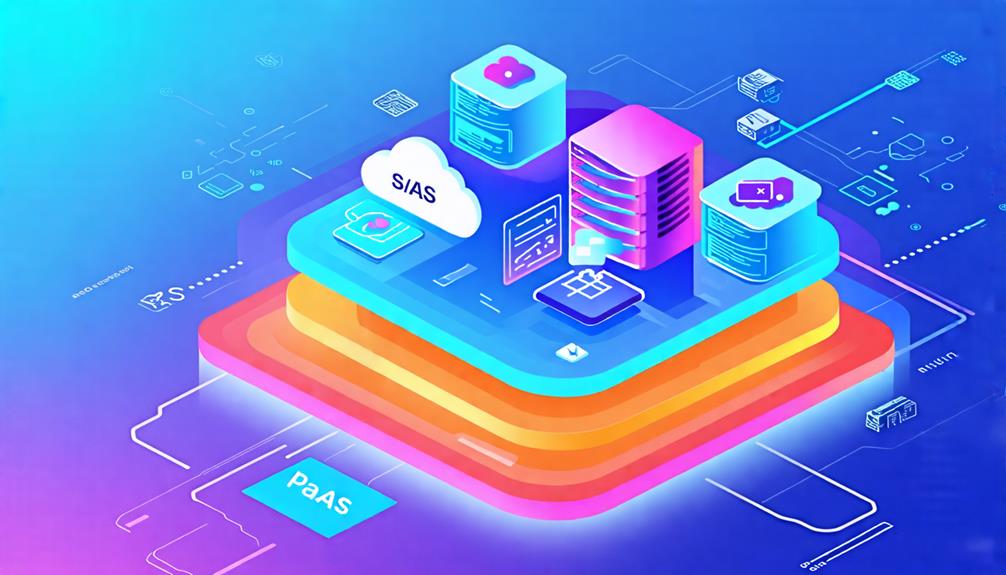
IaaS vs. FaaS: Which Cloud Service Model Is Right for Developers?

When choosing between IaaS and FaaS for development, think about your project's specific needs. IaaS offers full control over infrastructure, ideal for complex systems where you manage everything from the OS up. It's perfect if you need customizable solutions and have steady workloads. Conversely, FaaS abstracts infrastructure management, allowing you to focus solely on code. It scales automatically, which is great for variable demand and pay-as-you-go billing saves costs on irregular workloads. Additionally, FaaS speeds up deployment time, ideal for quick market entries.
Each has its strengths depending on your prioritization of control versus ease and flexibility. Discover more for informed decisions.
Key Takeaways
- IaaS offers developers full control over infrastructure, ideal for complex applications requiring specific configurations.
- FaaS abstracts infrastructure management, allowing developers to focus solely on writing and deploying code quickly.
- IaaS supports stateful applications, providing flexibility for developers managing persistent data and long-running processes.
- FaaS automatically scales with demand, making it suitable for developers handling event-driven, unpredictable workloads.
- FaaS's cost efficiency benefits developers with sporadic workloads, charging only for the actual compute time used.
Understanding IaaS and FaaS
Understanding IaaS and FaaS is crucial for developers navigating cloud service models.
IaaS, or Infrastructure as a Service, offers you on-demand access to virtualized servers and storage. You control the virtual environment while the provider manages the physical infrastructure. This setup offers flexibility in resource allocation and scalability, making it ideal if you need full control over your cloud services.
Although it requires more configuration, it allows you to tailor the environment to your specific needs. In contrast, PaaS (Platform as a Service) provides infrastructure and middleware that streamline app development, allowing users to focus more on application creation rather than managing the underlying infrastructure.
On the other hand, FaaS, or Function as a Service, operates differently. This cloud service follows an event-driven model, letting you focus on executing code in response to specific triggers. You don't have to worry about managing servers or low-level infrastructure, which significantly reduces operational overhead.
FaaS is optimized for efficiency, charging based on execution time and resource consumption, which is perfect for applications with variable workloads.
While IaaS is suitable for long-running applications due to predictable costs, FaaS is constrained by execution time limits.
Despite this, the simplicity of deploying functions without managing infrastructure can be a game-changer for developers looking to streamline their processes.
Key Differences Between Models
How do IaaS and FaaS truly differ for developers when choosing a cloud service model? It all starts with infrastructure management. With IaaS, you're tasked with managing the entire software stack, from operating systems to middleware. It gives you control, but it can be time-consuming.
On the other hand, FaaS abstracts that complexity, letting you focus solely on writing and deploying code in response to events.
The billing model is another critical distinction. IaaS usually follows a pay-per-use or subscription model based on provisioned resources. It's ideal for consistent workloads.
Meanwhile, FaaS charges only for the execution time of functions, making it more cost-effective for sporadic workloads.
When it comes to scalability, IaaS allows you to manually adjust resources based on demand. FaaS takes it further, automatically scaling functions in response to events without user intervention, optimizing resource utilization.
State management also sets them apart. IaaS supports stateful applications, where data persists beyond requests.
FaaS is designed for stateless functions, making each execution independent.
Lastly, deployment speed is a key factor. FaaS enables rapid deployment since you can quickly deploy functions without fussing over infrastructure, unlike IaaS, which demands more setup time. To make informed decisions, developers should consider the service level agreements that define expectations and commitments when opting for either model.
Benefits of Using IaaS

While developers might be tempted by the allure of newer cloud models, IaaS offers several compelling benefits that shouldn't be overlooked. This cloud solution provides on-demand access to virtualized hardware resources, letting you bypass the need for hefty physical hardware investments.
With IaaS, you can easily provision servers, storage, and networking through virtual machines, granting you a robust infrastructure that's both cost-effective and flexible.
Here are four key benefits of using IaaS:
- Cost Savings: You only pay for the resources you consume, shifting from capital expenditure to operational expenditure. This means significant cost savings as you avoid upfront investments in physical hardware.
- Rapid Scaling: IaaS solutions, like AWS EC2 and Google Compute Engine, allow you to quickly scale resources to accommodate fluctuating workloads. This is ideal for applications with variable demand, ensuring optimal performance without wasting resources.
- Flexibility: You have the freedom to configure and customize the infrastructure based on specific application requirements and performance needs. This flexibility empowers you to tailor your cloud environment precisely.
- Full Control: Retain complete control over the operating systems and software stacks, allowing for greater experimentation and the creation of tailored development environments.
Additionally, IaaS supports the deployment of various applications and services, making it a versatile option for businesses seeking to optimize their IT infrastructure.
Advantages of FaaS
Embracing the innovation of Function as a Service (FaaS) can transform the way developers approach cloud computing. With FaaS, you'll enjoy cost efficiency because it operates on a pay-as-you-go model. You only pay for the compute time your code uses, making it ideal for applications with variable workloads. This cost-saving feature is a game-changer for managing your budget effectively.
FaaS also offers event-driven scalability, automatically adjusting to handle incoming requests or events. You won't need to worry about manually scaling or provisioning resources, as your cloud provider manages this seamlessly. This means reduced operational overhead, allowing you to concentrate on writing code rather than managing infrastructure.
You'll benefit from a faster time-to-market as well. With FaaS, deploying individual functions to the cloud is a breeze, and you can iterate on them independently. This accelerates the entire application development process, getting your solutions to users quicker.
Moreover, FaaS promotes simplified integration with other cloud services and APIs. You can effortlessly create complex applications by combining small, discrete functions that respond to events. Automatic scaling adjusts resources dynamically based on demand, optimizing resource usage and minimizing costs. This streamlined approach enhances your application development, making FaaS a powerful cloud service choice.
Scalability Considerations

FaaS has many benefits, but understanding scalability considerations is key when choosing between cloud service models. As a developer, you need to consider how your applications will handle varying workloads and resource demands. IaaS and FaaS offer different scalability options to fit your needs.
1. IaaS Scalability: With IaaS, you can dynamically provision virtual machines and resources based on demand. This model allows you to scale vertically, increasing the size of existing instances, or horizontally, by adding more instances.
This flexibility is great for applications requiring persistent resources and custom configurations.
2. FaaS Scalability: FaaS automatically scales your functions in response to specific events, eliminating the need to manage underlying infrastructure. This cloud service is ideal for stateless applications with unpredictable workloads, as it rapidly adjusts to spikes in usage without manual intervention.
3. Resource Efficiency: FaaS offers more efficient resource utilization, as you're only charged for actual usage. This can lead to cost savings, especially for applications with irregular or peak workload patterns.
4. Application Suitability: Consider IaaS for applications needing continuous operation and FaaS for event-driven tasks that benefit from quick scaling.
Choosing the right model ensures optimal performance and resource allocation for your applications.
Each type of cloud computing service, IaaS, PaaS, FaaS, and SaaS, supports scalability and operational efficiency tailored to different business needs.
Security and Compliance
When considering cloud service models, understanding the security and compliance landscape is crucial. With IaaS, you gain more control over security configurations and compliance measures since you manage the underlying infrastructure. This allows you to implement custom data encryption solutions and directly handle incident response.
However, this control comes with the responsibility of monitoring and mitigating vulnerabilities such as misconfigured servers and applications.
On the other hand, FaaS abstracts these security controls, placing reliance on the service provider's protocols. This can limit your ability to customize security measures, as FaaS typically provides built-in encryption defaults that may not meet specific organizational requirements.
Furthermore, incident response in FaaS often depends on the service provider's logging capabilities and event management processes, which may not offer the same level of direct access as IaaS.
Regarding compliance, major IaaS providers like AWS and Azure hold comprehensive certifications (e.g., ISO 27001, HIPAA, GDPR), which can help you ensure your applications meet industry regulations.
FaaS, due to its serverless nature, often offers more limited compliance options. Thus, balancing security and compliance needs against the provided cloud service model's features is key. To enhance security in cloud services, implementing strong, unique passwords and enabling two-factor authentication are recommended best practices.
Choosing the Right Model

Balancing security and compliance is just one part of the equation; selecting the right cloud service model depends on various factors that affect development and operational efficiency. As you consider cloud migration, you'll need to evaluate whether IaaS or FaaS aligns with your project's needs. Each model offers distinct advantages that can impact your cost structure, scalability, and overall application platform.
- Resource Management: IaaS offers full control over your virtualized infrastructure, letting you manage complex systems with precision. In contrast, FaaS abstracts these details so that the developer just writes code for specific functions, which is ideal for simpler, event-driven tasks.
- Cost Structure: If your workloads are sporadic, FaaS's pay-per-execution model might save you money compared to IaaS's reserved resource charges.
- Scalability: For seamless scalability, FaaS automatically adjusts to demand without manual intervention, while IaaS requires manual scaling, which may suit stable workloads better.
- Complexity of Applications: If your applications involve complex state management or long-running processes, IaaS could be the better choice. FaaS excels with short-lived, stateless functions but might struggle with intricate workflows.
Choosing the right cloud model depends on these key considerations. As you evaluate your options, be mindful of the security and compliance risks associated with cloud service models, as these can vary significantly between IaaS and FaaS environments.