How to Select the Right Hosting Plan for Your Service-Based Business
When selecting a hosting plan for your service-based business, it's crucial to evaluate your unique needs. Consider the nature of your services, your target audience, and the traffic you anticipate.
Different hosting types—shared, VPS, or dedicated—each have their advantages and disadvantages. Understanding these can save you both time and money. Additionally, factors such as performance, security, and budget are significant.
How can you effectively balance these elements to choose the right hosting plan?
Understanding Business Needs
To choose an effective hosting plan, you must understand your business's unique requirements and objectives.
Begin by evaluating the nature of your services and your target audience. This will help you identify the functionalities necessary for optimal website performance.
Next, assess your current and projected traffic volumes to determine the required bandwidth and storage capacity. This step is crucial for ensuring a seamless user experience, especially during peak periods. If your website features text, images, or interactive elements, ensure the hosting plan provides adequate resources and performance.
Consider your business's future growth potential. Opt for web hosting providers that offer scalable solutions, allowing your hosting plan to evolve with your business and traffic.
Additionally, evaluate your team's technical expertise to decide between a managed hosting solution, which offers more support, or a self-managed option that requires more hands-on management.
Aligning your hosting plan with both your current needs and future goals will establish a strong foundation for your online presence.
Types of Hosting Plans
Understanding the different types of hosting plans available can help you make an informed decision that aligns with your business needs.
For small service-based businesses with budget constraints, shared hosting is a cost-effective solution, as multiple websites share a single server's resources. However, as your business scales, you might want to consider VPS hosting, which offers dedicated resources in a virtual environment, providing more control and customization.
For high-traffic service-based businesses handling sensitive data, dedicated hosting is ideal. It provides an entire server dedicated to your needs, maximizing both performance and security.
Another flexible option is cloud hosting, which utilizes a network of virtual servers. This allows you to scale resources dynamically based on traffic fluctuations, ensuring your site remains reliable and cost-effective, especially during peak times.
Lastly, managed hosting offloads server management and technical support to the service provider, allowing you to focus on core business operations without worrying about maintenance.
Each of these hosting plans offers unique benefits, so carefully evaluate your specific requirements to choose the best one for your business.
Performance and Security

When selecting a hosting plan, prioritizing performance and security is essential. Fast loading times and a reliable uptime guarantee are pivotal for maintaining customer engagement and preserving your reputation.
Additionally, robust security measures are crucial for protecting sensitive data, thereby ensuring trust in your online transactions.
Speed and Efficiency
Speed and efficiency are critical for your business, as they directly influence user experience and trust. When choosing a web hosting plan, prioritize features that enhance performance and reliability.
Consider the following key factors:
- Fast loading times: Aim for loading times under 3 seconds to improve user experience and boost search engine rankings.
- SSD storage: Choose SSD storage over traditional HDDs to enhance website performance by up to 300%.
- Uptime guarantee: Select a hosting provider that offers at least 99.9% uptime to ensure your site remains accessible.
Security Features Importance
Security features are essential for safeguarding your website and maintaining customer trust, ensuring your business operates smoothly and efficiently. One of the most critical elements is the use of SSL certificates. These certificates encrypt data during transmission, protecting sensitive customer details and payment information from potential breaches.
When choosing a hosting provider, prioritize those offering robust security measures such as firewalls and DDoS protection. These features enhance your website's resilience against malicious attacks, reducing the risk of downtime. Additionally, ensure your plan includes regular automated backups. These backups are vital for recovering critical data in the event of data loss or security incidents, thereby preventing operational disruptions.
Another key feature to consider is malware scanning. This capability helps detect and remove infections that could impair your site's performance and undermine user trust.
It's important to note that a strong security posture not only shields your business but can also improve your search engine rankings. Google favors secure websites, so investing in these security features can enhance your online visibility.
Cost and Budget Considerations
When selecting a hosting plan, it's crucial to evaluate the total cost, including any potential hidden fees. Consider long-term financial implications, as unexpected renewals or upgrades can affect your budget.
Total Cost Assessment
Evaluating the total cost of a hosting plan involves more than just the initial fees; it's crucial to consider renewal rates and additional expenses that can affect your long-term budget.
When assessing the total cost, keep these key points in mind:
- Initial hosting fees may be low, but renewal rates can increase significantly.
- Additional costs for essential features like SSL certificates, backups, and security measures can accumulate.
- Compare the total cost of ownership across different hosting plans, especially as your business scales and traffic grows.
Hidden Fees Awareness
Many hosting providers attract customers with low initial prices, but hidden fees can quickly inflate your total costs. It's essential to read the fine print before making a decision. For example, renewal rates often rise significantly after the initial contract period, so it's crucial to know what you'll pay once the introductory offer ends.
Be cautious of extra features that may seem necessary but come with additional charges, such as SSL certificates or backups. Exceeding bandwidth limits can also lead to unexpected expenses, especially during traffic surges. Carefully review the terms and conditions to uncover any cancellation fees or refund policies, as many providers impose charges for early termination.
Also, be aware of setup or migration fees—some hosting companies might charge these costs when you sign up or transfer your existing website to their platform.
Long-term Financial Planning
Selecting a hosting plan requires careful consideration of the total cost of ownership, which includes initial fees, renewal rates, and potential upgrade expenses. It's imperative to incorporate long-term financial planning to ensure your hosting choice aligns with your budget.
Consider these key factors:
- Initial and Renewal Rates: Opt for hosting providers with transparent pricing structures that clearly outline future costs.
- Upgrade Costs: Plan for potential upgrades and how they might impact your budget.
- Customer Support Options: Determine if 24/7 support is included or if it incurs additional fees, as reliable support can help prevent costly downtime.
Evaluating Hosting Providers
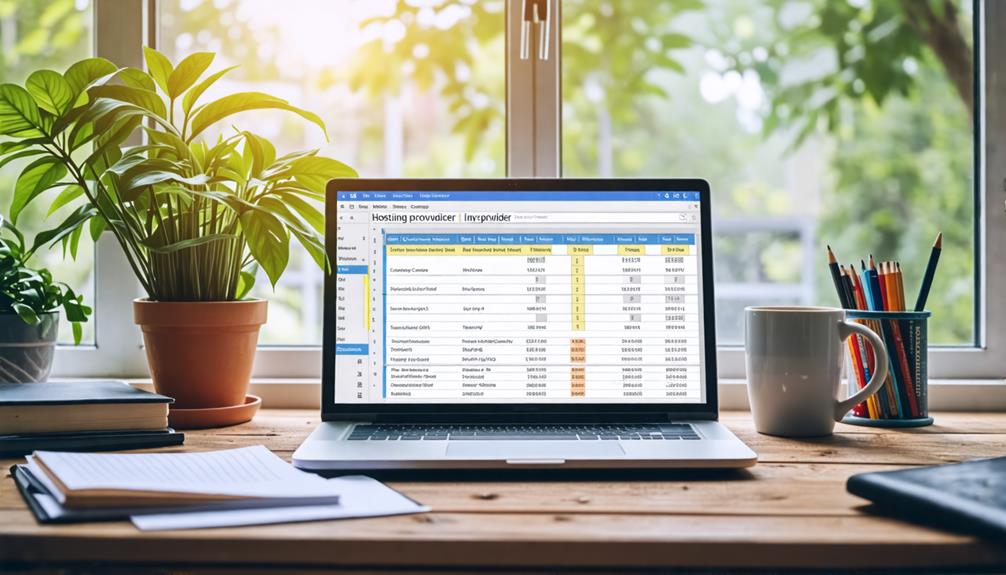
When choosing a hosting provider, prioritize key factors like uptime guarantees, customer support, and security features to ensure your business's online presence runs smoothly. Here's a quick comparison table to help you evaluate potential options:
| Hosting Provider | Uptime Guarantee | Customer Support Options | Security Features |
|---|---|---|---|
| Provider A | 99.9% | 24/7 Chat, Phone, Email | SSL Certificates, Firewalls |
| Provider B | 99.8% | 24/7 Email, Limited Chat | Basic Security Measures |
| Provider C | 99.95% | 24/7 Phone, Chat, Email | Advanced Security Features |
| Provider D | 99.9% | 24/7 Chat Only | SSL Certificates |
| Provider E | 99.7% | Limited Support Hours | Minimal Security Measures |
Additionally, evaluate performance metrics such as server speed and resource allocation to improve your website's loading times. Analyze the security features offered, like SSL certificates and firewalls, to protect sensitive data. Customer reviews can provide valuable insights into the reliability and performance of potential providers. By considering these factors, you can find a reliable hosting provider that meets your web hosting needs.
Data Center Locations
Data center locations are pivotal in optimizing website performance and enhancing user experience by reducing latency. Proximity to your target audience directly affects load times, making it crucial to consider the following factors when choosing a hosting provider:
- Proximity: Shorter distances between the data center and your audience reduce latency, resulting in faster load times.
- Redundancy: Providers with multiple data centers offer better uptime and reliability, especially during high traffic periods.
- Internet Infrastructure: Opt for hosts with data centers in regions known for robust internet connectivity to ensure optimal performance.
Selecting a hosting provider that aligns with these considerations will contribute to a more efficient and reliable website experience.
Making the Final Decision

After evaluating factors like data center locations, it's crucial to make a well-informed final decision for your hosting plan. Start by selecting a hosting provider that aligns closely with your website's specific needs. Ensure the plan includes fundamental features such as scalability, which allows your site to grow alongside your business.
Assess the security features offered by the provider, including SSL certificates and regular backups, to protect sensitive customer data effectively.
Additionally, consider potential technical issues; having a reliable support team is essential. Verify their customer support availability—24/7 support is vital for timely resolutions.
Conclusion
Selecting the right hosting plan for your service-based business is crucial for achieving success. By identifying your specific needs and assessing various hosting options, you can find a plan that delivers the necessary performance, security, and support.
Keep your budget in mind while ensuring the solution accommodates future growth. Conduct thorough research on providers and their data center locations to make an informed decision that will benefit your business in the long run.