
Future Trends in Automotive SaaS: What to Expect in the Next Decade

In the next decade, you'll see Automotive SaaS embracing electrification, with EVs driving software demand. AI and machine learning will enhance vehicle efficiency, while connectivity expands through 5G and IoT. Expect autonomous vehicles to grow, with Mobility as a Service (MaaS) reshaping transportation preferences. Sustainable practices will lead the charge with recyclable materials and renewable energy production. Charging infrastructure will see considerable advancements, and smarter supply chains will emerge. Regulatory enhancements and new safety standards will be pivotal in adopting these innovative technologies. Curious about how these shifts will redefine the roads and industries around you?
Key Takeaways
- Automotive SaaS solutions will enhance scalable services and streamline data management for efficient vehicle operations.
- Over-the-air updates will continuously improve vehicle functionality, offering real-time enhancements and maintenance.
- AI-driven predictive maintenance will reduce vehicle issues by analyzing real-time data for optimal performance.
- Connected vehicle technologies will generate significant revenue through advanced data analytics and customer insights.
- Integration of SaaS with IoT will boost operational efficiency and connectivity in automotive systems.
Electrification and Software Integration
Electrification is revolutionizing the automotive industry, and software integration is at the heart of this transformation.
You're witnessing a shift as electric vehicles (EVs) are poised to overtake internal combustion engine (ICE) vehicles by 2036. This change significantly boosts the demand for software solutions that enhance battery performance and energy efficiency.
The automotive software market is on track to grow from $31 billion in 2019 to a staggering $80 billion by 2030, driven by the need for advanced electrification technologies.
With the market for electric vehicle components, including crucial software for battery management and power electronics, valued at over $100 million in 2023, the trend of electrification is reshaping supply chains.
Software-defined vehicles (SDVs), a cornerstone of this evolution, rely heavily on seamless hardware and software integration. Over-the-air updates play a key role in enhancing vehicle functionality and user experience.
As an EV owner, you'll benefit from continuous optimization, ensuring your vehicle operates at peak efficiency.
As the automotive industry evolves, electrification trends dominate, particularly in developing software for energy management and vehicle-to-everything (V2X) communication systems, shaping the future of transportation technology.
In parallel, the growing adoption rates of SaaS solutions in the banking sector illustrate how software is reshaping industries by improving scalability, security, and accessibility.
AI and Machine Learning Evolution
AI and machine learning are rapidly transforming the automotive SaaS landscape, setting the stage for groundbreaking changes in vehicle technology. They're not just buzzwords; they're driving forces behind predictive maintenance solutions that keep your vehicles in top shape. By analyzing real-time data, AI helps you anticipate and fix potential issues before they become costly problems.
This evolution in the automotive technologies market is making cars smarter and more efficient. You'll notice that AI is streamlining design and production processes, enhancing operational efficiency. As vehicle systems grow more complex, the AI market in the automotive sector is expanding to match.
AI-driven advancements in connected vehicle technologies are opening up substantial revenue opportunities. These connected vehicle services underscore the growing importance of data analytics and software, which are reshaping the future automotive landscape.
Machine learning is also pivotal in understanding consumer behavior and market demands. It allows automotive companies to tailor their offerings, improving customer engagement and satisfaction.
As you look ahead to 2034, expect the automotive technologies market, heavily influenced by AI and machine learning, to achieve a whopping CAGR of 21.1%, reaching over $1.6 trillion. The future is undeniably digital and data-driven. The growth of AI-driven personalization in customer interactions will continue to redefine how automotive services are delivered and experienced.
Autonomous Vehicle Advancements

Autonomous vehicle advancements are revolutionizing the automotive industry, with the market poised to unlock a staggering $10 trillion opportunity by 2035. As autonomous technology evolves, advanced driver assistance systems (ADAS) are becoming more sophisticated, driving consumer acceptance and integration into everyday vehicles.
By 2030, you can expect 12% of vehicles to boast Levels 3 and 4 autonomous driving capabilities, highlighting a significant shift towards automation.
The growth of Level 2 ADAS is impressive, with projections showing an annual increase of up to 30% through 2025. This surge is fueled by automotive perception sensors, which are essential for enabling these systems.
Cameras and radars dominate this market, valued at over $10 billion, providing critical data that allows vehicles to perceive and react to their surroundings effectively.
The introduction of higher-level autonomous driving software is setting the stage for broader deployment. As regulatory frameworks adapt, market penetration is expected to rise significantly.
A noteworthy milestone is the Mercedes S-Class, which introduced SAE Level 3 self-driving technology in 2022-2023. This advancement marks a pivotal moment in the journey towards fully autonomous vehicles, setting a precedent for future developments.
Additionally, companies in the automotive industry are increasingly adopting SaaS solutions to enhance scalability and operational efficiency, further driving innovation in autonomous vehicle technology.
Connectivity and IoT Expansion
Amid the rapid evolution of automotive technology, connectivity and IoT expansion are crucial drivers of innovation. The market for connected vehicles is set to explode, growing from USD 0.8 billion in 2023 to an astounding USD 568 billion by 2035. This growth is fueled by integrating advanced features and services that enhance your driving experience. Imagine your car automatically paying for parking or charging, generating potential earnings of USD 1,600 per vehicle annually.
The adoption of Vehicle-to-Everything (V2X) communication is another game-changer. It's essential for improving traffic management and supports the shift towards autonomous driving. You'll notice smoother traffic flow and increased safety as vehicles communicate with each other and surrounding infrastructure. Moreover, the rise of 5G networks will significantly boost vehicle connectivity. With faster and more reliable communication channels, you can expect real-time data sharing that enhances your overall driving experience.
By 2030, over-the-air updates will allow your vehicle to receive new features seamlessly, just like your smartphone. This means your car's functionality will continuously improve, keeping you at the forefront of technological advancements. The integration of SaaS and IoT in the automotive industry will streamline data management and enhance overall operational efficiency. The future of driving isn't just about getting from A to B—it's about staying connected and informed every mile of the way.
Sustainability and Eco-friendly Innovations
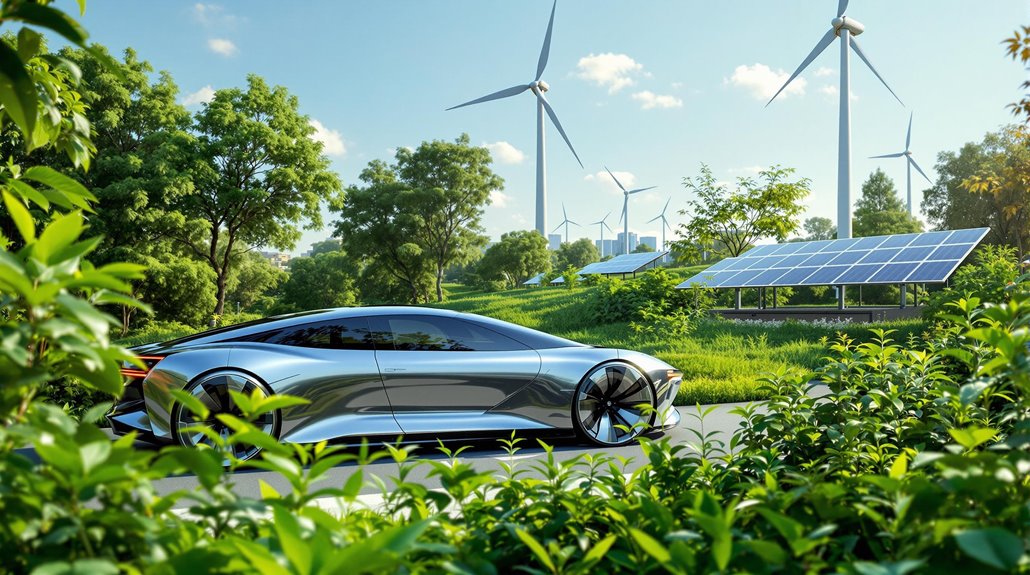
Sustainability is no longer just a buzzword in the automotive world; it's a driving force reshaping the industry's future. As you navigate this evolving landscape, you'll notice a significant push towards electric vehicles (EVs) and eco-friendly materials. Over 140 countries are setting net-zero emissions targets by 2050, steering automakers to rethink manufacturing and vehicle design.
In response, companies are investing in renewable energy for their production facilities. For instance, Kia's innovative use of bioplastics and recycled materials in their EV interiors exemplifies this shift. Such practices not only reduce environmental impact but also cater to consumer demand for greener options.
Battery recycling is another key area of innovation. By focusing on reusing graphite and electrolytes, manufacturers are minimizing waste and conserving resources. This effort aligns with the regulatory frameworks in regions like the EU and China, which push for lower-emission technologies.
Volkswagen's commitment to recyclable parts and sustainable textiles demonstrates the industry's dedication to sustainability.
As EVs gain mainstream acceptance, these eco-friendly practices will become standard in automotive production, underscoring the importance of sustainability in shaping the future of transportation. Additionally, SaaS solutions allow businesses to easily scale their services based on demand, which can be particularly beneficial for automotive companies looking to adapt quickly to the evolving market needs.
Mobility as a Service Growth
The Mobility as a Service (MaaS) sector is rapidly transforming urban transportation by integrating various travel modes into cohesive, app-based solutions.
You're witnessing a revolution in the mobility industry as people increasingly turn to MaaS platforms for their daily commutes. With the global MaaS market set to surpass $200 billion by 2025, there's a clear shift toward shared mobility solutions. This growth is fueled by urbanization and the demand for seamless travel options that prioritize convenience and cost-effectiveness.
In emerging markets, like India and China, the preference for subscription models over traditional vehicle ownership is gaining traction. A significant 67% of Indian consumers and 48% of Chinese consumers are opting for these models, reflecting changing consumer preferences.
This trend indicates a move away from owning vehicles toward a more flexible, subscription-based approach that offers various transportation options.
The COVID-19 pandemic accelerated this shift as people sought flexible, reliable transportation amidst economic uncertainties. Additionally, partnerships between public transport and private companies are strengthening the MaaS ecosystem, enhancing service offerings and connectivity.
As a result, MaaS platforms are becoming an essential component of urban mobility, transforming how you navigate your city. Predictive analytics is playing a crucial role in this transformation by forecasting future behaviors and optimizing MaaS offerings through data-driven insights.
Charging Infrastructure Developments

With the rapid rise of electric vehicles, expanding charging infrastructure is more crucial than ever.
You're seeing exciting developments that enhance EV adoption and make driving an electric vehicle more appealing. The U.S. plans to roll out half a million public chargers by 2030, a massive boost for public charging access. These deployments are most noticeable in urban areas, where demand for accessible charging solutions is surging.
Government incentives and partnerships are pouring investments into charging infrastructure, significantly improving accessibility for you as an EV user. Fast-charging technologies are also advancing, reducing downtime and making EVs more convenient for everyday use.
You'll find it easier than ever to integrate EVs into your routine, thanks to these innovations. SaaS platforms promote seamless integration of new technologies, enhancing collaboration and operational efficiency in the charging ecosystem.
Here are some key factors influencing the charging landscape:
- Government Incentives: Boost investments and drive infrastructure growth.
- Public Charging Networks: Critical for urban EV adoption and reducing range anxiety.
- Fast-Charging Tech: Minimizes downtime, enhancing convenience.
- Home Charging Solutions: Popular for their convenience and ease for daily use.
These developments are paving the way for a future where EVs are a practical option for everyone, transforming the driving experience.
Supply Chain and Production Efficiency
Amid evolving global challenges, the automotive supply chain is transforming to boost resilience and efficiency. You're witnessing a shift from traditional just-in-time manufacturing to more robust strategies that can withstand disruptions. This change is vital for maintaining production efficiency, especially given the complexities of the modern automotive industry. Embracing digital twins and blockchain technology, you can enhance transparency and traceability, ensuring that every part of the supply chain operates smoothly.
3D printing is a game-changer, slashing prototype production times by up to 50% for companies like Audi. This innovation lets you respond faster to design changes and reduce time to market. To stay competitive, collaboration is key. By working closely with suppliers and partners, you can innovate and manage the increasing complexity of vehicle design and manufacturing. Sustainability is another critical focus. By adopting sustainable sourcing practices, you can reduce your carbon footprint without compromising production efficiency.
The use of iPaaS in integration can simplify the connection between various SaaS applications, enhancing the resilience of the automotive supply chain. The automotive industry is moving towards a greener future, and being part of this change can set you apart. Embrace these trends to remain resilient and efficient in a rapidly evolving landscape.
Regulatory and Safety Transformations

Navigating the evolving landscape of regulatory and safety transformations demands agility and foresight. As you delve into the future of automotive SaaS, you'll need to keep up with shifting regulatory frameworks designed to accommodate advancements in autonomous driving.
By 2030, safety standards for Level 3 and higher autonomy will be established, making it imperative for your software solutions to ensure compliance.
Advanced driver-assistance systems (ADAS) aren't just a luxury—they're becoming a necessity, driven by regulatory pressures. These systems reduce accident rates and are now mandated in new vehicles.
You'll find governments worldwide pushing for standardized safety technologies, which means the demand for compliance-focused software solutions will surge.
Incorporating safety technologies like in-cabin monitoring systems is crucial. These systems enhance driver attentiveness and prevent accidents involving unattended children or pets, aligning with evolving regulations.
- Embrace regulatory frameworks to adapt to new standards for autonomous vehicles.
- Integrate ADAS into your offerings to meet mandated safety feature requirements.
- Focus on safety technologies that ensure driver attentiveness and vehicle safety.
- Prepare for market growth in automotive software, projected to reach $462 billion by 2030.
With robust vendor management being crucial in SaaS environments, ensuring compliance with evolving automotive regulations will be essential for success. Embrace these transformations to stay ahead in the automotive industry.