
Advantages and Disadvantages of Each Cloud Service Model
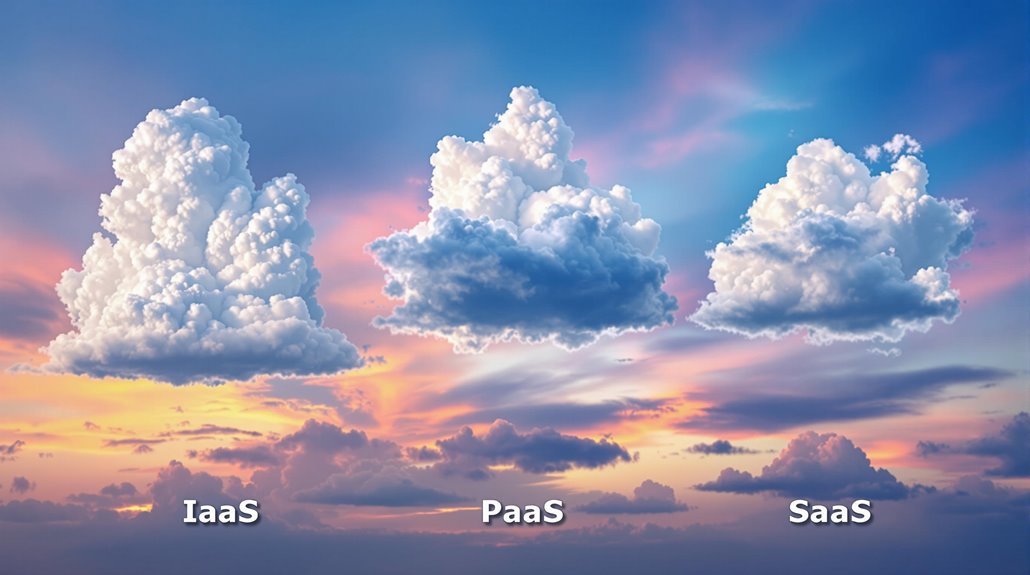
When choosing between IaaS, PaaS, and SaaS, you should weigh the distinct advantages and disadvantages each offers. IaaS gives you maximum control and customization but places security responsibilities on your shoulders and risks vendor lock-in. PaaS streamlines app development and scales efficiently, yet offers limited customization and potential compliance challenges. SaaS provides ease and cost-efficiency with seamless updates, although it's dependent on internet connectivity and might not meet all specific business needs. To make the best choice, consider your unique requirements and get ready to explore more insights into these models.
Key Takeaways
- IaaS offers maximum infrastructure control and customization but involves user-managed security and potential vendor lock-in risks.
- PaaS streamlines application development with scalable resources but limits customization and may pose compliance challenges.
- SaaS provides cost-efficient access and automatic updates, yet it relies on internet connectivity and can have limited customization.
- IaaS supports faster application deployment and disaster recovery but requires users to handle security responsibilities.
- PaaS enhances collaboration and reduces maintenance, but it creates dependency on providers for infrastructure management.
Understanding Cloud Service Models
Cloud service models are essential for modern businesses, offering flexibility and efficiency tailored to your specific needs. With IaaS, PaaS, and SaaS, you can choose the level of control and responsibility that best suits your business requirements. Each model addresses different aspects of your operational strategy, allowing you to allocate resources where they're most effective.
IaaS provides you with scalable computing resources like servers and storage. It allows you to maintain control over applications and operating systems, making it ideal if you need a high degree of customization. Major cloud providers like AWS and Microsoft Azure offer robust IaaS solutions to meet your infrastructure demands.
PaaS offers a development platform that streamlines the process of creating and deploying applications. By focusing on coding rather than managing infrastructure, you can accelerate development cycles. Services like Google App Engine and Heroku illustrate how PaaS can enhance your productivity by reducing operational overhead.
SaaS delivers fully managed software applications accessible online, eliminating the need for local installation. With options like Salesforce and Google Workspace, you access comprehensive solutions that require minimal customization.
Choosing the right cloud service model helps align your technology with your business needs efficiently. Each of these models supports scalability and operational efficiency, allowing businesses to adapt and grow in a rapidly changing digital landscape.
Infrastructure as a Service (IaaS)
Infrastructure as a Service (IaaS) acts as a powerful engine driving modern business agility by offering scalable virtualized computing resources over the internet.
With IaaS, you can bypass the hefty capital expenses of buying physical servers and data center space. Instead, you use resources from top providers like Amazon Web Services, Microsoft Azure, and Google Cloud Platform, who offer flexible pricing models. This means you only pay for the resources you use, effectively reducing costs.
One of the biggest advantages of IaaS is the control it offers. You manage the operating systems and applications on your virtual machines, allowing you to customize your IT environment to fit your exact needs. This level of control enhances your ability to tailor solutions that are best for your business.
IaaS also accelerates deployment. With 68% of businesses reporting faster application deployment, you can quickly bring new projects to market, boosting your agility.
However, this flexibility comes with a caveat: security and compliance responsibilities rest on your shoulders. While cloud providers ensure the infrastructure's security, managing and securing your applications and data is crucial to mitigate risks, as 94% of organizations voice concerns about cloud security.
A significant consideration when using IaaS is the potential for vendor lock-in, which can limit flexibility and control, especially when integrating with existing software systems.
Platform as a Service (PaaS)

Platform as a Service (PaaS) offers an efficient development environment that allows you to focus on creating applications without the hassle of managing the underlying infrastructure.
PaaS platforms streamline app development by providing built-in tools for design, testing, and deployment, which boosts productivity and fosters collaboration among your team. This cloud environment is inherently scalable, letting you adjust resources effortlessly as demand fluctuates, all without investing in additional hardware.
When it comes to cost-effectiveness, PaaS shines by eliminating the need for extensive hardware and software management. You can take advantage of pay-as-you-go models, where you only pay for what you use, making it a budget-friendly option.
Reduced maintenance is a significant benefit, as vendors handle all updates and upkeep of the infrastructure, freeing you to focus solely on coding and enhancing your applications.
Additionally, cross-platform development is supported, ensuring a consistent user experience across different devices. However, it's essential to consider the advantages and disadvantages. While PaaS offers many benefits, you might face limitations in customizing software components due to vendor constraints.
Additionally, reliance on a single provider could pose challenges if you decide to switch platforms. Overall, PaaS can be a game-changing solution for your app development needs.
Software as a Service (SaaS)
Software as a Service (SaaS), a prominent cloud service model, revolutionizes how you access applications by delivering them over the internet. By leveraging SaaS applications like Google Workspace and Salesforce, you no longer need to worry about local installation and maintenance. This cloud-based software operates on a subscription basis, helping you sidestep hefty upfront costs and reducing your overall IT expenditure by an impressive 30%. One of SaaS's key advantages is the automatic updates feature, ensuring you always have the latest features and security enhancements without interrupting your workflow.
Collaboration tools within these solutions empower real-time teamwork, with 68% of businesses experiencing faster application deployment as a major benefit. Educational institutions, for instance, benefit from Student Information Systems that streamline enrollment and grading processes. However, SaaS isn't without its challenges. You may find yourself with limited control over software customization, which can be a hurdle if tailored solutions are necessary for your business. Cloud security and data security remain pressing concerns for many organizations, with 94% expressing worries over potential vulnerabilities and compliance issues.
Despite these drawbacks, SaaS plays a crucial role in digital transformation, offering a scalable, efficient way to access and utilize essential applications.
IaaS: Benefits and Drawbacks

When exploring cloud service models, IaaS (Infrastructure as a Service) stands out for offering exceptional control over virtualized computing resources. You can manage applications and operating systems without the need for physical hardware, giving you flexibility and scalability.
Major IaaS providers like AWS, Microsoft Azure, and Google Cloud Platform enable you to save significantly on hardware investments and infrastructure management. On average, you could see a reduction of about 30% in IT costs, making IaaS a cost-effective choice for many businesses.
One of the great benefits of IaaS is its ability to help you quickly scale IT resources up or down based on demand. This is ideal for businesses with fluctuating workloads or those experiencing rapid growth.
However, this flexibility comes with the responsibility of securing your applications and data. The onus is on you to mitigate security risks, which is a concern for 94% of organizations using cloud services.
Additionally, you should be aware of potential vendor lock-in. Migrating data and applications between different providers can become complex and costly, potentially limiting your future flexibility.
For organizations needing extensive control, IaaS offers unparalleled customization for IT resources, such as disaster recovery.
It's crucial to weigh these factors when considering IaaS for your business needs.
PaaS: Pros and Cons
Frequently, when businesses look to streamline their development processes, PaaS (Platform as a Service) emerges as an appealing option. PaaS enables you to focus on building applications by providing a streamlined development environment, removing the need to manage the underlying infrastructure. This cloud service model can significantly speed up your time to market, as it allows developers to concentrate on coding and innovation rather than infrastructure management.
In terms of collaboration, PaaS offers built-in tools and services that facilitate teamwork, enabling development teams to work simultaneously on projects. This collaboration accelerates project timelines and improves efficiency.
Moreover, PaaS typically offers scalability, allowing you to adjust resources based on application demand seamlessly. This scalability helps avoid over-provisioning and unnecessary costs.
However, there are drawbacks to consider. PaaS can limit your customization options and control over application code, which mightn't align with all development needs.
Additionally, security measures are crucial due to the risks associated with shared resources. You must carefully select vendors and ensure robust security protocols to comply with data protection regulations.
While PaaS reduces the complexities of software maintenance, these limitations require careful consideration. A key advantage of using PaaS is the ability to leverage seamless upgrades managed by cloud providers, which reduces operational disruptions and keeps your applications up-to-date.
SaaS: Advantages and Limitations
Convenience is at the heart of Software as a Service (SaaS), offering a range of advantages that make it an attractive option for many businesses. One of the primary benefits is cost efficiency. SaaS solutions work on a subscription model, which eliminates hefty upfront software licensing fees and can cut IT expenses by about 30% on average. This model allows you to better allocate resources and focus on other critical business needs.
Accessibility is another major advantage. With SaaS, you can access applications from any device with an internet connection, which boosts productivity and fosters collaboration, especially among remote teams. Plus, you benefit from automatic updates, so you always have the latest features and security enhancements without lifting a finger.
SaaS also offers impressive scalability. You can easily adjust your usage up or down based on demand, providing flexibility without requiring significant hardware investments. Additionally, SaaS providers ensure compliance with industry regulations, reducing the burden on businesses to manage these aspects internally.
However, it's important to note the limitation of limited customization. SaaS solutions often don't offer the same level of tailored functionality as on-premises systems. This could be a drawback if your organization has specific business needs that require more customized options.
Nonetheless, for many, the advantages outweigh these limitations.
Choosing the Right Model
Selecting the right cloud service model is crucial for aligning with your organization's specific needs and goals. You'll need to weigh the control and flexibility each model offers against your business requirements.
For instance, Infrastructure as a Service (IaaS) grants the most control over your infrastructure, making it perfect for customization and scalability. On the other hand, Platform as a Service (PaaS) strikes a balance, allowing developers to focus on rapid application development without managing underlying hardware. Software as a Service (SaaS) is tailored for those who seek immediate software access with minimal management. Cloud ERP provides extensive scalability, making it ideal for businesses experiencing rapid growth and requiring tailored configurations.
Consider these factors when choosing a cloud service model:
- Control: IaaS offers maximum control, while SaaS requires minimal management.
- Flexibility: IaaS provides flexibility for infrastructure customization.
- Development: PaaS is ideal for fast application development and deployment.
- Cost Structures: IaaS saves on hardware, PaaS reduces development time, and SaaS offers subscription-based cost savings.
- Business Requirements: Match the model to your specific organizational needs.
Ultimately, understanding your organization's priorities and how they align with cloud technologies will guide you in choosing the most suitable model for successful implementation and operation.